
 한국어
 中文 (中国)
 日本語
 中文 (台灣)
Vietnam has a remarkably diverse coffee landscape shaped by growing regions, bean varieties and local drinking habits. For visitors tasting coffee across the country, the question is Vietnamese coffee Robusta or Arabica? has a more interesting answer than choosing just one: Vietnam produces both, although Robusta is far more prominent. At Tonkin Coffee, Fine Robusta from the Gia Lai Highlands brings a bold, chocolatey foundation to signature Vietnamese coffee drinks.
Is Vietnamese coffee mainly Robusta or Arabica?
Vietnamese coffee is predominantly associated with Robusta, but Vietnamese coffee does not mean Robusta exclusively. The country produces both species, and cafés may use Robusta, Arabica or blends to create different flavor profiles.
| Question | Short answer |
| Does Vietnam grow Robusta? | Yes, extensively |
| Does Vietnam grow Arabica? | Yes, in smaller quantities |
| Is every Vietnamese coffee Robusta? | No |
| Can Vietnamese coffee blend both beans? | Yes |
| Does one species define Vietnamese coffee? | No |
For a broader view of what types of coffee beans are grown in Vietnam, the country’s coffee landscape extends beyond these two familiar names, although Robusta remains dominant.
Why is Robusta more common in Vietnamese coffee?
Robusta grows well across many important Vietnamese coffee regions, particularly the Central Highlands. Its strong productivity and established role in the country’s coffee industry have made the bean widely available.
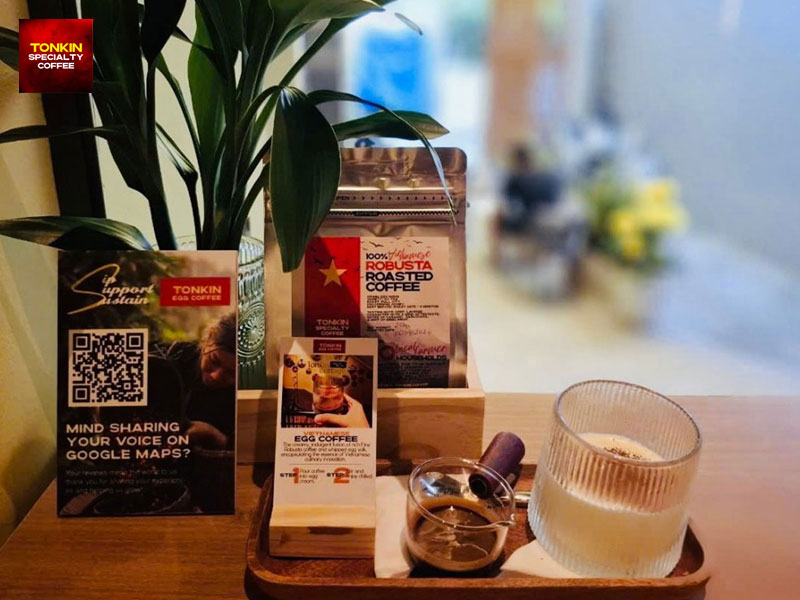
Its sensory structure also suits many Vietnamese preparations. Full body, pronounced coffee intensity and relatively low perceived acidity allow Robusta to remain noticeable alongside condensed milk, cream or ice.
Where does Arabica fit into Vietnamese coffee?
Arabica prefers cooler, higher-elevation conditions and represents a smaller part of Vietnam’s production. Depending on origin and processing, Arabica can offer brighter acidity, lighter body and fruitier or more floral aromas.
Arabica grown in Vietnam is still Vietnamese coffee. The country’s coffee identity should therefore not be reduced to Robusta alone.
Does Vietnamese coffee have to use Robusta to be authentic?
No. Authentic Vietnamese coffee cannot be defined by one coffee species alone. Beans matter, but brewing methods, ingredients, café habits and the way people enjoy coffee are also parts of Vietnam’s coffee culture.
Is phin coffee always made with Robusta?
No. A phin is a brewing device rather than a coffee species. A Vietnamese phin can be used with Robusta, Arabica or a blend.
This distinction is useful because brewing method and bean type are often treated as if they mean the same thing. They describe different parts of the cup.
Is egg coffee always made with Robusta?
Not necessarily. Egg coffee is defined more by the relationship between coffee and whipped egg cream than by a universal bean requirement.
At Tonkin Coffee, Fine Robusta provides the foundation for egg coffee. Its full body and chocolatey character remain recognizable beneath the silky, sweet egg cream.
How can you tell Robusta and Arabica apart in the cup?
Robusta generally feels denser and more intense, while Arabica is often more aromatic and brighter. These are useful tasting clues, but they are not absolute rules.
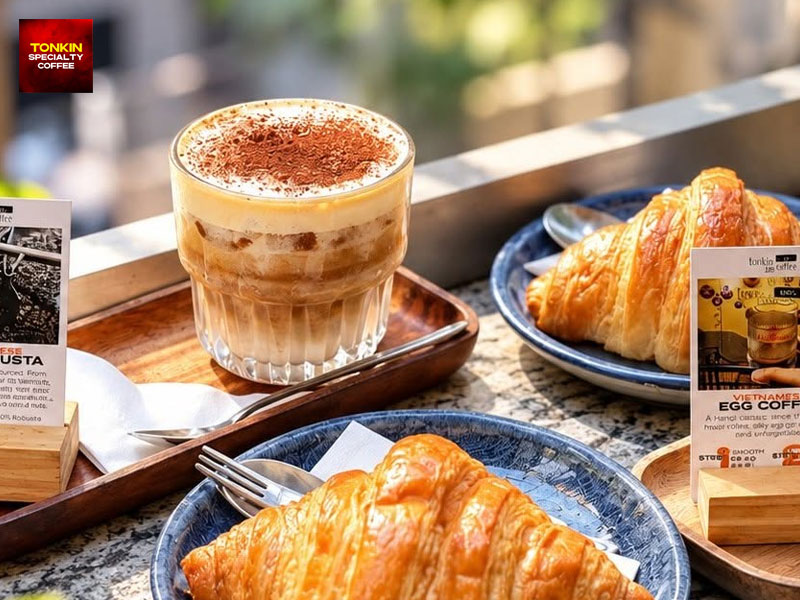
For anyone comparing Robusta coffee vs Arabica taste, roast level, processing and brewing can matter almost as much as the species itself.
What does Robusta usually taste like?
Good Robusta can show dark chocolate, cocoa, roasted nuts, caramel and subtle spice, supported by a substantial body and noticeable bitterness.
That profile also helps answer What is Vietnamese Robusta coffee? in practical terms: the bean is not simply “strong coffee.” Quality-focused Vietnamese Robusta can be smooth, rounded and naturally sweet while retaining its characteristic intensity.
What does Arabica usually taste like?
Arabica commonly offers a lighter body and brighter perceived acidity. Fruit, citrus and floral characteristics may become more noticeable depending on origin, processing and roast.
A dark-roasted Arabica, however, may taste more intense than expected. Likewise, carefully processed Fine Robusta can taste considerably smoother than old stereotypes suggest.
Is a Robusta-Arabica blend still Vietnamese coffee?
Yes. A blend can still be part of Vietnamese coffee culture, and blending does not automatically indicate lower quality.
A roaster may combine the body and intensity of Robusta with the aroma and brightness of Arabica to create a particular balance.
Is 100% Robusta better than a blend?
Not necessarily. A 100% Robusta, 100% Arabica or blended coffee can all be excellent when good beans are processed, roasted and brewed carefully.
For visitors choosing coffee in Vietnam, the percentage printed on a package is therefore only one clue. Flavor preference is often a more useful guide.
Which should you choose in Vietnam: Robusta or Arabica?
Choose according to the flavors you already enjoy rather than trying to identify which bean is “more Vietnamese.”
| Your usual preference | Good starting direction |
| Strong, full-bodied coffee | Robusta |
| Chocolate and roasted nuts | Fine Robusta |
| Bright, fruity coffee | Arabica |
| Creamy, dessert-like drinks | Egg coffee |
| Sweet, rich coffee | Vietnamese milk coffee |
| Sweet-savory contrast | Salt coffee |
Trying more than one style can be especially useful. A bright Arabica and a Fine Robusta-based egg coffee reveal very different sides of Vietnam’s contemporary coffee scene.
Does stronger Vietnamese coffee always mean Robusta?
No. The word strong can describe several different things: flavor intensity, bitterness, roast character, caffeine or simply the amount of coffee used in brewing.
The question is Robusta coffee stronger than Arabica therefore needs context. Robusta generally contains more caffeine and often has a more pronounced sensory character, but brewing and roasting can significantly change how strong a particular cup feels.
Does dark roasting make coffee Robusta?
No. Roast level cannot change one coffee species into another. Dark roasting develops different aromas and can increase perceived roast intensity, whether the original bean is Robusta or Arabica.
That is another reason taste alone cannot reliably identify the species in every cup.
Why does Tonkin Coffee choose Fine Robusta?
Tonkin Coffee uses Fine Robusta because its full body, chocolate notes, roasted-nut character and natural intensity complement the Vietnamese drinks served by the brand.
The coffee comes from farming partners Cô Hòa and Chú Diện in the Gia Lai Highlands, part of Vietnam’s Central Highlands. Tonkin purchases their harvest directly as part of a long-term relationship intended to provide greater income stability while supporting continuity in coffee quality.
Is Fine Robusta a separate drink at Tonkin Coffee?
No. Fine Robusta is the coffee base rather than a separate menu drink.
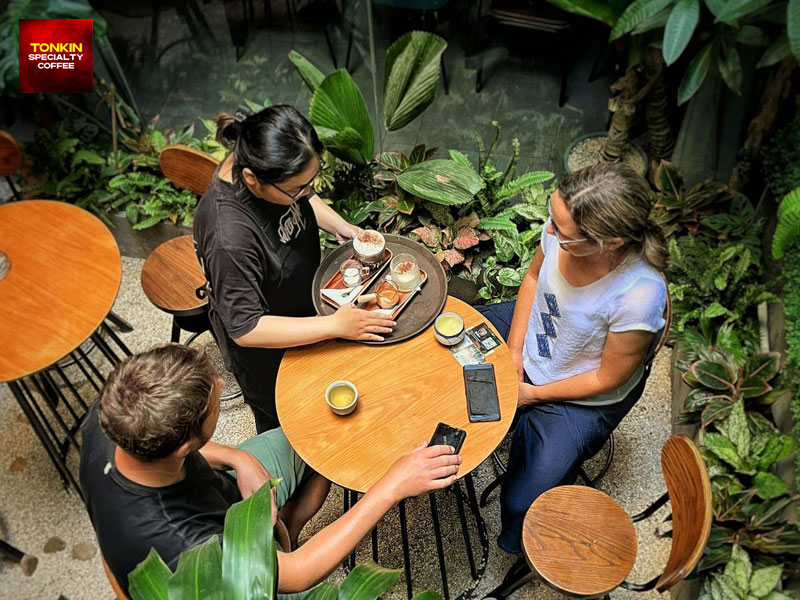
Tonkin uses Fine Robusta across signature preparations including egg coffee, salt coffee and Vietnamese milk coffee. Each recipe changes the drinking experience while preserving a recognizable coffee backbone.
Where can travelers experience Fine Robusta in central Ho Chi Minh City?
For visitors deciding where to try Fine Robusta coffee in Ho Chi Minh City, Tonkin has four locations in the city center. The easiest choice is to match the café with the day’s sightseeing route.
Which café fits a Ben Thanh Market route?
Tonkin Specialty Coffee, at 91 Ly Tu Trong Street, fits naturally between Ben Thanh Market and Independence Palace. A discreet entrance leads upstairs to an intimate space decorated with Vietnamese folk masks, traditional paintings and woven details.
Where can visitors enjoy a quieter coffee break?
Tonkin Garden Cafe, at 135/50 Tran Hung Dao Street, offers a leafy courtyard inside a quiet alley. The nearly century-old Saigon house creates a slower atmosphere away from the busier streets nearby.
Where can visitors combine bánh mì and egg coffee?
Tonkin Egg Coffee, at 1 Le Thi Rieng Street, sits opposite Huynh Hoa bánh mì. Guests can bring Huynh Hoa bánh mì inside without an additional fee and enjoy seating, air conditioning and free Wi-Fi.
Which café fits a Nguyen Hue and Saigon River walk?
Tonkin Egg Coffee & Herbal Tea, at 27 Ngo Duc Ke Street, is convenient for Nguyen Hue Walking Street, Bitexco, Dong Khoi and the Saigon River. Its quiet upstairs setting inside a historic 1917 villa provides a relaxing stop during a downtown walk.
So, is Robusta or Arabica more representative of Vietnamese coffee?
Robusta is more representative of Vietnam’s coffee production today, but Vietnamese coffee is broader than one species. Arabica, blends, different brewing styles and drinks such as egg coffee all contribute to the country’s evolving coffee culture.
For visitors curious about the Robusta side of that story, Tonkin Coffee provides a clear connection from Gia Lai farmers and Fine Robusta beans to Vietnamese coffee drinks served in central Ho Chi Minh City.
Visit Tonkin Coffee Today!
Tonkin Specialty Coffee
- Add: 91 Ly Tu Trong St., Ben Thanh Ward, Ho Chi Minh City, Vietnam.
- Hotline: 086 799 0125
Tonkin Garden Cafe
- Add: 135/50 Tran Hung Dao St., Cau Ong Lanh Ward, Ho Chi Minh City, Vietnam.
- Hotline: 087 992 4691
Tonkin Egg Coffee
- Add: 1 Le Thi Rieng St., Ben Thanh Ward, Ho Chi Minh City, Vietnam.
- Hotline: 0815 841 909
Tonkin Egg Coffee & Herbal Tea
- Add: 27 Ngo Duc Ke St., Sai Gon Ward, Ho Chi Minh City, Vietnam
Nestled in the heart of Ho Chi Minh City, Tonkin Coffee is one of the best coffee shops to experience authentic Vietnamese flavors. From the iconic egg coffee and refreshing coconut coffee to bold Vietnamese coffee and the unique salt coffee, every sip is a journey into tradition. For non-coffee lovers, our Vietnamese matcha offers a gentle alternative. Pair your drink with a freshly baked banh mi or a buttery croissant, and savor the true taste of Vietnam in a setting inspired by folk culture and Indochine charm.