

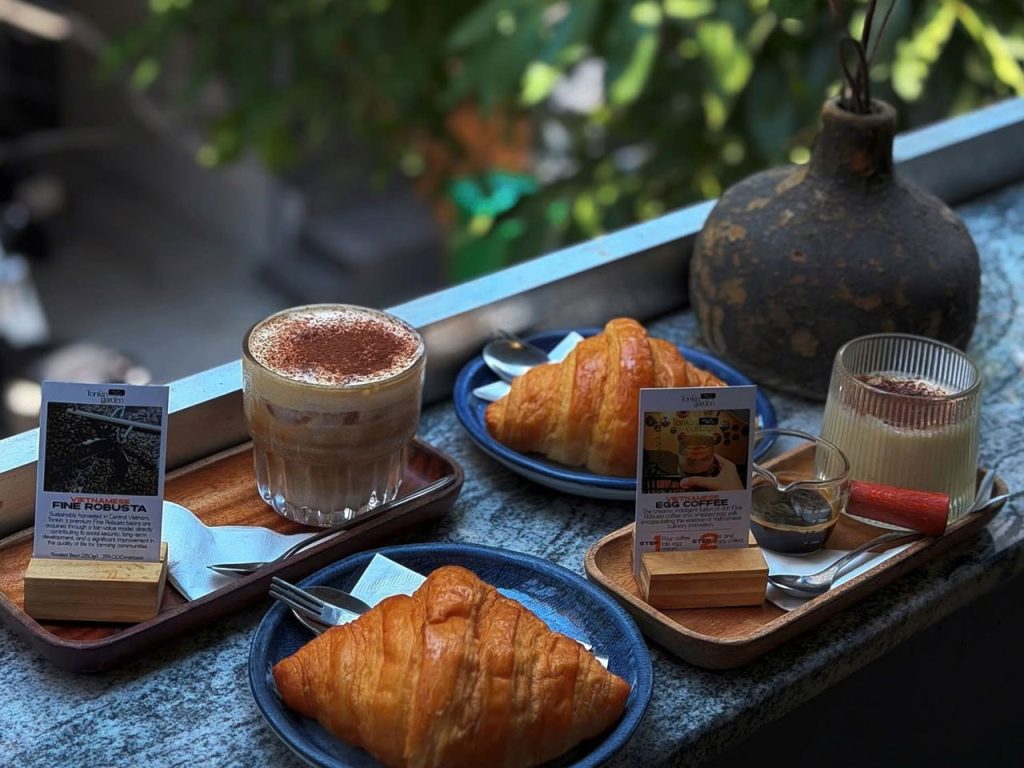
Vietnamese Robusta can taste very different when the beans are carefully selected, processed and roasted. For travelers wondering where to try Fine Robusta coffee in Ho Chi Minh City, the best experience comes from tasting the coffee simply first, then comparing it with richer Vietnamese-style drinks.
At Tonkin Coffee, Fine Robusta from Gia Lai is served across central District 1 locations, making it easy to discover a bolder yet cleaner side of Vietnamese coffee while exploring Ho Chi Minh City.
Where Can Travelers Taste Fine Robusta in Central Ho Chi Minh City?
Travelers can experience Vietnamese Fine Robusta at Tonkin Coffee locations in District 1, including Tonkin Specialty Coffee on Ly Tu Trong Street, Tonkin Garden on Tran Hung Dao Street and Tonkin Egg Coffee & Herbal Tea on Ngo Duc Ke Street. Each branch offers the same coffee-focused philosophy in a different setting.
| Tonkin Coffee location | Central context | Good choice for |
| Tonkin Specialty Coffee | 91 Ly Tu Trong, near Ben Thanh area | Understanding Fine Robusta itself |
| Tonkin Garden | 135/50 Tran Hung Dao | Slower, quieter coffee break |
| Tonkin Egg Coffee | 1 Le Thi Rieng, District 1 | Experiencing Vietnamese egg coffee |
| Tonkin Egg Coffee & Herbal Tea | 27 Ngo Duc Ke, near Nguyen Hue Walking Street and Saigon River | Sightseeing break in downtown Saigon |
Why Start at Tonkin Specialty Coffee?
Located at 91 Ly Tu Trong Street, Tonkin Specialty Coffee is a practical starting point for visitors spending the day around Ben Thanh Market and central District 1.
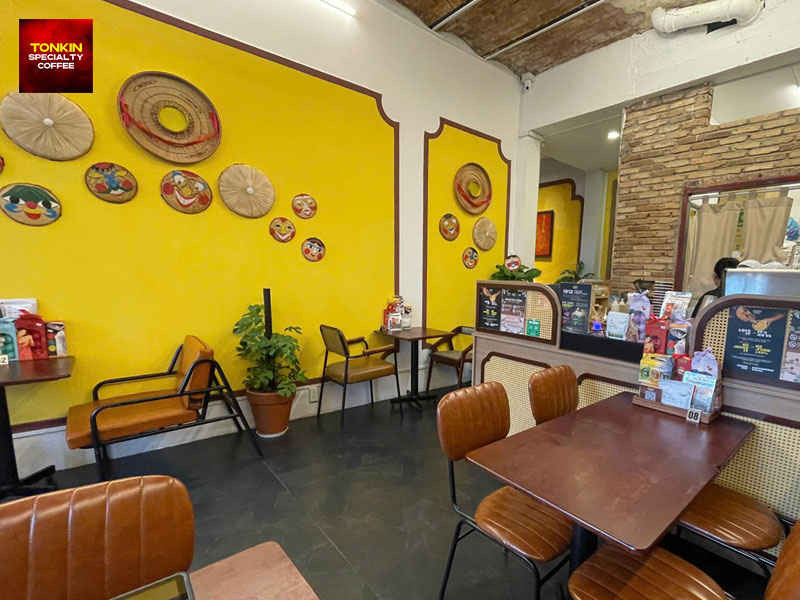
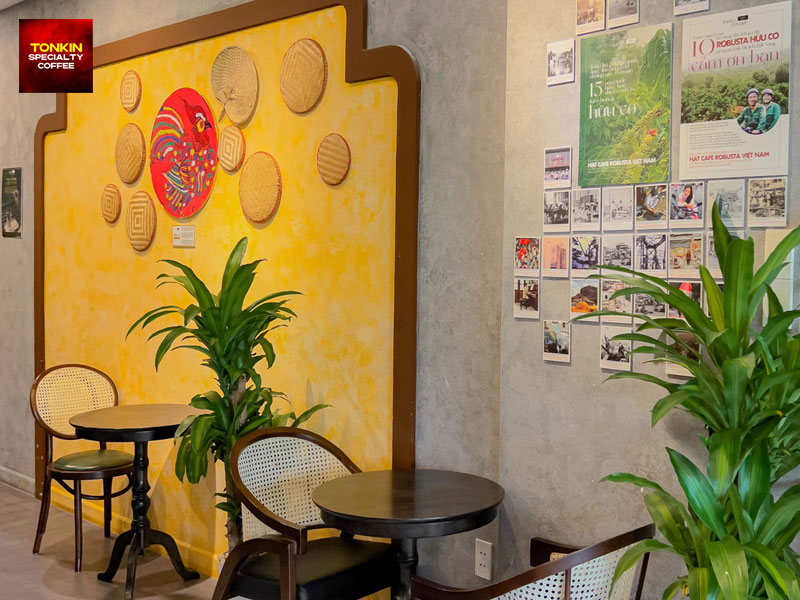
The interior brings Vietnamese visual identity into the experience through warm materials, folk masks, traditional artwork and Indochine-inspired details. More importantly for coffee drinkers, the setting gives Fine Robusta enough attention to be tasted on its own rather than hidden beneath sweetness.
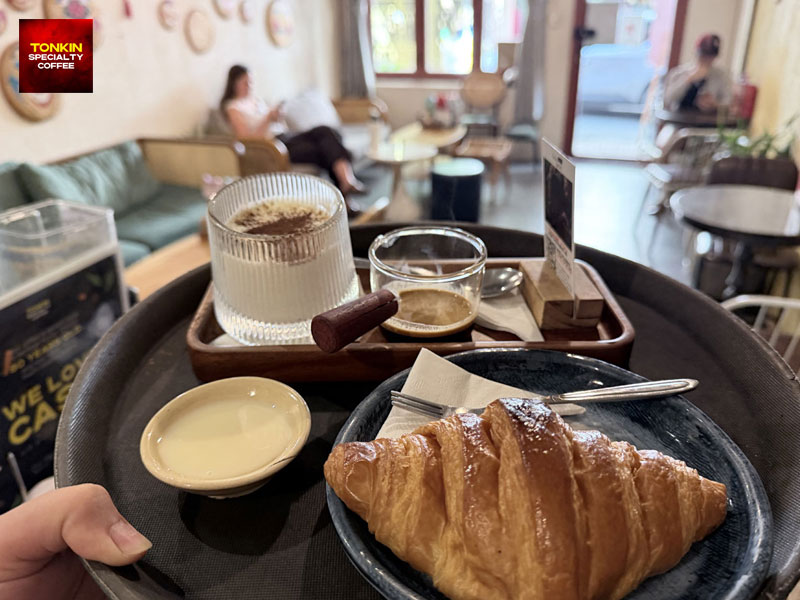
A useful first order is:
- Black Fine Robusta or espresso
- A few sips without sugar or milk
- A second Vietnamese-style drink for comparison
That sequence makes the bean’s dark chocolate, roasted-nut and caramel character easier to recognize.
When Does Tonkin Garden Make More Sense?
Tonkin Garden at 135/50 Tran Hung Dao Street suits travelers who want to slow down after moving through busy streets, museums or shopping areas.
The garden atmosphere offers a different rhythm from a quick city-centre coffee stop. A quieter table also gives you time to notice how the coffee changes as it cools: bitterness can soften, chocolate notes may become clearer, and the finish becomes easier to judge.
This is also a comfortable choice for couples or small groups when coffee is part of a longer conversation rather than just a caffeine stop.
When Should You Visit Tonkin Egg Coffee on Le Thi Rieng Street?
Tonkin Egg Coffee at 1 Le Thi Rieng Street in District 1 is a good choice for travelers who want to experience Fine Robusta through one of Vietnam’s most distinctive coffee drinks. The location is particularly suitable for visitors who have already tasted Robusta black and want to see how the same bold coffee character works with a rich egg cream.
The Fine Robusta base provides enough body, chocolate depth and controlled bitterness to remain noticeable beneath the creamy layer. This makes egg coffee more than a sweet drink; the contrast between strong Vietnamese coffee and smooth egg cream is an important part of the experience.
Why Choose Tonkin Egg Coffee & Herbal Tea During Sightseeing?
Tonkin Egg Coffee & Herbal Tea at 27 Ngo Duc Ke Street fits naturally into a walking route around Nguyen Hue Walking Street, Dong Khoi, Bitexco and the Saigon River.
The location makes Vietnamese coffee easy to add between sightseeing stops without turning the afternoon into a separate café expedition. Visitors planning an Authentic coffee experience in Saigon during daytime can taste Fine Robusta and then continue toward the river within the same central itinerary.
Vietnamese herbal teas also give groups an alternative when not everyone wants another coffee.
What Should First-Time Visitors Order to Understand Fine Robusta?
Black coffee or espresso is the clearest starting point because additional milk, condensed milk or cream can soften bitterness and hide subtle differences in flavor. Fine Robusta should remain bold and full-bodied, but the cup should also feel clean and structured.
What Flavors Should You Notice First?
A carefully produced Fine Robusta can show:
- Dark chocolate
- Cocoa
- Roasted or toasted nuts
- Caramel
- Brown-sugar sweetness
- Gentle spice
- A dense, smooth mouthfeel
For someone unfamiliar with Vietnamese coffee, strong bitterness can initially attract all the attention. Take two or three small sips before making a judgment; sweetness and nutty flavors often become clearer after the first impression.
For a broader introduction to local drinks, Tonkin’s guide to the best Vietnamese coffee for first-time visitors in Saigon can help travelers decide what to try after the first black coffee.
Should Egg Coffee Come Before or After Black Coffee?
If the goal is understanding Fine Robusta, black coffee should come first. Egg coffee works especially well afterward because the comparison shows why the coffee base matters.
Tonkin’s egg cream is rich and sweet, so the coffee underneath needs enough body, bitterness and chocolate depth to remain recognizable. A quality Robusta base keeps the drink coffee-forward instead of allowing the cream to turn the cup into a simple dessert.
What Makes Fine Robusta Different From Ordinary Strong Coffee?
Fine Robusta is not merely a darker roast or a stronger drink. Quality begins with ripe cherries, careful sorting, defect control, processing, drying, storage and roasting, then becomes visible in the final cup through cleanliness and flavor definition.
Travelers wanting more background on what is fine robusta coffee should think of Fine Robusta as a quality-focused approach to Coffea canephora rather than a separate coffee species.
Does Better Robusta Have to Taste Less Bitter?
No. Controlled bitterness is part of Robusta’s identity.
Dark chocolate offers a useful comparison: bitterness can be pleasant when supported by aroma, sweetness and depth. Problems appear when burnt, rubbery, stale or aggressively woody flavors dominate everything else.
A practical guide on how to tell if robusta coffee is high quality explains why clean aroma, natural sweetness, clear flavors and a pleasant finish are better quality indicators than intensity alone.
Does Fine Robusta Need to Taste Like Arabica?
Fine Robusta does not need to imitate Arabica to be considered premium. Robusta usually expresses itself through heavier body, lower perceived acidity, darker chocolate and nut flavors and more noticeable bitterness.
That distinction becomes clearer when comparing robusta coffee vs arabica taste: many Arabicas emphasize fruit, floral aromas and brighter acidity, while well-produced Robusta can excel through depth, texture and cocoa-like richness.
Likewise, discussions about is robusta coffee stronger than arabica need context. Caffeine content and perceived strength may be higher in Robusta, but neither automatically tells you whether the beans are high quality.
How Can Travelers Evaluate Fine Robusta at a Café?
You do not need professional cupping equipment. A few simple observations can reveal whether a café treats Robusta as a serious coffee rather than merely a strong base for sweet drinks.
What Should You Look for in the Cup?
Positive signs include:
- A clear cocoa, chocolate or nut aroma
- Full body without excessive roughness
- Bitterness balanced by some natural sweetness
- Distinct flavors instead of a muddy roasted taste
- A clean finish after swallowing
Less attractive signs include stale aromas, burnt rubber, heavy ash or an aggressively drying aftertaste.
Asking where the beans come from is also useful. At Tonkin Coffee, the Fine Robusta comes from Gia Lai in Vietnam’s Central Highlands, with a profile centered on dark chocolate, roasted nuts, caramel and subtle spice.
Which Tonkin Coffee Location Fits Your Day in Saigon?
There is no single branch that suits every traveler. The better choice depends on where you are going before and after coffee.
Choose Tonkin Specialty Coffee on Ly Tu Trong when the coffee itself is the priority or when your itinerary includes the Ben Thanh area. Pick Tonkin Garden on Tran Hung Dao when you want more time to sit, talk and recover from the pace of central Saigon.
For a route through Nguyen Hue Walking Street and the Saigon River, the Ngo Duc Ke branch keeps the coffee stop close to major downtown landmarks.
Is Tonkin Coffee Worth Visiting Specifically for Fine Robusta?
Tonkin Coffee is particularly relevant for visitors who want to experience Vietnamese Robusta as more than an intensely roasted coffee mixed with condensed milk. The same quality-focused bean can be explored through black coffee, espresso-based drinks and richer Vietnamese preparations.
The easiest approach is simple: begin with Fine Robusta without added sweetness, notice the chocolate, nutty character, body and finish, then try another local-style drink for contrast.
A visit to Tonkin Coffee therefore becomes more than a coffee break. It offers a practical reference for understanding what Vietnamese Robusta can taste like when strength remains part of the cup, but quality, balance and clarity receive equal attention.
Visit Tonkin Coffee Today!
Tonkin Specialty Coffee
- Add: 91 Ly Tu Trong St., Ben Thanh Ward, Ho Chi Minh City, Vietnam.
- Hotline: 086 799 0125
Tonkin Garden Cafe
- Add: 135/50 Tran Hung Dao St., Cau Ong Lanh Ward, Ho Chi Minh City, Vietnam.
- Hotline: 087 992 4691
Tonkin Egg Coffee
- Add: 1 Le Thi Rieng St., Ben Thanh Ward, Ho Chi Minh City, Vietnam.
- Hotline: 0815 841 909
Tonkin Egg Coffee & Herbal Tea
- Add: 27 Ngo Duc Ke St., Sai Gon Ward, Ho Chi Minh City, Vietnam
Nestled in the heart of Ho Chi Minh City, Tonkin Specialty Coffee is one of the best coffee shops to experience authentic Vietnamese flavors. From the iconic egg coffee and refreshing coconut coffee to bold Vietnamese coffee and the unique salt coffee, every sip is a journey into tradition. For non-coffee lovers, our Vietnamese matcha offers a gentle alternative. Pair your drink with a freshly baked banh mi or a buttery croissant, and savor the true taste of Vietnam in a setting inspired by folk culture and Indochine charm.