
 한국어
 中文 (中国)
 日本語
 中文 (台灣)
Vietnam has built a distinctive coffee identity around bold flavors, diverse growing regions and drinks that balance intensity with sweetness and creaminess. To understand that identity, knowing what is Vietnamese Robusta coffee helps explain why this bean plays such an important role in the country’s coffee culture. At Tonkin Coffee, Fine Robusta from the Gia Lai Highlands provides a chocolatey, nutty foundation for egg coffee, salt coffee and Vietnamese milk coffee.
What makes Vietnamese Robusta coffee distinctive?
Vietnamese Robusta stands out for its dense body, recognizable coffee intensity and ability to remain flavorful when combined with richer ingredients. These qualities have helped Robusta become closely connected with both Vietnam’s coffee industry and everyday café culture.
Robusta is not the only coffee grown in the country. Understanding what types of coffee beans are grown in Vietnam reveals a broader landscape that includes Robusta, Arabica and smaller quantities of less common coffees.
Is Vietnamese Robusta a different coffee species?
No. Vietnamese Robusta is not a separate species created in Vietnam. The term refers to Robusta coffee, or Coffea canephora, cultivated in Vietnamese growing regions.
Origin still matters. Climate, soil, altitude, farming practices and processing can influence the characteristics of the beans before roasting and brewing further shape the cup.
Is all Vietnamese coffee made from Robusta?
No. Vietnam also produces Arabica, particularly in cooler, higher-elevation areas. However, Robusta accounts for the dominant share of national coffee production and plays an especially important role in the Central Highlands.
This distinction also helps explain what Vietnamese coffee means beyond a single bean or recipe. Vietnamese coffee includes agricultural origins, roasting and brewing practices, café habits and drinks that have evolved over generations.
Where is Vietnamese Robusta coffee grown?
The Central Highlands are the heart of Vietnamese Robusta production. Dak Lak, Gia Lai and parts of other highland provinces have long-established coffee-growing communities, although conditions vary considerably between individual farms and locations.
Why are the Central Highlands important for Robusta?
Many areas of the Central Highlands offer warm growing conditions suited to Robusta, together with extensive agricultural land and generations of farming experience. Red basalt soils are also strongly associated with several important coffee-producing areas.
The region therefore connects geography with coffee knowledge. Farming, processing and local experience have developed alongside the expansion of Vietnam’s coffee industry.
What makes Gia Lai important for Vietnamese Robusta?
Gia Lai is one of the Central Highlands provinces closely associated with Robusta cultivation. Its coffee landscape is also directly connected with the Fine Robusta served by Tonkin Coffee.
Tonkin works with farming partners Cô Hòa and Chú Diện in the Gia Lai Highlands and purchases their harvest directly. The long-term relationship is intended to provide greater income stability for the farming household while supporting continuity and attention to coffee quality.
What does Vietnamese Robusta coffee taste like?
Vietnamese Robusta is generally full-bodied, intense and lower in perceived acidity than many Arabica coffees. Quality Robusta can develop dark chocolate, roasted nut, caramel and subtle spice notes, often accompanied by a lingering coffee finish.
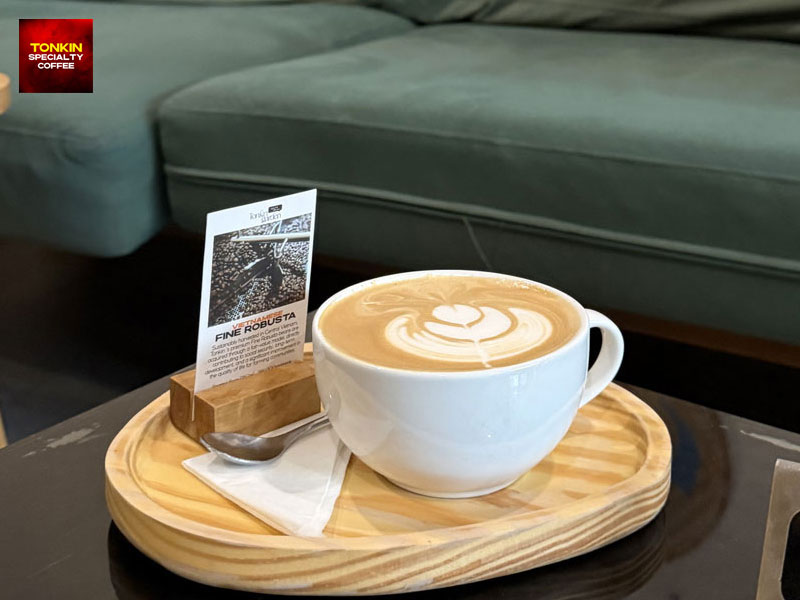
For a deeper sensory explanation of what Robusta coffee tastes like, quality is an important part of the answer. Poorly handled Robusta and carefully produced Fine Robusta can offer very different experiences.
Is Vietnamese Robusta always bitter?
No. Bitterness is part of Robusta’s natural sensory structure, but good Robusta should not automatically taste harsh.
Cherry quality, processing, roast level and brewing all influence the result. Carefully handled beans can produce natural sweetness and rounded chocolate or nutty characteristics alongside their more pronounced bitterness.
How does Robusta differ from Arabica in the cup?
The differences are easier to understand as general tendencies rather than fixed rules.
| Characteristic | Vietnamese Robusta | Arabica |
| Body | Fuller and denser | Often lighter |
| Perceived acidity | Generally lower | Often brighter |
| Common notes | Chocolate, nuts, caramel, spice | Fruit, floral, citrus |
| Intensity | Usually more pronounced | Often more aromatic |
| Caffeine | Generally higher | Generally lower |
A detailed Robusta coffee flavor profile also depends on origin, cherry ripeness, processing, roasting and brewing. Species alone cannot predict exactly how a cup will taste.
What is Fine Robusta coffee?
Fine Robusta is still Robusta, not a different coffee species. The term describes quality-focused Robusta produced with greater attention throughout farming, harvesting, processing and preparation.
This distinction matters because the old assumption that Robusta must be rough or one-dimensional overlooks what careful production can achieve.
Why can Fine Robusta taste smoother?
Good raw material gives producers and roasters a stronger starting point. Ripe cherries, careful processing and controlled roasting can help reveal clean sweetness, chocolate, roasted nuts, caramel and balanced bitterness while reducing undesirable flavors.
The result still has the body associated with Robusta, but the cup can feel more rounded and expressive.
Where does Tonkin Coffee’s Fine Robusta come from?
Tonkin sources its Fine Robusta from the Gia Lai Highlands. Farming partners Cô Hòa and Chú Diện have worked with coffee for decades, connecting each cup with the agricultural community behind the beans.
A stable relationship also supports consistency. When farmers have greater security to maintain cultivation and focus on quality, Tonkin can work with more consistent raw coffee for roasting and preparation.
Why does Fine Robusta work well in Vietnamese coffee drinks?
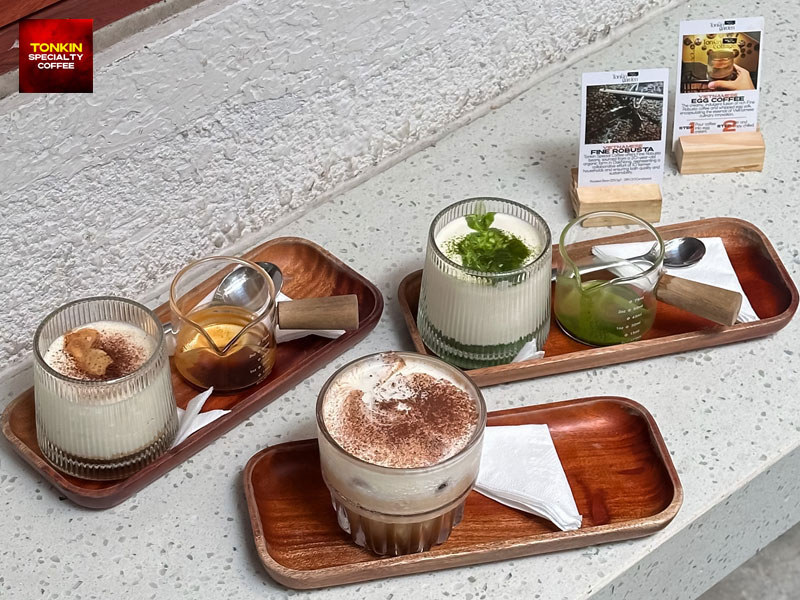
Robusta has enough body and intensity to remain recognizable when combined with sweet or creamy ingredients. That makes Fine Robusta particularly suited to egg coffee, salt coffee and Vietnamese milk coffee.
At Tonkin Coffee, Fine Robusta is the coffee base across these signature drinks rather than a separate menu drink.
Why does Robusta work well in egg coffee?
Egg coffee depends on contrast. The coffee underneath needs enough structure to balance the silky, sweet egg cream rather than disappearing beneath it.
Tonkin’s Fine Robusta brings chocolate, roasted nut and caramel characteristics that complement the airy cream. Tasting a little cream first and then reaching the coffee underneath makes that contrast especially easy to notice.
Why does Robusta pair well with condensed milk and salt coffee?
Condensed milk adds sweetness and creamy weight, while Robusta provides a bold coffee backbone. The two elements balance each other in Vietnamese milk coffee.
Salt coffee uses a different contrast. A creamy salted layer softens and rounds the coffee without making the drink simply taste salty.
How should first-time visitors try Vietnamese Robusta?
There is no single correct starting point. Choosing according to familiar flavors usually creates a more enjoyable introduction.
- Like creamy desserts? Start with egg coffee.
- Prefer sweet-and-savory contrasts? Try salt coffee.
- Enjoy sweet, rich coffee? Vietnamese milk coffee is approachable.
- Prefer a clearer coffee taste? Choose a preparation with fewer creamy ingredients.
The goal is not to prove that one style is the most authentic. Each drink reveals a different side of the same coffee base.
Where can travelers taste Fine Robusta in central Ho Chi Minh City?
Tonkin Coffee offers four café experiences in central Ho Chi Minh City, making Fine Robusta easy to include in a sightseeing route.
Which Tonkin Coffee café suits a Ben Thanh Market route?
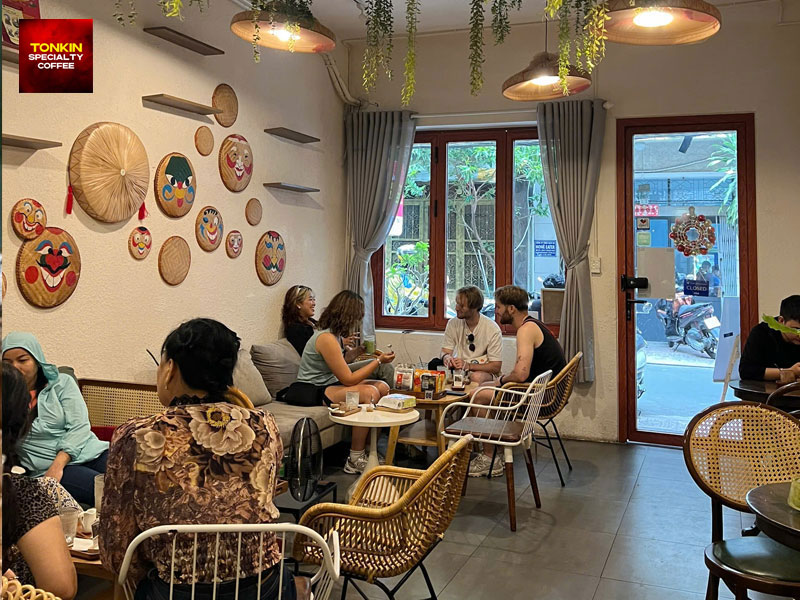
Tonkin Specialty Coffee, at 91 Ly Tu Trong Street, is convenient for Ben Thanh Market and Independence Palace. The hidden upstairs space features Vietnamese folk masks, traditional paintings and woven decorative details.
Where can visitors enjoy Robusta in a quiet garden?
Tonkin Garden Cafe, at 135/50 Tran Hung Dao Street, offers a slower setting inside a quiet alley. A leafy courtyard and nearly century-old Saigon house create a peaceful break from the surrounding city center.
Where can visitors combine egg coffee with bánh mì?
Tonkin Egg Coffee, at 1 Le Thi Rieng Street, sits opposite Huynh Hoa bánh mì. Guests can bring a Huynh Hoa bánh mì inside without an additional fee, with seating, air conditioning and free Wi-Fi available.
Which Tonkin Coffee café is near Nguyen Hue and Bitexco?
Tonkin Egg Coffee & Herbal Tea, at 27 Ngo Duc Ke Street, fits naturally into a route around Nguyen Hue Walking Street, Bitexco, Dong Khoi and the Saigon River. Its quiet upstairs setting inside a historic 1917 villa offers a different pace from the busy streets outside.
Visit Tonkin Coffee Today!
Tonkin Specialty Coffee
- Add: 91 Ly Tu Trong St., Ben Thanh Ward, Ho Chi Minh City, Vietnam.
- Hotline: 086 799 0125
Tonkin Garden Cafe
- Add: 135/50 Tran Hung Dao St., Cau Ong Lanh Ward, Ho Chi Minh City, Vietnam.
- Hotline: 087 992 4691
Tonkin Egg Coffee
- Add: 1 Le Thi Rieng St., Ben Thanh Ward, Ho Chi Minh City, Vietnam.
- Hotline: 0815 841 909
Tonkin Egg Coffee & Herbal Tea
- Add: 27 Ngo Duc Ke St., Sai Gon Ward, Ho Chi Minh City, Vietnam
Nestled in the heart of Ho Chi Minh City, Tonkin Coffee is one of the best coffee shops to experience authentic Vietnamese flavors. From the iconic egg coffee and refreshing coconut coffee to bold Vietnamese coffee and the unique salt coffee, every sip is a journey into tradition. For non-coffee lovers, our Vietnamese matcha offers a gentle alternative. Pair your drink with a freshly baked banh mi or a buttery croissant, and savor the true taste of Vietnam in a setting inspired by folk culture and Indochine charm.