

 한국어
 中文 (中国)
 日本語
 中文 (台灣)
Vietnam’s coffee landscape extends far beyond the Robusta beans for which the country is widely known. To understand Is Son La known for Arabica coffee?, look to this mountainous province in northwestern Vietnam, where Arabica has developed a strong regional identity. Tonkin Coffee explores Sơn La’s growing conditions, flavor characteristics, and place within Vietnam’s diverse coffee culture.
Why Is Son La Famous for Arabica Coffee in Vietnam?
Son La stands out because Arabica has become an important agricultural product and part of the province’s regional identity. Coffee farms spread across mountainous landscapes, while decades of cultivation have built farming knowledge around local conditions.
The province is now considered one of Vietnam’s significant Arabica-producing areas. Son La coffee also received geographical indication protection in 2017, reinforcing the connection between the product and its place of origin.
Where Is Son La Located?
Son La is in northwestern Vietnam, a mountainous region quite different from the Central Highlands coffee belt farther south.
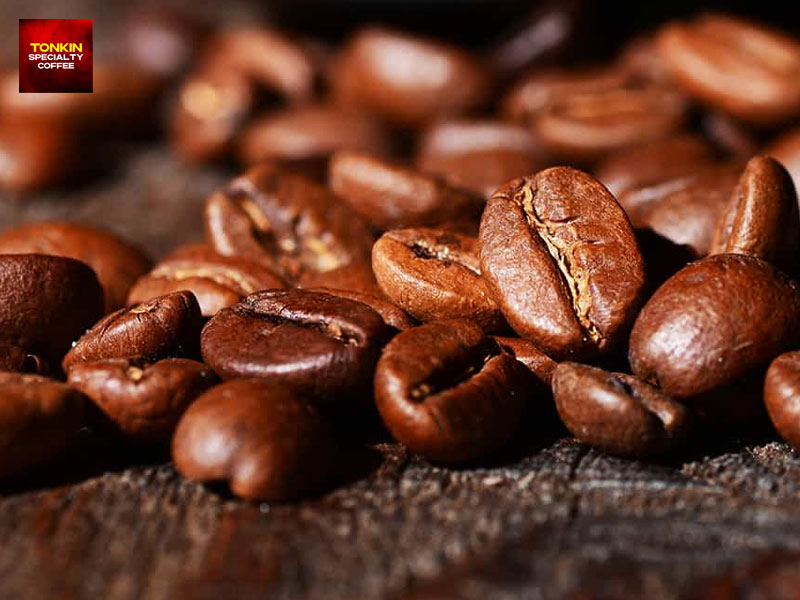
Several areas are closely connected with local coffee cultivation, including:
- Mai Son
- Thuan Chau
- Son La City
- surrounding mountain farming areas
This geography matters for visitors trying to understand Vietnamese coffee. The country does not have one uniform coffee landscape; different regions have developed different relationships with Arabica and Robusta.
How Important Is Arabica to Son La?
Arabica plays a major role in Son La’s coffee economy. The province has tens of thousands of hectares devoted to coffee cultivation, creating a substantial farming and processing network.
Geographical indication protection is another useful sign of Son La’s established identity. However, a regional name alone does not guarantee that every coffee will taste identical or meet the same quality level. Farm management, cherry selection and processing remain important.
What Makes Son La Suitable for Growing Arabica Coffee?
Son La combines mountainous terrain, relatively cool conditions and established farming knowledge that can support Arabica cultivation. Altitude contributes to the growing environment, but altitude alone does not determine whether a coffee will be good.
Coffee-growing areas within the province can differ in elevation, exposure, rainfall and farm practices. Rather than treating Son La as a single uniform terroir, it is more useful to see the province as a collection of growing environments sharing a broader regional identity.
How Do Mountain Conditions Affect Arabica?
Arabica generally performs well in cooler environments than Robusta. Son La’s mountain landscapes therefore provide conditions that can suit Arabica production.
Seasonal weather also influences flowering, cherry development, harvesting and drying. These natural conditions only begin the quality chain; farmers still need to manage the trees and harvest cherries at suitable maturity.
Vietnam’s geography becomes even clearer when Son La is compared with southern origins. Understanding why Vietnam’s Central Highlands are ideal for coffee reveals how different climates and elevations support another major part of the country’s coffee industry.
Why Do Harvesting and Processing Matter?
A famous origin cannot compensate for poorly handled coffee. Cherry ripeness, harvesting, processing, drying and storage can all change what eventually reaches the cup.
Washed processing may emphasize clarity and acidity, while natural processing can bring greater fruit character, sweetness or body. Neither method automatically produces better coffee; careful execution matters more than the name of the process.
What Does Son La Arabica Coffee Taste Like?
Son La Arabica can show fruity aromas, natural sweetness, gentle acidity and a clean finish. Depending on the farm, processing and roast, chocolate, nutty or caramel-like characteristics may also appear.
These descriptions should be treated as flavor directions rather than a fixed recipe. Two coffees grown within Son La can taste noticeably different after different harvesting, fermentation, roasting or brewing choices.
Is Son La Arabica Fruity or Chocolatey?
Son La Arabica can express both characteristics. A lighter roast may make fruit, floral aromas and acidity easier to notice, while another roast or processing style may emphasize sweetness, chocolate or nuts.
The same principle helps answer broader origin questions such as Is Da Lat coffee Arabica?. Da Lat and the surrounding Lam Dong highlands have a strong Arabica association, but a geographic label does not mean every coffee from an area has one species, roast style or flavor profile.
Is Son La Arabica Strong or Mild?
“Strong” can describe several different things: bitterness, roast intensity, body, caffeine or simply how concentrated a brew tastes. Son La Arabica may feel brighter and lighter in body than many Robusta coffees, but preparation can significantly change that impression.
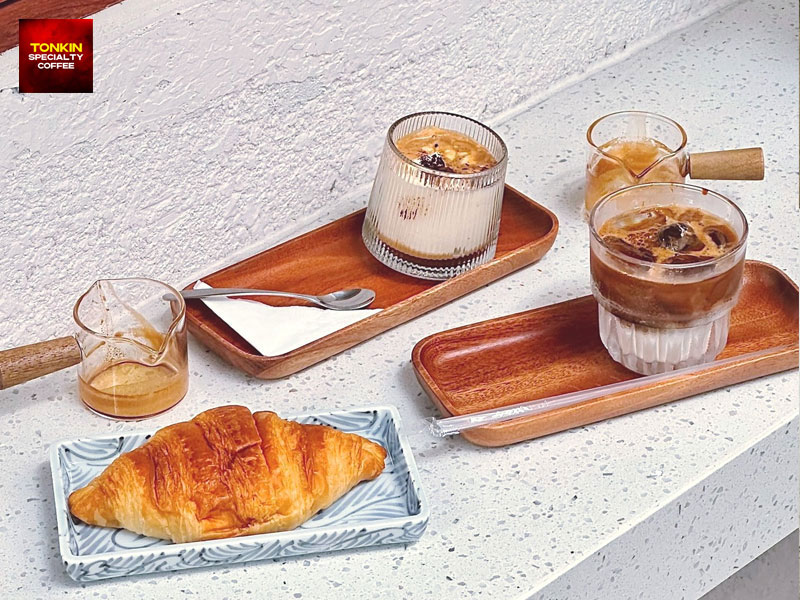
For a first tasting, try the coffee without too many added ingredients. Pay attention to aroma, sweetness, acidity, body and finish instead of trying to decide immediately whether the coffee is strong.
How Is Son La Arabica Different From Vietnamese Robusta?
Son La Arabica and Vietnamese Robusta represent two distinct parts of the country’s coffee landscape. Arabica is often more aromatic and acidity-forward, while carefully produced Robusta can deliver greater body, deeper chocolate notes and a more pronounced coffee intensity.
| Characteristic | Son La Arabica | Gia Lai Fine Robusta |
| Species | Arabica | Robusta |
| Region | Northwestern Vietnam | Central Highlands |
| Typical direction | Fruity, sweet, aromatic | Chocolate, caramel, roasted nuts |
| Body | Often light to medium | Often fuller |
| Perceived acidity | Often more noticeable | Usually lower |
| Experience | Bright and nuanced | Bold and rounded |
These are general tendencies rather than rules.
Is Arabica Always Better Than Robusta?
No. Species alone cannot determine quality. Carefully harvested and processed Robusta can be clean, sweet and balanced, while poorly handled Arabica can contain undesirable flavors.
Vietnam makes this distinction especially interesting because several coffee species and regional identities coexist. A broader guide to the types of coffee beans grown in Vietnam helps place Arabica, Robusta and smaller-volume Liberica-related coffees within the same national coffee landscape.
How Does Dak Lak Fit Into Vietnam’s Coffee Map?
Dak Lak provides a useful contrast because the province is strongly associated with Robusta, particularly around Buon Ma Thuot. The answer to What coffee is grown in Dak Lak? is therefore closely connected with Vietnam’s Robusta story rather than the Arabica identity associated with Son La.
Neither origin needs to be ranked above the other. Son La, Dak Lak, Gia Lai and Lam Dong help show how geography, species and farming traditions create different coffee experiences across Vietnam.
Where Can Travelers Experience Another Side of Vietnamese Coffee?
After learning about Son La Arabica, tasting quality Robusta is a practical way to understand how diverse Vietnamese coffee can be. Tonkin Coffee uses Fine Robusta sourced from Gia Lai in the Central Highlands as the coffee foundation for its signature drinks.
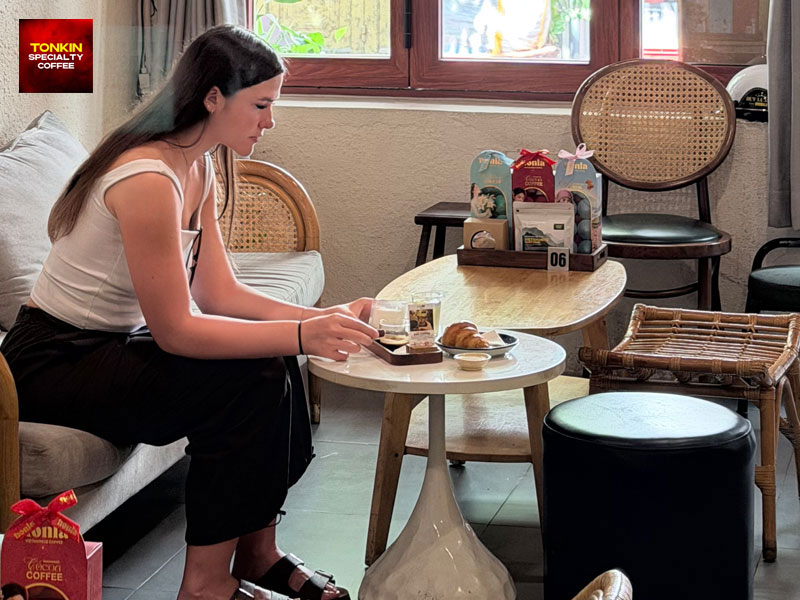
Gia Lai Fine Robusta can bring dark chocolate, roasted nuts, caramel, subtle spice and a full body. Tonkin also maintains direct connections with farmers, linking sourcing consistency with the quality and character expected in the final cup.
Which Vietnamese Coffee Drinks Are Worth Trying?
At Tonkin, Fine Robusta is a coffee base rather than a separate menu drink. The bold profile works particularly well in several Vietnamese favorites:
- Egg coffee pairs the coffee with a fresh, silky egg cream made with eggs, honey, sugar and a small amount of rum.
- Salt coffee combines a creamy salted layer with the deeper coffee underneath.
- Vietnamese milk coffee balances the full-bodied coffee with condensed milk.
For anyone asking What is Vietnamese coffee?, these drinks demonstrate why the answer cannot be reduced to one bean or one brewing method. Vietnamese coffee is shaped by beans, preparation, ingredients and the culture surrounding the cup.
Which Tonkin Coffee Location Fits a Ho Chi Minh City Itinerary?
Tonkin Coffee has four cafés in central Ho Chi Minh City, each offering a different setting for experiencing Vietnamese coffee. Choosing by sightseeing route is often easier than crossing the city for a specific branch.
Which Café Is Convenient Near Ben Thanh Market?
Tonkin Specialty Coffee – 91 Ly Tu Trong St., Ben Thanh Ward
The discreet entrance leads upstairs to an intimate space decorated with Vietnamese folk masks, traditional paintings and woven bamboo details. The location fits naturally between Ben Thanh Market, Independence Palace and the Central Post Office area.
Where Can You Slow Down in a Quiet Garden?
Tonkin Garden Cafe – 135/50 Tran Hung Dao St., Cau Ong Lanh Ward
Set inside a quiet alley, the café combines a leafy garden with a nearly century-old modernist house. The calmer setting works well when the day needs a longer break rather than another quick sightseeing stop.
Where Can You Pair Banh Mi With Egg Coffee?
Tonkin Egg Coffee – 1 Le Thi Rieng St., Ben Thanh Ward
The café sits close to Huynh Hoa bánh mì. Guests can bring Huynh Hoa bánh mì inside without an additional fee and enjoy seating, air conditioning and Wi-Fi alongside coffee.
Which Café Is Near Nguyen Hue and Bitexco?
Tonkin Egg Coffee & Herbal Tea – 27 Ngo Duc Ke St., Sai Gon Ward
Located in a 1917 villa, this café is convenient for Nguyen Hue Walking Street, Bitexco, Saigon Opera House and the Saigon River. The historic upstairs setting creates a quieter contrast to the busy streets outside.
Discover More Than One Side of Vietnamese Coffee
Son La Arabica tells an important part of Vietnam’s coffee story through mountain cultivation, aromatic character and gentle acidity. Gia Lai Fine Robusta reveals another side through fuller body, chocolate depth and rounded sweetness.
For a traveler, tasting both is more meaningful than deciding which species is “better.” Exploring different origins, beans and preparations makes Vietnamese coffee easier to understand, and a stop at Tonkin Coffee offers a practical way to experience how quality Robusta becomes part of contemporary Vietnamese coffee culture.
Visit Tonkin Coffee Today!
Tonkin Specialty Coffee
- Add: 91 Ly Tu Trong St., Ben Thanh Ward, Ho Chi Minh City, Vietnam.
- Hotline: 086 799 0125
Tonkin Garden Cafe
- Add: 135/50 Tran Hung Dao St., Cau Ong Lanh Ward, Ho Chi Minh City, Vietnam.
- Hotline: 087 992 4691
Tonkin Egg Coffee
- Add: 1 Le Thi Rieng St., Ben Thanh Ward, Ho Chi Minh City, Vietnam.
- Hotline: 0815 841 909
Tonkin Egg Coffee & Herbal Tea
- Add: 27 Ngo Duc Ke St., Sai Gon Ward, Ho Chi Minh City, Vietnam
Nestled in the heart of Ho Chi Minh City, Tonkin Coffee is one of the best coffee shops to experience authentic Vietnamese flavors. From the iconic egg coffee and refreshing coconut coffee to bold Vietnamese coffee and the unique salt coffee, every sip is a journey into tradition. For non-coffee lovers, our Vietnamese matcha offers a gentle alternative. Pair your drink with a freshly baked banh mi or a buttery croissant, and savor the true taste of Vietnam in a setting inspired by folk culture and Indochine charm.