
 한국어
 中文 (中国)
 日本語
 中文 (台灣)
Vietnam’s coffee map becomes more interesting when you look beyond the country name and explore individual growing regions. Understanding what coffee is grown in Dak Lak starts with Robusta, the bean most closely connected with the province and Buon Ma Thuot. From there, comparing origins such as Dak Lak and Gia Lai reveals how farming, processing and preparation can give Vietnamese coffee remarkably different expressions.
Which coffee bean is Dak Lak best known for?
Robusta, or Coffea canephora, is the coffee most strongly associated with Dak Lak. Decades of cultivation have created extensive farming knowledge, production infrastructure and a regional identity closely connected with this resilient, full-bodied coffee species.
Dak Lak forms part of Vietnam’s Central Highlands, alongside important coffee-producing areas such as Gia Lai and Lam Dong. Within this broader landscape, Dak Lak has become particularly recognizable for Robusta cultivation.
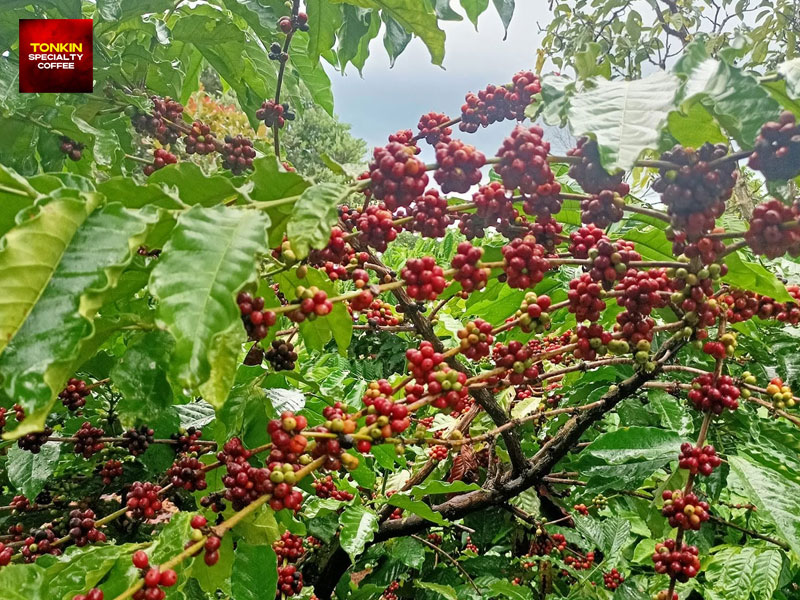
For anyone wondering where is coffee grown in Vietnam, looking at individual provinces is more useful than treating the country as one uniform growing area. Different locations have their own elevations, farming histories and production patterns.
Why is Robusta so important in Dak Lak?
Robusta has become deeply embedded in Dak Lak through both growing conditions and generations of agricultural experience. Farmers understand the seasonal demands of the crop, while established processing and trading networks have developed around coffee production.
This history matters as much as the bean itself. Why are Vietnam’s Central Highlands ideal for coffee? The answer involves climate, seasonal rainfall, highland landscapes and agricultural soils, but decades of accumulated farming knowledge are equally important in turning those conditions into a dependable crop.
Is all Dak Lak coffee the same?
No. “Dak Lak Robusta” identifies an origin and species, not a guaranteed flavor profile or quality level.
Two farms in the same province may make different decisions about tree care, cherry maturity, harvesting and post-harvest handling. Later, processing, storage and roasting create even more variation.
Origin narrows the map; it does not write the entire tasting note.
Is Arabica also grown in Dak Lak?
Dak Lak is overwhelmingly associated with Robusta rather than Arabica. Arabica has a much smaller presence, while higher and cooler Vietnamese growing areas are generally more strongly associated with commercial Arabica cultivation.
That does not make Dak Lak’s coffee landscape one-dimensional. Coffee diversity can exist within a single species because farms, harvests and processing methods are not identical.
For a broader view of what types of coffee beans are grown in Vietnam, the national picture includes Robusta and Arabica as the major names, alongside smaller quantities of less common coffee types.
Does Robusta dominance mean less flavor diversity?
Not at all. Think of the journey as several layers:
Robusta – farm – cherry selection – processing – roasting – brewing – cup
Changing one layer can influence the final experience. A carefully handled Robusta does not need to taste like a generic dark, bitter coffee, just as the word Arabica alone cannot guarantee quality.
Why is Buon Ma Thuot closely associated with Vietnamese coffee?
Buon Ma Thuot, the capital of Dak Lak Province, is one of the most recognizable geographic names in Vietnamese coffee. The city sits within a major Robusta-producing region and has developed a strong cultural and commercial association with coffee.
For visitors, understanding the name is useful when reading café menus, coffee packaging or origin descriptions. “Buon Ma Thuot coffee” is geographic information rather than the name of one specific drink or brewing method.
Is Buon Ma Thuot Vietnam’s only important coffee area?
No. Vietnam’s coffee geography stretches well beyond one city or province. Gia Lai, Dak Lak and Lam Dong are all important parts of the Central Highlands coffee landscape, while coffee is also cultivated in other regions of the country.
Each origin deserves to be understood on its own terms. A famous province may tell you where a bean began its journey, but the farm and everything that happens after harvest still matter.
Why should visitors recognize coffee origins?
Knowing a few origin names makes ordering Vietnamese coffee more interesting. Instead of seeing only “strong Vietnamese coffee,” you can begin to distinguish country, growing region, province, species and preparation.
That turns an origin name from marketing text into useful information about the cup in front of you.
What does Dak Lak Robusta taste like?
There is no single flavor that every Dak Lak Robusta must have. Depending on farming, processing and roasting, coffee from the province may show cocoa, dark chocolate, roasted nut, caramel, earthy or spicy characteristics alongside the fuller body commonly associated with Robusta.
The final cup can vary considerably. One coffee may emphasize clean cocoa and nutty characteristics, while another may be roasted toward a much darker and more bitter profile.
Why can two Dak Lak coffees taste completely different?
Coffee flavor is built through many stages. Cherry maturity at harvest changes the raw material, processing influences how that material develops, and roasting can either preserve or transform characteristics already present in the bean.
The same principle explains why Vietnamese coffee beans taste different across cafés and regions. Geography matters, but geography never works alone.
Does stronger Dak Lak coffee mean better coffee?
No. Strength, bitterness, body and quality describe different things.
A very dark roast may taste intense, but intensity does not prove that the original green coffee was better. Likewise, Robusta can have a full body and noticeable bitterness while still showing sweetness, balance and a clean finish when quality and preparation are carefully managed.
How can you read a Vietnamese coffee origin label?
Read the label in layers rather than expecting one word to explain the whole cup. Province and species are useful starting points, while processing and roast information can provide additional clues when available.
| Label information | What it tells you |
| Vietnam | Country of origin |
| Central Highlands | Broad growing region |
| Dak Lak | Province |
| Buon Ma Thuot | More specific geographic identity |
| Robusta | Coffee species |
| Fine Robusta | Quality-focused approach to Robusta |
| Natural / Washed | Processing information when specified |
| Light / Medium / Dark | General roast direction when specified |
A detailed label does not automatically guarantee a good coffee, but clearer information makes the origin easier to understand.
How is Dak Lak coffee different from Gia Lai coffee?
Dak Lak and Gia Lai are neighboring parts of the wider Central Highlands coffee landscape, and both have strong connections with Robusta. The province name alone, however, cannot determine which coffee is better.
Farm management, harvest quality, processing, storage, roasting and brewing all influence the result. A carefully handled Gia Lai coffee may be more expressive than a poorly handled Dak Lak coffee, while an excellent Dak Lak lot can easily reverse that comparison.
Why does Tonkin focus on Gia Lai Fine Robusta?
Tonkin’s choice reflects a specific sourcing relationship rather than a claim that Gia Lai is inherently superior to Dak Lak. The brand sources quality Fine Robusta from Gia Lai and maintains direct connections with farmers behind that coffee.
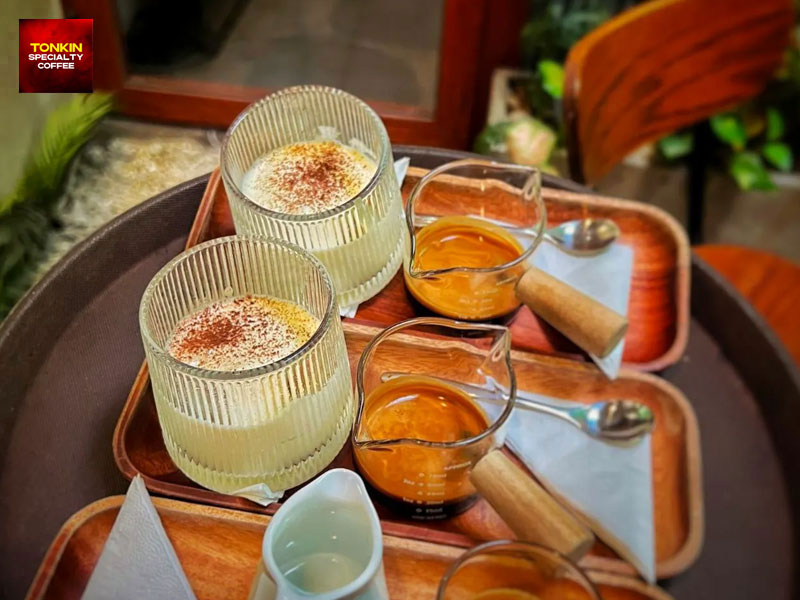
The resulting coffee provides a foundation of dark chocolate, roasted nuts, caramel, subtle spice and full body. Tonkin uses Fine Robusta as the coffee base across signature drinks rather than presenting Fine Robusta as a separate menu item.
Which Tonkin drinks reveal the character of Robusta?
Egg coffee, salt coffee and Vietnamese milk coffee each show a different interaction between a bold coffee base and other flavors. Trying one of these drinks is an approachable way to explore Robusta without turning a café visit into a technical tasting session.
| Drink | What to notice |
| Egg coffee | Airy cream against a bold coffee base |
| Salt coffee | Creamy sweetness with a subtle savory contrast |
| Vietnamese milk coffee | Condensed-milk sweetness supported by full-bodied coffee |
You do not need professional tasting vocabulary. Notice the aroma first, then the body, sweetness, bitterness and finish.
Where can you experience Gia Lai Fine Robusta with Tonkin?
Tonkin serves its Gia Lai Fine Robusta across four cafés in central Ho Chi Minh City. Rather than crossing the city just for coffee, choose the location that fits naturally into the sightseeing route you already have planned.
| Café | Address | Easy to combine with |
| Tonkin Specialty Coffee | 91 Ly Tu Trong St., Ben Thanh Ward | Ben Thanh Market, Independence Palace |
| Tonkin Garden Cafe | 135/50 Tran Hung Dao St., Cau Ong Lanh Ward | A quiet, longer café break |
| Tonkin Egg Coffee | 1 Le Thi Rieng St., Ben Thanh Ward | Huynh Hoa bánh mì, Tao Dan |
| Tonkin Egg Coffee & Herbal Tea | 27 Ngo Duc Ke St., Sai Gon Ward | Nguyen Hue, Bitexco, Saigon River |
Which Tonkin café fits your sightseeing route?
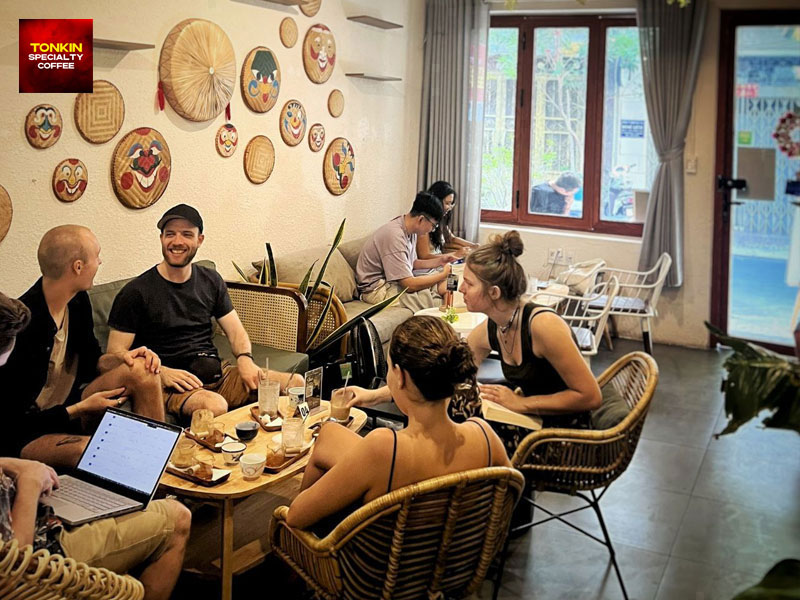
Choose Tonkin Specialty Coffee around Ben Thanh Market for its hidden upstairs setting, Vietnamese folk masks, woven bamboo details and traditional artwork. Tonkin Garden Cafe offers a slower experience in a quiet alley, with greenery surrounding a nearly century-old modernist Saigon house.
Near Huynh Hoa, Tonkin Egg Coffee lets customers bring bánh mì inside without an additional fee and provides seating, air conditioning and Wi-Fi. Around Nguyen Hue, Tonkin Egg Coffee & Herbal Tea occupies a quiet upstairs space in a historic 1917 villa within easy reach of Bitexco, the Saigon Opera House, Bach Dang and the Saigon River.
From Dak Lak to Gia Lai, discover Vietnam through coffee origin
Dak Lak answers an important question about Vietnamese coffee: Robusta is the province’s defining crop, and Buon Ma Thuot sits at the heart of that regional identity. But recognizing the province name should be the beginning of understanding a coffee rather than the end.
Once you start noticing origin, farm, bean, processing, roasting and preparation, Vietnamese coffee becomes far more varied than the familiar idea of a single strong, dark cup.
At Tonkin Coffee, that journey takes a different Central Highlands route through Gia Lai Fine Robusta. Visit the café that fits your Ho Chi Minh City itinerary, taste the coffee with its origin in mind, and a simple café break becomes an opportunity to understand another layer of Vietnam’s coffee landscape.
Visit Tonkin Coffee Today!
Tonkin Specialty Coffee
- Add: 91 Ly Tu Trong St., Ben Thanh Ward, Ho Chi Minh City, Vietnam.
- Hotline: 086 799 0125
Tonkin Garden Cafe
- Add: 135/50 Tran Hung Dao St., Cau Ong Lanh Ward, Ho Chi Minh City, Vietnam.
- Hotline: 087 992 4691
Tonkin Egg Coffee
- Add: 1 Le Thi Rieng St., Ben Thanh Ward, Ho Chi Minh City, Vietnam.
- Hotline: 0815 841 909
Tonkin Egg Coffee & Herbal Tea
- Add: 27 Ngo Duc Ke St., Sai Gon Ward, Ho Chi Minh City, Vietnam
Nestled in the heart of Ho Chi Minh City, Tonkin Coffee is one of the best coffee shops to experience authentic Vietnamese flavors. From the iconic egg coffee and refreshing coconut coffee to bold Vietnamese coffee and the unique salt coffee, every sip is a journey into tradition. For non-coffee lovers, our Vietnamese matcha offers a gentle alternative. Pair your drink with a freshly baked banh mi or a buttery croissant, and savor the true taste of Vietnam in a setting inspired by folk culture and Indochine charm.