

 한국어
 中文 (中国)
 日本語
 中文 (台灣)
Coffee quality begins long before the beans reach a roaster or café. Understanding why Vietnam’s Central Highlands are ideal for coffee means looking at the region’s highland conditions, red basalt soils and seasonal climate, as well as the experienced farmers who work with the land year after year. For Tonkin Coffee, direct relationships with farmers in Gia Lai help connect that agricultural foundation with greater stability and consistency from farm to cup.
What makes Vietnam’s Central Highlands suitable for coffee growing?
The Central Highlands form Vietnam’s most important coffee-growing landscape, with provinces such as Gia Lai, Dak Lak and Lam Dong contributing different growing conditions. Rather than one uniform environment, the region contains variations in elevation, rainfall, temperature and farm practices.
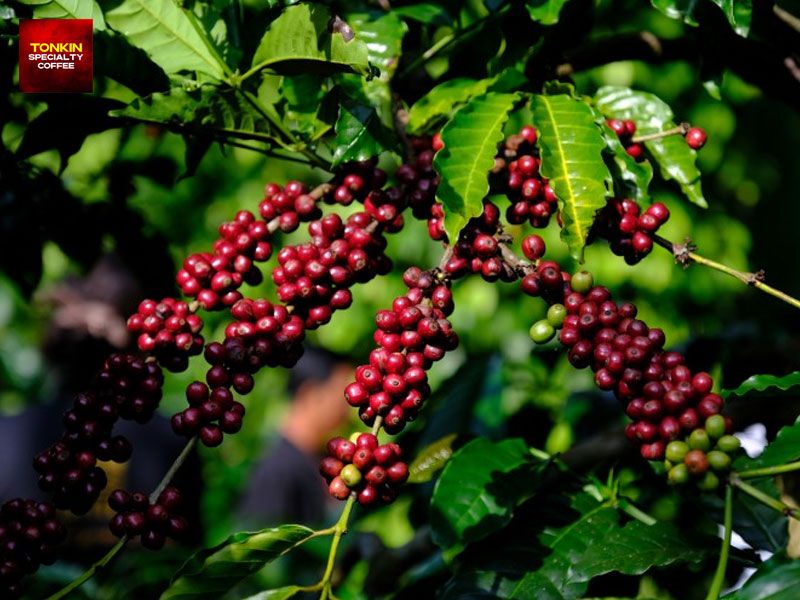
For visitors, understanding these differences makes Vietnamese coffee easier to appreciate. A cup is shaped by a combination of origin, climate, soil, variety, farming, processing and preparation, rather than by one famous region or bean alone.
How do elevation and highland conditions influence coffee?
Elevation can influence temperature, plant development and growing conditions, but there is no single altitude that represents the entire Central Highlands. Farms across Gia Lai, Dak Lak and Lam Dong occupy different landscapes and therefore do not produce identical coffee.
The broader question of where coffee is grown in Vietnam also extends beyond the Central Highlands. Understanding the geography helps explain why Vietnamese coffee should not be treated as one uniform flavor profile.
Why are red basalt soils important to coffee farms?
Red basalt soils are strongly associated with agricultural landscapes across parts of the Central Highlands. Their characteristics can support perennial crops when combined with appropriate rainfall, drainage, farm management and local growing conditions.
Soil, however, should not be treated as a shortcut for predicting flavor. Chocolate, caramel or nutty notes do not simply come from red soil. Genetics, cherry maturity, processing, roasting and brewing all influence what eventually reaches the cup.
How do wet and dry seasons support the coffee cycle?
Seasonal changes help shape the rhythm of coffee farming. Rain supports plant development, while changes between wetter and drier periods influence flowering, cherry development, harvesting and drying.
Weather is never perfectly predictable. Farmers therefore need experience to respond to changing rainfall, temperature and harvest conditions rather than simply relying on the region’s reputation.
Why is Gia Lai important to the Central Highlands coffee story?
Gia Lai combines established coffee-growing landscapes with generations of practical farming knowledge. For Tonkin, the province is particularly important because quality Fine Robusta sourced from Gia Lai forms the coffee foundation for its signature drinks.
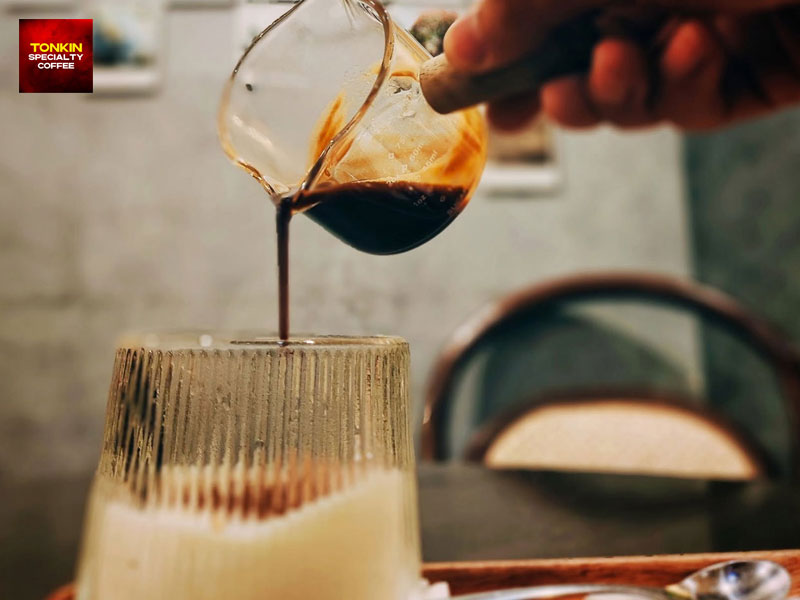
Questions such as What types of coffee beans are grown in Vietnam? help explain the country’s wider diversity, but Tonkin’s story is deliberately more focused: a specific origin, long-term farmer relationships and a consistent Fine Robusta foundation.
What does coffee farming in Gia Lai involve?
A coffee farm is more than an origin printed on packaging. Farming households spend months caring for trees, responding to weather, managing harvest timing and making decisions that influence the condition of the cherries leaving the farm.
Those decisions also happen against changing market conditions. Coffee prices, labor requirements, agricultural inputs and unpredictable seasons can all affect how confidently a farming household can plan beyond the next harvest.
Why does farmer knowledge matter as much as geography?
Good growing conditions create potential; experienced farmers help translate that potential into coffee quality. Understanding the trees and seasons can influence farm maintenance, harvest timing, cherry selection and consistency.
The Central Highlands provide a strong agricultural foundation, but the hands working with that landscape season after season remain essential. This human element is easy to miss when coffee is described only through altitude, soil and climate.
Why does coffee quality depend on more than terroir?
Terroir sets the possibilities, but quality develops through a chain of decisions from tree to cup. Even coffee from a suitable growing area can become inconsistent when harvesting, processing, drying, storage or roasting varies significantly.
The main stages include:
- Farm management – caring for coffee trees through changing seasons.
- Cherry maturity – deciding when fruit is ready for harvest.
- Harvesting – managing the quality of the raw material collected.
- Post-harvest handling – processing and drying coffee carefully.
- Storage and transport – protecting green coffee before roasting.
- Roasting and brewing – turning agricultural quality into flavor.
This complete journey also helps answer why Vietnamese coffee beans can taste different, even when two coffees come from the same broad region.
Why does brewing consistency begin before the café?
Brewing consistency begins with sourcing consistency. A barista can control grind size, dose and extraction, but repeatable brewing becomes more difficult when the raw coffee changes dramatically from one supply cycle to another.
Closer relationships with origin can create greater continuity. Farmers understand what the buyer values, while the coffee business develops a clearer understanding of the crop it receives.
Who are the hands behind Tonkin’s Gia Lai coffee?
Behind Tonkin’s Gia Lai Fine Robusta are local coffee farmers whose knowledge has developed through decades of working with the land. Their experience comes from repeated harvests, changing weather and changing market conditions.
Tonkin purchases the farming household’s harvest directly as part of a long-term partnership. The aim is to create greater income stability while maintaining a closer relationship with the people responsible for the coffee at its origin.
How can a stable farmer relationship support coffee quality?
Greater predictability gives farming households more room to plan, continue their craft and reinvest in quality-focused practices. For Tonkin, continuity also creates a clearer connection with the raw material used from one harvest to another.
The relationship can be understood simply:
| At the farm | Along the coffee chain | In the cup |
| More predictable purchasing | Better continuity of raw material | More consistent character |
| Greater ability to plan | Clearer origin relationship | Better traceability |
| More room to reinvest | Stronger quality focus | More repeatable experience |
A stable cup does not begin at the espresso machine. A stable cup begins with a stable relationship.
What does “Brewing Stability” mean from farm to cup?
Brewing Stability connects farmer security with coffee consistency. A dependable purchasing relationship can reduce uncertainty for farming households, while continuity at origin can support more predictable raw material for roasting and brewing.
This is the idea behind The Hands Behind Your Cup. Direct sourcing becomes meaningful when the relationship continues beyond a single transaction and creates value for both the people growing coffee and the people eventually drinking it.
Vietnamese coffee diversity remains much broader than Fine Robusta. A reader curious about unusual bean forms can explore Vietnamese Culi, or peaberry coffee, while cà phê mít and its connection with Liberica reveals another lesser-known part of the country’s coffee landscape. These topics answer What is cà phê Culi (peaberry coffee)? and What is cà phê mít (Liberica coffee)? without reducing Vietnamese coffee to Robusta alone.
How does Gia Lai Fine Robusta reach a Tonkin cup?
Tonkin uses Gia Lai Fine Robusta as the coffee base across its signature drinks. Fine Robusta is not a separate coffee species or a standalone menu drink; the term reflects a quality-focused approach to Robusta.
The coffee can bring dark chocolate, roasted nuts, caramel, subtle spice and a full body. Those characteristics provide enough structure to remain noticeable when paired with airy egg cream, a creamy salted layer or condensed milk.
For a visitor, that creates a simple farm-to-cup connection:
Gia Lai Highlands – coffee farmers – Fine Robusta – roasting and brewing – signature Vietnamese coffee in Ho Chi Minh City.
Where can travelers experience the Gia Lai-to-Saigon journey?
Tonkin serves its coffee across four locations in central Ho Chi Minh City, allowing visitors to fit a coffee stop naturally into an existing sightseeing route.
| Café | Address | Nearby route |
| Tonkin Specialty Coffee | 91 Ly Tu Trong St., Ben Thanh Ward | Ben Thanh Market, Independence Palace |
| Tonkin Garden Cafe | 135/50 Tran Hung Dao St., Cau Ong Lanh Ward | A slower central-city break |
| Tonkin Egg Coffee | 1 Le Thi Rieng St., Ben Thanh Ward | Huynh Hoa, Tao Dan |
| Tonkin Egg Coffee & Herbal Tea | 27 Ngo Duc Ke St., Sai Gon Ward | Nguyen Hue, Bitexco, Saigon River |
Which café fits a Ben Thanh sightseeing route?
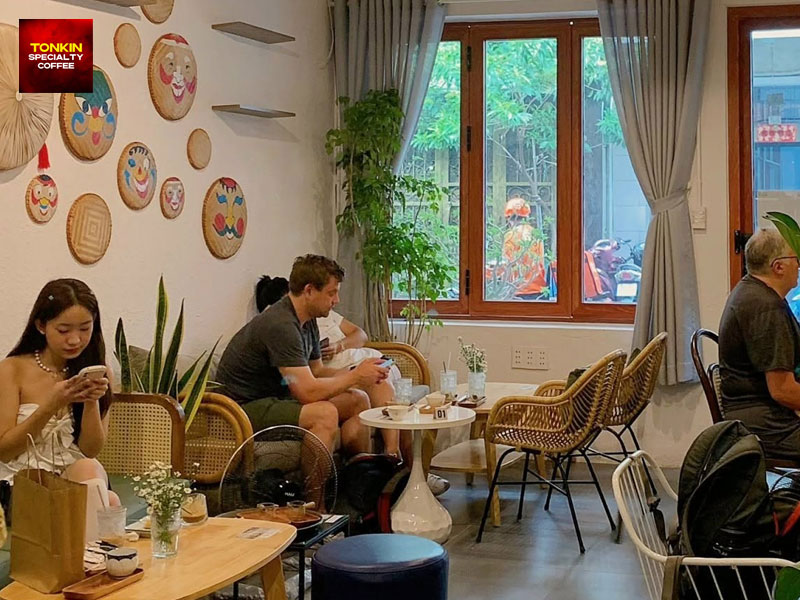
Tonkin Specialty Coffee is a natural stop between Ben Thanh Market and Independence Palace. A discreet entrance leads upstairs to an intimate space decorated with Vietnamese folk masks, woven bamboo elements and traditional artwork.
Where can you slow down in a garden setting?
Tonkin Garden Cafe sits inside a quiet alley on Tran Hung Dao Street. Its garden and nearly century-old modernist Saigon house offer a calmer setting for visitors who want more than a quick coffee stop.
Where can you pair bánh mì with coffee?
Tonkin Egg Coffee sits close to Huynh Hoa. Customers can bring Huynh Hoa bánh mì inside without an additional fee and enjoy it with coffee in an air-conditioned space with seating and Wi-Fi before continuing toward Tao Dan.
Which café fits a Nguyen Hue and Saigon River walk?
Tonkin Egg Coffee & Herbal Tea occupies an upstairs space in a historic 1917 villa on Ngo Duc Ke Street. Nguyen Hue Walking Street, Bitexco, the Saigon Opera House, Bach Dang and the Saigon River all fit naturally into the same walking route.
From the Gia Lai Highlands to your cup at Tonkin
Vietnam’s Central Highlands provide excellent conditions for coffee, but altitude, rainfall and basalt soil tell only part of the story. Farmers who understand the land across changing seasons help turn natural potential into coffee that can be handled with greater care and consistency.
At Tonkin Coffee, the connection with Gia Lai brings that story into central Ho Chi Minh City. Choose the café that fits your sightseeing route, taste the coffee with its origin in mind, and the journey becomes clearer: highland landscape, experienced hands, stable relationships and, finally, the cup on your table.
Visit Tonkin Coffee Today!
Tonkin Specialty Coffee
- Add: 91 Ly Tu Trong St., Ben Thanh Ward, Ho Chi Minh City, Vietnam.
- Hotline: 086 799 0125
Tonkin Garden Cafe
- Add: 135/50 Tran Hung Dao St., Cau Ong Lanh Ward, Ho Chi Minh City, Vietnam.
- Hotline: 087 992 4691
Tonkin Egg Coffee
- Add: 1 Le Thi Rieng St., Ben Thanh Ward, Ho Chi Minh City, Vietnam.
- Hotline: 0815 841 909
Tonkin Egg Coffee & Herbal Tea
- Add: 27 Ngo Duc Ke St., Sai Gon Ward, Ho Chi Minh City, Vietnam

Nestled in the heart of Ho Chi Minh City, Tonkin Coffee is one of the best coffee shops to experience authentic Vietnamese flavors. From the iconic egg coffee and refreshing coconut coffee to bold Vietnamese coffee and the unique salt coffee, every sip is a journey into tradition. For non-coffee lovers, our Vietnamese matcha offers a gentle alternative. Pair your drink with a freshly baked banh mi or a buttery croissant, and savor the true taste of Vietnam in a setting inspired by folk culture and Indochine charm.