
 한국어
 中文 (中国)
 日本語
 中文 (台灣)
Vietnam is widely known for Robusta, but the country’s coffee landscape extends far beyond high-volume production. For anyone wondering does Vietnam produce specialty coffee?, the answer is yes, with quality-focused Arabica and Fine Robusta showing greater attention to origin, farming, processing and flavor. At Tonkin Coffee, Fine Robusta from the Gia Lai Highlands brings that quality story into signature Vietnamese coffee drinks served in central Ho Chi Minh City.
What does specialty coffee mean in Vietnam?
Specialty coffee in Vietnam is best understood through quality, origin, traceability and sensory character rather than the name of a bean alone. Good raw material is only the beginning; harvesting, processing, roasting and preparation all influence the final result.
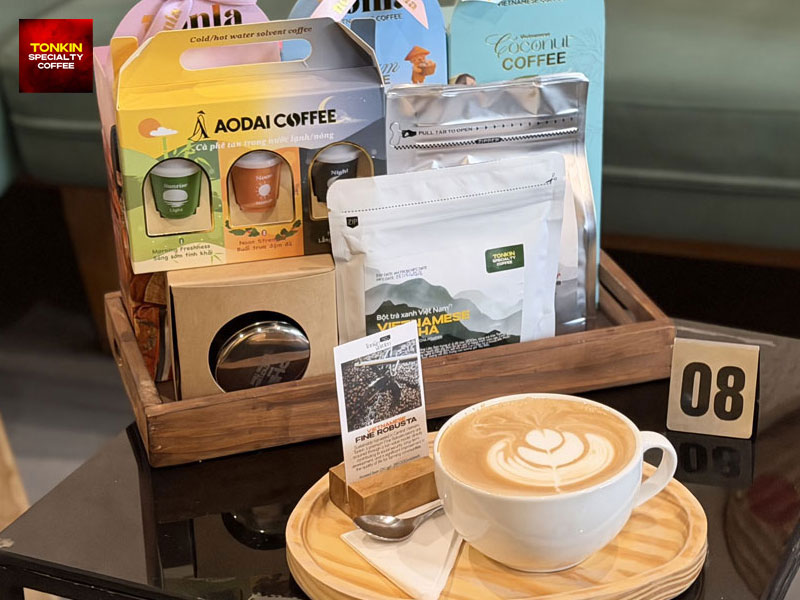
This distinction is especially useful in Vietnam because the country’s coffee identity has long been closely associated with Robusta.
Does specialty coffee have to be Arabica?
No. Arabica is strongly associated with the global specialty coffee movement, but species alone does not guarantee quality.
A wider look at the types of coffee beans grown in Vietnam shows why quality should be separated from species. Vietnam produces Arabica as well as Robusta, and both can vary significantly according to origin, farming, processing and roasting.
Can Robusta be quality-focused coffee?
Yes. Fine Robusta demonstrates how careful production can reveal a much broader sensory range than the old image of Robusta as simply strong and bitter.
Understanding what Vietnamese Robusta coffee is also helps explain this distinction. Fine Robusta remains Robusta rather than becoming a new species; the difference comes from greater attention to coffee quality from farm to cup.
Where is higher-quality coffee grown in Vietnam?
Vietnam’s coffee-growing landscape extends across several regions, with the Central Highlands playing an especially important role. Local climate, elevation and farming conditions vary, so coffee from one province should not automatically be assumed to have the same profile or quality as coffee from another.
| Growing area | Coffee associated with the area | Why the area matters |
| Gia Lai | Robusta / Fine Robusta | Established Central Highlands coffee farming |
| Dak Lak | Robusta | Major Vietnamese coffee-producing area |
| Lam Dong | Arabica and Robusta | Diverse highland growing conditions |
| Higher-elevation areas | Arabica | Cooler conditions can favor Arabica |
Why do the Central Highlands matter for quality coffee?
The Central Highlands combine extensive coffee cultivation with generations of farming experience. Provinces including Gia Lai, Dak Lak and Lam Dong have developed distinct relationships with coffee production.
The region is particularly important when considering the common question whether Vietnamese coffee is Robusta or Arabica. Both are grown in Vietnam, but Robusta has a much larger presence and remains central to the country’s coffee identity.
Can quality-focused coffee come from Gia Lai?
Yes. Gia Lai is strongly associated with Robusta, and careful cultivation and processing can produce beans with full body, chocolate, roasted nuts, caramel, subtle spice and natural sweetness.
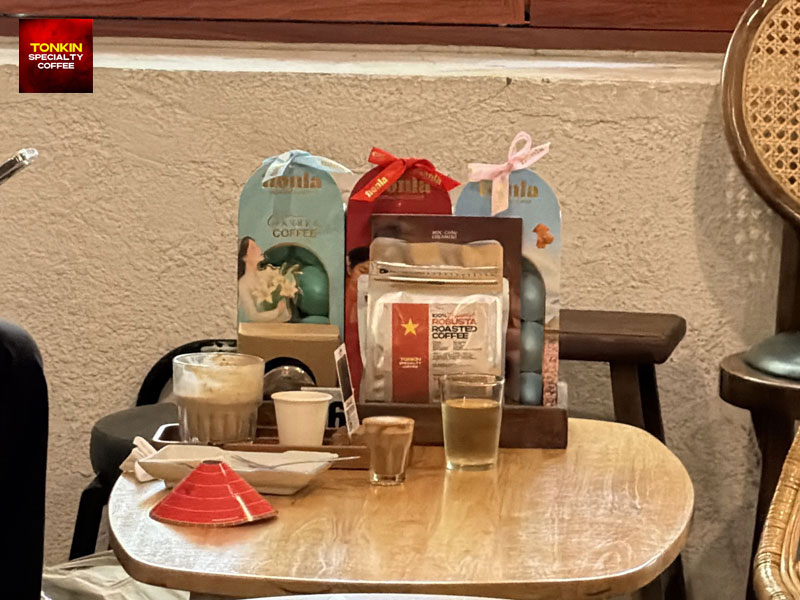
The province is also the source of the Fine Robusta used by Tonkin Coffee, creating a direct connection between a Central Highlands farming area and coffee served in central Ho Chi Minh City.
How does Vietnamese coffee move toward higher quality?
Higher-quality coffee begins long before roasting. Healthy cherries, appropriate ripeness, careful harvesting, controlled processing, drying and traceable sourcing can all affect the quality of green coffee.
Why do harvesting and processing matter?
Coffee cherries do not all reach ideal ripeness at exactly the same moment. Greater attention to the raw fruit gives producers a stronger foundation for developing clean and desirable flavors.
Processing and drying then influence characteristics such as sweetness, aroma, body, acidity and cup cleanliness. No single processing method guarantees superior coffee; careful execution matters more than the method name alone.
Why does coffee traceability matter?
Traceability helps connect flavor with specific information: where the coffee was grown, who cultivated the crop and how the beans moved through production.
For travelers, this information can make coffee less abstract. A cup becomes connected with an actual growing region and farming community rather than simply carrying a broad “Vietnamese coffee” label.
What does high-quality Vietnamese coffee taste like?
There is no single flavor profile for quality Vietnamese coffee. Arabica can offer brighter acidity and fruit, floral or sweet aromas, while carefully produced Fine Robusta can deliver chocolate, roasted nuts, caramel and spice with a dense but smooth body.
Can high-quality Vietnamese coffee still taste strong?
Yes. Strong flavor does not automatically indicate low quality.
Coffee intensity, bitterness, body, roast level and caffeine describe different characteristics. A Fine Robusta can feel powerful while remaining balanced, smooth and clearly flavored.
How can visitors recognize good Robusta?
A practical guide to how to tell if Robusta coffee is high quality begins with more than bitterness. Look for clean flavors, identifiable sweetness, a pleasant body and a finish without distracting defects or harshness.
Origin information is another useful clue. A café that can explain where its beans come from and how the coffee is prepared gives visitors more information for judging the cup themselves.
How can travelers identify quality-focused coffee in Vietnam?
Visitors do not need professional cupping knowledge to make a more informed choice. A few straightforward questions can reveal much more than the price or appearance of a café.
Before ordering, consider:
- Origin: Is a growing region identified?
- Bean: Is the coffee Robusta, Arabica or a blend?
- Producer: Is information about the farmer or farming community available?
- Flavor: Can the coffee be described beyond simply “strong”?
- Preparation: Does the final drink preserve a recognizable coffee character?
An expensive or beautifully designed café does not automatically serve better coffee. Likewise, quality coffee does not have to be consumed black; egg coffee, salt coffee and Vietnamese milk coffee can still express the structure of a carefully selected coffee base.
How does Tonkin Coffee approach Fine Robusta?
Tonkin Coffee uses Fine Robusta from the Gia Lai Highlands, connecting coffee served in central Ho Chi Minh City with the farming household behind the beans.
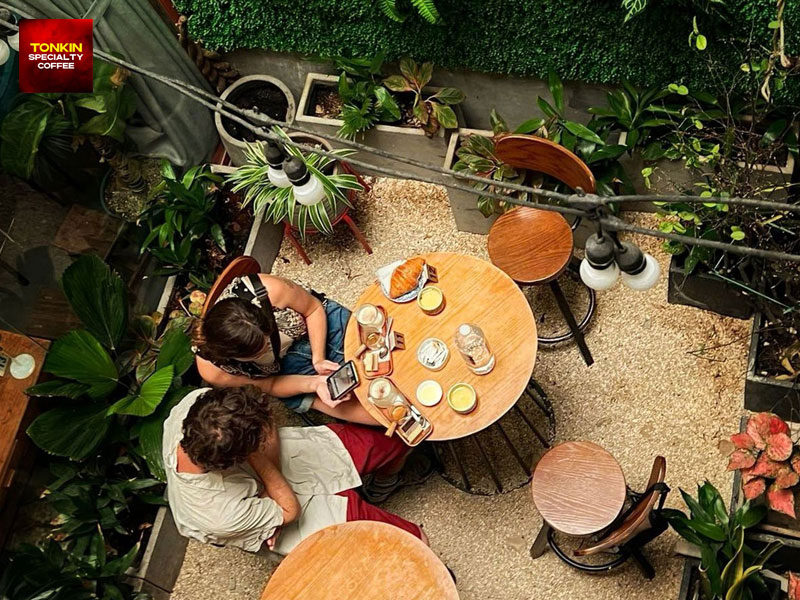
Tonkin works with Cô Hòa and Chú Diện, who have farmed coffee for decades. Tonkin purchases their harvest directly as part of a long-term relationship intended to provide greater income stability while supporting continuity in coffee farming and quality.
Why does a stable farmer relationship matter?
Direct purchasing does not automatically make coffee high quality. However, a stable relationship can create better conditions for farmers and roasters to work consistently toward quality.
Greater predictability can support continued investment in cultivation, while a consistent supply relationship gives Tonkin a clearer understanding of the raw coffee behind its drinks.
How does Tonkin use Fine Robusta?
Fine Robusta is the coffee base rather than a separate menu drink at Tonkin Coffee. Its dark chocolate, roasted-nut, caramel and subtle spice characteristics provide the foundation for signature drinks including egg coffee, salt coffee and Vietnamese milk coffee.
The full body is particularly useful in creamy preparations because the coffee remains noticeable rather than disappearing beneath other ingredients.
Where can travelers experience Fine Robusta in central Ho Chi Minh City?
For visitors deciding where to try Fine Robusta coffee in Ho Chi Minh City, Tonkin Coffee offers four city-center locations that can be matched with different sightseeing routes.
Which Tonkin Coffee café fits a Ben Thanh route?
Tonkin Specialty Coffee, at 91 Ly Tu Trong Street, is convenient for Ben Thanh Market and Independence Palace. The discreet entrance leads upstairs to a café featuring Vietnamese folk masks, traditional paintings and woven decorative details.
Which Tonkin Coffee café offers a quieter setting?
Tonkin Garden Cafe, at 135/50 Tran Hung Dao Street, combines a leafy courtyard with a nearly century-old Saigon house. The quiet alley setting suits a slower break from the surrounding city center.
Where can visitors pair egg coffee with bánh mì?
Tonkin Egg Coffee, at 1 Le Thi Rieng Street, sits opposite Huynh Hoa bánh mì. Guests can bring Huynh Hoa bánh mì inside without an additional fee, with seating, air conditioning and free Wi-Fi available.
Which café fits a Nguyen Hue walking route?
Tonkin Egg Coffee & Herbal Tea, at 27 Ngo Duc Ke Street, is convenient for Nguyen Hue Walking Street, Bitexco, Dong Khoi and the Saigon River. The quiet upstairs café occupies a historic 1917 villa and also serves herbal tea.
Visit Tonkin Coffee Today!
Tonkin Specialty Coffee
- Add: 91 Ly Tu Trong St., Ben Thanh Ward, Ho Chi Minh City, Vietnam.
- Hotline: 086 799 0125
Tonkin Garden Cafe
- Add: 135/50 Tran Hung Dao St., Cau Ong Lanh Ward, Ho Chi Minh City, Vietnam.
- Hotline: 087 992 4691
Tonkin Egg Coffee
- Add: 1 Le Thi Rieng St., Ben Thanh Ward, Ho Chi Minh City, Vietnam.
- Hotline: 0815 841 909
Tonkin Egg Coffee & Herbal Tea
- Add: 27 Ngo Duc Ke St., Sai Gon Ward, Ho Chi Minh City, Vietnam
Nestled in the heart of Ho Chi Minh City, Tonkin Coffee is one of the best coffee shops to experience authentic Vietnamese flavors. From the iconic egg coffee and refreshing coconut coffee to bold Vietnamese coffee and the unique salt coffee, every sip is a journey into tradition. For non-coffee lovers, our Vietnamese matcha offers a gentle alternative. Pair your drink with a freshly baked banh mi or a buttery croissant, and savor the true taste of Vietnam in a setting inspired by folk culture and Indochine charm.