



At Tonkin Coffee, two cold Vietnamese favorites offer very different experiences. The comparison between coconut coffee vs Vietnamese iced coffee comes down to more than sweetness: one is creamy, tropical and smooth, while the other is bold, refreshing and clearly coffee-forward. Understanding their texture, intensity and ideal drinking occasion can help first-time visitors choose the cup that best matches their taste.
What Is the Main Difference Between Coconut Coffee and Vietnamese Iced Coffee?
The main difference is the ingredient used to soften the coffee.
Coconut coffee combines Vietnamese coffee with coconut milk, coconut cream or a blended coconut mixture. This creates a smooth aroma, fuller body and tropical finish.
Vietnamese iced coffee may be served black over ice or mixed with condensed milk as cà phê sữa đá. Ice and milk adjust its intensity, but the roasted coffee remains easier to identify.
| Comparison point | Coconut coffee | Vietnamese iced coffee |
| Main character | Creamy and tropical | Bold and roasted |
| Texture | Thick and smooth | Fluid and easy to sip |
| Coffee intensity | Softer on the palate | More immediate |
| Sweetness | Rounded and creamy | Direct and milk-like |
| Best moment | A leisurely café break | A quick energizing stop |
How Do Coconut Coffee and Vietnamese Iced Coffee Taste Different?
Coconut coffee usually begins with a gentle coconut aroma before the roasted coffee appears underneath. Its creamy body softens sharper edges and creates a gradual transition from tropical sweetness to a deeper coffee finish.

A more detailed explanation of what does Vietnamese coconut coffee taste like shows how coconut aroma, roasted notes and creaminess can appear in different stages of the same sip.
Vietnamese iced coffee places coffee closer to the center of the experience. A black iced version can taste bold, slightly bitter and clean. Condensed milk adds caramel-like sweetness and a silky texture, but the coffee remains clear.
Neither drink has one fixed flavor. Bean selection, roast level, coffee concentration and the amount of milk or coconut mixture can all change the balance.
Which Drink Has a Creamier and More Satisfying Texture?
Coconut coffee is usually the creamier choice. Coconut milk or cream adds body, while blending or shaking can make the drink feel similar to a light frozen dessert.
It is often enjoyed slowly because each sip carries both aroma and texture. The coconut component can also make strong Vietnamese coffee feel more approachable to people who usually order milk-based drinks.
Vietnamese iced coffee feels lighter. Condensed milk adds smoothness, but the drink stays fluid as the ice melts. It can therefore feel more refreshing for people who do not want the heavier mouthfeel of a blended beverage.
Latte drinkers who enjoy thick, creamy drinks may prefer coconut coffee. Those who like iced lattes but want a stronger espresso impression may feel more comfortable with Vietnamese iced coffee.
Which Drink Tastes Sweeter or More Bitter?
Coconut coffee can feel sweeter because coconut contributes aroma, richness and a naturally dessert-like impression. However, sweetness depends on the recipe rather than the name of the drink alone.
The guide is Vietnamese coconut coffee sweet or bitter explains how coffee, coconut and added sweetener balance one another. A well-made cup should still allow the roasted coffee to appear beneath the creamy layer.
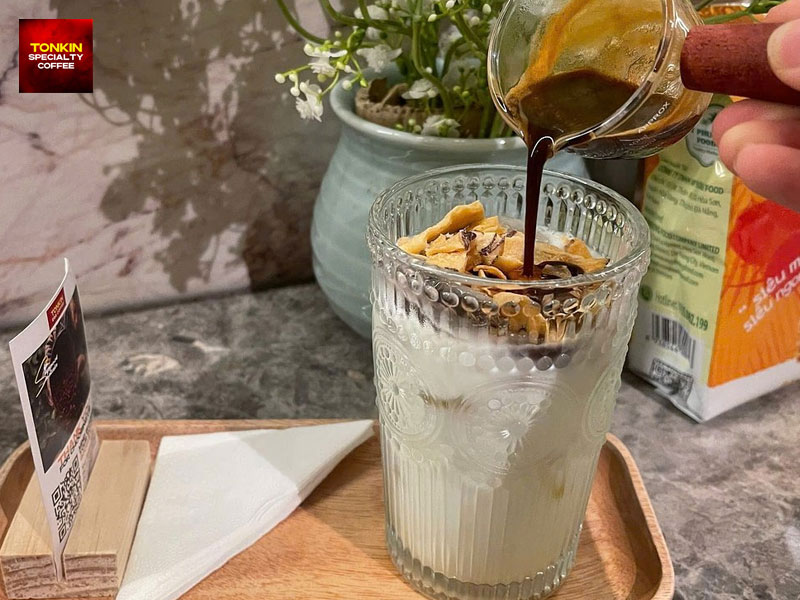
Vietnamese iced coffee with condensed milk delivers a more direct sweetness. Its coffee base may produce noticeable roasted bitterness during the first few sips, especially when the drink is concentrated. As the ice melts, the cup generally becomes softer.
Guests who prefer less sugar can ask whether sweetness can be adjusted. They should also remember that a creamy flavor does not necessarily mean the drink contains less coffee or caffeine.
Which Drink Feels Stronger and More Energizing?
Vietnamese iced coffee often feels stronger because less coconut richness stands between the palate and the coffee.
Black iced coffee offers the clearest roasted profile. Cà phê sữa đá combines similar intensity with concentrated dairy sweetness, creating a drink that feels bold but balanced.
Coconut coffee may taste gentler, but its caffeine content depends on the quantity and concentration of the coffee base. Coconut milk changes how the strength is perceived rather than removing caffeine.
Choose Vietnamese iced coffee when you want a direct coffee break before continuing a walking route. Choose coconut coffee when you want to sit down, cool off and spend more time enjoying a layered drink.
Which Coffee Works Better During Hot Weather in Ho Chi Minh City?
Both drinks suit a warm day, but they provide different types of refreshment.
Vietnamese iced coffee feels clean and immediate, particularly when served with plenty of ice. It is easy to sip quickly and works well during a busy sightseeing schedule.
Coconut coffee feels cooling through its creamy texture and tropical aroma. It can be especially satisfying after walking outdoors because it functions as both a coffee and a café treat.
The best Vietnamese coffee for hot weather ultimately depends on whether you value lightness or creaminess. A traveler moving quickly between attractions may prefer iced coffee, while someone taking a longer afternoon break may prefer coconut coffee.
Coconut coffee is also not limited to one serving temperature. The comparison Vietnamese coconut coffee hot or iced can help guests choose between a cooling tropical drink and a warmer, more comforting presentation.
Which Drink Offers a More Traditional Vietnamese Experience?
Vietnamese iced coffee is more closely connected with everyday coffee habits in Vietnam. Its combination of strong coffee, condensed milk and ice is familiar across street-side shops, local cafés and modern coffee spaces.
Coconut coffee represents a newer and more creative side of Vietnamese café culture. It combines a strong local coffee foundation with a tropical ingredient that feels especially natural in southern Vietnam.

Visitors do not need to treat authenticity as a competition. Vietnamese iced coffee demonstrates how coffee fits into daily routines, while coconut coffee shows how familiar local flavors can develop into contemporary beverages.
How Should First-Time Visitors Choose Between the Two Drinks?
Choose coconut coffee when you:
- Prefer creamy or blended beverages
- Enjoy coconut desserts and tropical aromas
- Usually avoid pronounced bitterness
- Want a slower café experience
Choose Vietnamese iced coffee when you:
- Regularly drink espresso or strong cold coffee
- Want the coffee flavor to remain prominent
- Prefer a lighter texture
- Want to try an everyday Vietnamese classic
Visitors comparing other signature drinks can read coconut coffee vs salt coffee to understand the difference between tropical creaminess and a subtle sweet-salty balance.
Another useful comparison is Coconut coffee vs egg coffee, especially for guests deciding between a refreshing coconut drink and Tonkin’s chilled, custard-like egg cream.
Which Drink Pairs Better With Vietnamese Food and Pastries?
Vietnamese iced coffee pairs naturally with breakfast foods, buttery pastries and bánh mì because its direct roasted flavor can balance rich or savory ingredients.
It works particularly well when the coffee is intended to accompany a meal rather than become the main treat.
Coconut coffee is often more satisfying with a simple pastry or a lightly salty snack. A very sweet dessert may compete with the coconut mixture, while a neutral croissant allows the drink’s tropical aroma to remain noticeable.
Choose Vietnamese iced coffee as a lively companion to food. Choose coconut coffee when the drink itself is the focus of the café break.
How Can Travelers Compare Both Drinks at Tonkin Coffee?
Travelers can order both drinks for the table and taste the Vietnamese iced coffee first. This makes it easier to identify the roasted coffee character before noticing how coconut changes the aroma, sweetness and texture.
A sip of water between the two cups can reset the palate.
At Tonkin Coffee, this side-by-side experience helps guests understand Vietnamese coffee beyond a single famous recipe. The coffee foundation connects both drinks, while their additional ingredients reveal two contrasting styles: one direct and familiar, the other creamy and tropical.
Which Drink Should You Ultimately Choose?
Choose coconut coffee when you want a smooth, aromatic and leisurely drink that softens the intensity of Vietnamese coffee.
Choose Vietnamese iced coffee when you want a bolder cup, a lighter texture and a closer connection to everyday local café culture.
There is no universal winner. The better drink is the one that matches your mood, tolerance for bitterness and preferred mouthfeel.
First-time visitors sharing drinks can order both. Vietnamese iced coffee establishes the classic foundation, while coconut coffee demonstrates how that foundation can become a modern tropical experience.
Frequently Asked Questions
Is coconut coffee stronger than Vietnamese iced coffee?
Not necessarily. Vietnamese iced coffee often tastes stronger, but caffeine depends on the amount and concentration of coffee used in each recipe.
Is coconut coffee just iced coffee with coconut milk?
Not always. Vietnamese coconut coffee often emphasizes layering, texture and balance rather than simply replacing dairy milk with coconut milk.
Can Vietnamese iced coffee be ordered without condensed milk?
Yes. Black iced coffee is served without condensed milk and provides a more direct coffee flavor.
Which drink is easier for someone who dislikes bitter coffee?
Coconut coffee is usually easier because its creamy coconut component softens perceived bitterness. A lightly sweetened Vietnamese milk coffee can also be approachable.
Visit Tonkin Coffee Today!
Tonkin Specialty Coffee
- Add: 91 Ly Tu Trong St., Ben Thanh Ward, Ho Chi Minh City, Vietnam.
- Hotline: 086 799 0125
Tonkin Garden Cafe
- Add: 135/50 Tran Hung Dao St., Cau Ong Lanh Ward, Ho Chi Minh City, Vietnam.
- Hotline: 087 992 4691
Tonkin Egg Coffee
- Add: 1 Le Thi Rieng St., Ben Thanh Ward, Ho Chi Minh City, Vietnam.
- Hotline: 0815 841 909
Tonkin Egg Coffee & Herbal Tea
- Add: 27 Ngo Duc Ke St., Sai Gon Ward, Ho Chi Minh City, Vietnam
Nestled in the heart of Ho Chi Minh City, Tonkin Specialty Coffee is one of the best coffee shops to experience authentic Vietnamese flavors. From the iconic egg coffee and refreshing coconut coffee to bold Vietnamese coffee and the unique salt coffee, every sip is a journey into tradition. For non-coffee lovers, our Vietnamese matcha offers a gentle alternative. Pair your drink with a freshly baked banh mi or a buttery croissant, and savor the true taste of Vietnam in a setting inspired by folk culture and Indochine charm.