


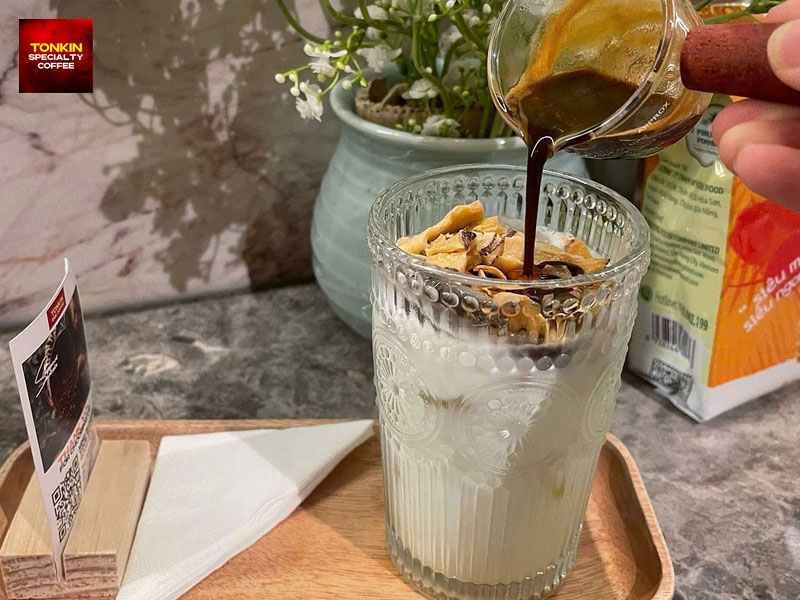
Vietnamese coconut coffee is usually mildly sweet with a gentle roasted bitterness underneath. For anyone asking is Vietnamese coconut coffee sweet or bitter, the answer depends on the coffee strength, coconut base, sweetener, and serving style. At Tonkin Coffee, espresso, creamy coconut milk, and coconut flakes create a balanced cup that feels smooth without losing its coffee depth.
Is coconut coffee usually sweeter than it is bitter?
In most café versions, sweetness is more noticeable at the beginning of the sip, while bitterness appears later and gives the drink structure.
| Flavor element | Typical intensity |
| Coconut sweetness | Mild to medium |
| Added sweetness | Mild to medium |
| Coffee bitterness | Light to moderate |
| Roasted aroma | Medium |
| Sweet aftertaste | Light |
| Bitter finish | Gentle and short |
A balanced cup should not taste sugary from start to finish. The coconut layer may create a smooth and mildly sweet first impression, but the coffee should still contribute roasted depth through the middle and finish.

A fuller explanation of what does Vietnamese coconut coffee taste like also considers aroma, creaminess, texture, temperature, and aftertaste. This article focuses specifically on the relationship between sweetness and bitterness.
Where does the sweetness come from?
Several ingredients can increase sweetness, but they do not all affect the drink in the same way.
Does coconut milk naturally taste sweet?
Coconut milk has a mild natural sweetness, although much of its sweet impression comes from its creamy texture and tropical aroma.
Its fat content rounds the coffee and reduces the perception of sharp bitterness. As a result, even unsweetened coconut milk can make coffee feel softer and slightly sweeter.
Does condensed milk make the drink much sweeter?
Condensed milk can significantly increase sweetness and body. It also adds dairy richness, making the drink denser and more dessert-like.
Not every Vietnamese coconut coffee contains condensed milk. Some cafés use sweetened coconut milk, sugar syrup, or a prepared coconut base instead.
Can coconut syrup make it overly sweet?
Yes. Coconut syrup can strengthen both sweetness and coconut aroma, but excessive syrup may create a candy-like finish.
A balanced preparation should use sweetener to connect the coconut and coffee rather than cover the roasted character completely.
Where does the bitterness come from?
The bitterness comes primarily from the coffee base. Espresso, concentrated phin coffee, and Vietnamese Robusta can all provide enough intensity to remain noticeable beneath the coconut layer.
Robusta is especially useful because it often has:
- A full body
- Dark roasted depth
- Cocoa-like notes
- Nutty character
- Moderate natural bitterness
That bitterness is not necessarily unpleasant. When properly extracted, it provides contrast and prevents the drink from becoming flat or excessively creamy.
Strong coffee and harsh coffee are not the same. Concentrated coffee creates structure, while over-extracted or burnt coffee can produce dryness and an unpleasant finish.
Which flavor appears first?
Sweetness generally appears first, while bitterness becomes clearer later.
| Stage of the sip | Likely flavor |
| Aroma | Coconut and mild sweetness |
| First contact | Creaminess and sweet coconut |
| Mid-palate | Espresso body |
| Finish | Gentle roasted bitterness |
| Aftertaste | Coconut aroma with coffee depth |
This sequence explains why the drink can initially feel soft and dessert-like while still ending with a recognizable coffee note.
The question does coconut coffee still taste like coffee depends largely on whether the espresso remains present during the mid-palate and finish. In a balanced cup, it should.
Does coconut milk remove coffee bitterness?
Coconut milk reduces the perception of bitterness, but it does not completely remove the roasted coffee flavor.
Its creamy texture softens sharpness and dryness. Natural fat also creates a rounder mouthfeel, making the coffee easier to drink without eliminating its body.
| Coconut milk changes | It does not have to remove |
| Sharpness | Roasted aroma |
| Dryness | Coffee body |
| Harsh finish | Espresso identity |
| Perceived bitterness | All coffee depth |
This is why coconut coffee can suit people who find black Vietnamese coffee too intense but still want a drink that feels coffee-based.
When does coconut coffee become too sweet?
Coconut coffee can become overly sweet when several sweet ingredients are used at once.
Common causes include:
- Too much condensed milk
- Sweetened coconut milk
- Coconut syrup
- A weak coffee base
- Heavy cream toppings
- Sweetened coconut flakes
- Too little ice in an iced version
Signs of excessive sweetness include a syrupy first sip, no roasted finish, a candy-like coconut note, and a heavy feeling after only a few sips.
Sweetness becomes a problem when it replaces the coffee structure instead of balancing it.
The ingredient choices behind this balance are explained in what is Vietnamese coconut coffee made of, including the different roles of coconut milk, coconut cream, condensed milk, ice, and toppings.
When can coconut coffee taste too bitter?
Although coconut milk normally softens the drink, coconut coffee can still become too bitter.
Possible causes include:
- Over-extracted espresso
- Burnt or excessively dark coffee
- Too much coffee relative to coconut milk
- Too little sweetener
- Thin coconut milk
- Poor integration between layers
- A hot serving with an unbalanced recipe
Excessive bitterness may create a dry finish or burnt aroma that remains long after the sip.
A good cup can be bold without being harsh. The bitterness should give the drink definition rather than dominate the coconut.
Does a strong coconut flavor make the drink sweeter?
Not necessarily. Coconut aroma, coconut richness, and sweetness are separate qualities.
A drink can smell strongly of coconut while remaining only mildly sweet. Coconut flakes may create a noticeable aroma without adding much sugar, while unsweetened coconut milk can add creaminess rather than intense sweetness.
Similarly, the question does Vietnamese coconut coffee taste strongly of coconut depends on the type of coconut ingredient, not only the sugar level.
Coconut cream may produce a stronger and richer impression, while coconut milk usually creates a lighter tropical layer.
Is hot coconut coffee sweeter or more bitter?
Hot coconut coffee can reveal both sweetness and bitterness more clearly because warmth releases aroma quickly and there is no dilution from ice.
The hot version may feel:
- Rounder
- More aromatic
- Fuller in body
- Clearer in roasted character
- More integrated in sweetness
It is not automatically more bitter. The result depends on coffee concentration and how much coconut milk or sweetener is used.
Warmth can make the coconut smell stronger while also making the espresso aroma more noticeable.
Is iced coconut coffee less bitter?
Iced coconut coffee often feels less bitter because cold temperature reduces the perception of sharpness. Melting ice also gradually lowers the drink’s concentration.
An iced version may offer:
- A cooler first sip
- Lighter body
- Softer bitterness
- Clearer refreshment
- A cleaner finish
However, iced coconut coffee can still be very sweet if it contains a heavily sweetened coconut base or excessive syrup.
This difference helps explain why people compare whether coconut coffee sweet or refreshing. A balanced iced version can provide both qualities without becoming syrupy.
Is blended coconut coffee the sweetest version?
Blended coconut coffee is often the sweetest and least bitter style.
It commonly includes coconut cream, sweetened coconut base, condensed milk, or crushed ice. The thick texture surrounds the palate and can make the coffee feel secondary.
| Serving style | Typical sweetness | Typical bitterness |
| Hot | Medium | Light to moderate |
| Iced and layered | Mild to medium | Light to moderate |
| Fully mixed iced | Medium | Light |
| Blended | Medium to high | Low to light |
These are general tendencies rather than fixed rules. A café can make any version sweeter or more coffee-forward by changing the ratios.
Is coconut coffee suitable for people who dislike bitter coffee?
Yes. Coconut coffee is often one of the more approachable Vietnamese coffee options for people who dislike sharp bitterness.
Coconut milk softens the espresso, while mild sweetness creates contrast. The drink still tastes like coffee, but it usually feels less intense than black Vietnamese coffee.
It may suit people who:
- Enjoy lattes
- Prefer creamy coffee
- Like tropical flavors
- Want a smoother introduction to Robusta
- Prefer iced drinks in warm weather
However, people who also dislike sweet drinks should ask whether condensed milk or syrup is included.
How does Tonkin Coffee balance sweetness and bitterness?
At Tonkin Coffee, Cà Phê Sữa Dừa combines espresso, creamy coconut milk, and coconut flakes.
The espresso provides roasted structure and a gentle bitter foundation. Coconut milk softens the stronger edges and creates smoothness, while coconut flakes add aroma and light texture without requiring an excessively syrupy finish.
| Tonkin Coffee component | Role in the balance |
| Espresso | Adds body and roasted bitterness |
| Coconut milk | Softens sharpness and adds mild sweetness |
| Coconut flakes | Enhances aroma and texture |
| Hot service | Highlights coffee and coconut aroma |
| Iced service | Produces a lighter, cooler finish |
This composition allows the drink to remain approachable without losing its coffee identity.
Where can visitors try Tonkin Coconut Coffee?
Tonkin Coffee serves Vietnamese-inspired drinks at four central Ho Chi Minh City locations:
- Tonkin Specialty Coffee – 91 Ly Tu Trong Street
- Tonkin Garden Cafe – 135/50 Tran Hung Dao Street
- Tonkin Egg Coffee & Herbal Tea – 27 Ngo Duc Ke Street
- Tonkin Egg Coffee – 1 Le Thi Rieng Street
Guests can choose a hot or iced serving to compare how temperature changes the perception of coconut sweetness and roasted bitterness.
The branches are convenient for routes around Ben Thanh Market, Nguyen Hue Walking Street, Bitexco Financial Tower, Tao Dan Park, and central District 1.
Visit Tonkin Coffee Today!
Tonkin Specialty Coffee
- Add: 91 Ly Tu Trong St., Ben Thanh Ward, Ho Chi Minh City, Vietnam.
- Hotline: 086 799 0125
Tonkin Garden Cafe
- Add: 135/50 Tran Hung Dao St., Cau Ong Lanh Ward, Ho Chi Minh City, Vietnam.
- Hotline: 087 992 4691
Tonkin Egg Coffee
- Add: 1 Le Thi Rieng St., Ben Thanh Ward, Ho Chi Minh City, Vietnam.
- Hotline: 0815 841 909
Tonkin Egg Coffee & Herbal Tea
- Add: 27 Ngo Duc Ke St., Sai Gon Ward, Ho Chi Minh City, Vietnam
Nestled in the heart of Ho Chi Minh City, Tonkin Specialty Coffee is one of the best coffee shops to experience authentic Vietnamese flavors. From the iconic egg coffee and refreshing coconut coffee to bold Vietnamese coffee and the unique salt coffee, every sip is a journey into tradition. For non-coffee lovers, our Vietnamese matcha offers a gentle alternative. Pair your drink with a freshly baked banh mi or a buttery croissant, and savor the true taste of Vietnam in a setting inspired by folk culture and Indochine charm.