

 한국어
 中文 (中国)
 日本語
 中文 (台灣)
Vietnam’s coffee story began long before the Central Highlands became the country’s best-known growing region. To understand Where were Vietnam’s first coffee plantations?, the journey leads back to Ninh Binh and Quang Binh in 1888. Tonkin Coffee connects this agricultural history with the present, allowing visitors in Ho Chi Minh City to experience how Vietnamese-grown beans developed into a distinctive everyday café culture.
Where were Vietnam’s earliest coffee plantations established?
The earliest formal coffee plantations are commonly associated with Ninh Binh in northern Vietnam and Quang Binh in central Vietnam. Plantations were established around 1888, marking an important shift from small-scale trials toward more organized cultivation.
Why are Ninh Binh and Quang Binh important to Vietnamese coffee history?
Ninh Binh and Quang Binh represent an early chapter that is easy to overlook today. Modern Vietnamese coffee is strongly connected with the Central Highlands, but the country’s first plantation experiments did not begin there.

Early cultivation mainly involved Arabica. Growers were still learning which Vietnamese climates and landscapes could support coffee successfully on a larger scale.
Was coffee already grown in Vietnam before 1888?
Yes. The question When was coffee introduced to Vietnam? leads back to 1857, when French missionaries brought Arabica into the country.
Early trials took place across northern and north-central areas, including Ninh Binh, Thanh Hoa, Nghe An and Ha Tinh. Cultivation later extended through parts of central Vietnam, including Quang Tri and Quang Binh.
The distinction is useful: 1857 marks the introduction and early trials, while 1888 is associated with the development of early plantations.
Why did Vietnam’s coffee cultivation move southward?
Coffee cultivation moved south as growers continued testing different climates, elevations and soils. Northern and north-central experiments helped establish the crop, but these areas did not become the main center of Vietnam’s modern coffee industry.
Why did northern Vietnam not remain the main coffee-growing region?
Early Arabica cultivation faced practical limitations. Growing conditions varied considerably, and some areas struggled to deliver the consistency and productivity required for larger commercial plantations.
Instead of abandoning coffee, growers explored other parts of the country. That movement gradually changed the geographic center of Vietnamese coffee.
Which central regions became part of the coffee journey?
Areas such as Nghe An, Quang Tri and Quang Binh became part of coffee’s gradual movement through Vietnam. These regions formed a geographic bridge between the earliest northern experiments and the later expansion into the highlands.
The route is easier to understand as a progression rather than a single relocation: northern Vietnam → central Vietnam → Central Highlands.
When did coffee reach the Central Highlands?
Coffee cultivation expanded more significantly into the Central Highlands during the early 20th century. By the 1920s, plantation development was increasing in areas such as Dak Lak.
This geographical shift would eventually reshape the entire industry. The region that began as a later chapter became the area most closely associated with Vietnamese coffee production.
Why did the Central Highlands become Vietnam’s coffee heartland?
The Central Highlands offered a combination of elevation, climate, agricultural land and growing conditions suitable for expanding coffee production. Dak Lak became especially important as cultivation increased.
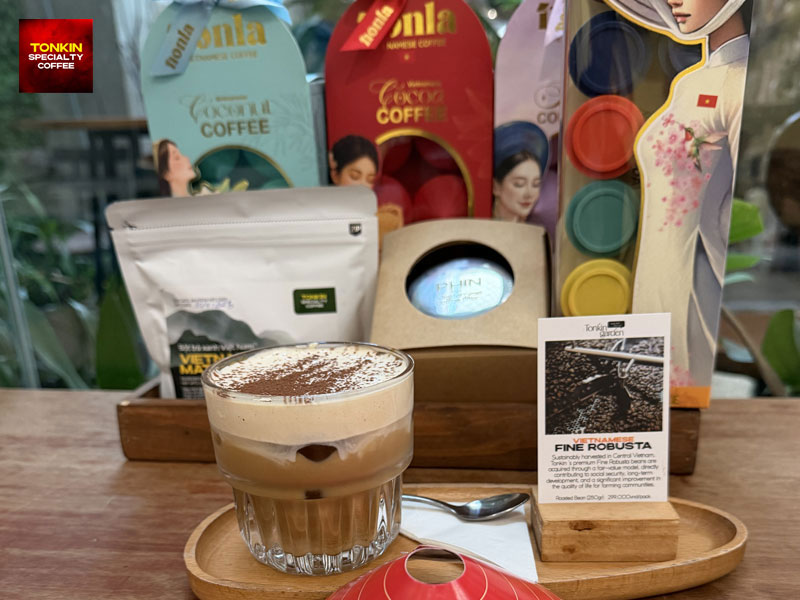
The story also coincided with a major change in the coffee being grown: Robusta gradually became much more important.
Was Robusta grown on Vietnam’s first coffee plantations?
Not originally. Early Vietnamese coffee cultivation was primarily associated with Arabica. Robusta and Excelsa were introduced later, around 1908.
This chronology explains a common misconception. Vietnam is strongly associated with Robusta today, but Robusta was not the coffee that began the country’s cultivation story.
Why did Dak Lak become closely associated with coffee?
Dak Lak developed into a major coffee-growing area as producers recognized the advantages of the Central Highlands for larger-scale cultivation. Robusta proved particularly well suited to the region and eventually became deeply connected with Vietnam’s coffee economy.
For visitors, the distinction is worth remembering: the birthplace of early Vietnamese coffee plantations and the center of modern production are not the same place.
How did Vietnam’s coffee map change over time?
Vietnamese coffee moved through several geographical stages rather than developing around one permanent production center.
| Period | Coffee geography | Why it matters |
| 1857 | Northern and north-central Vietnam | Arabica arrived and early trials began |
| 1888 | Ninh Binh and Quang Binh | Early plantations developed |
| Early 1900s | Cultivation continued southward | New growing areas were explored |
| 1920s onward | Central Highlands, especially Dak Lak | Larger plantation zones expanded |
| Modern era | Central Highlands | Region became central to coffee production |
The timeline also shows why Vietnamese coffee cannot be explained by one province or one coffee variety. Geography, agriculture and drinking habits all continued to evolve.
What did the move south mean for Vietnamese coffee in the cup?
The rise of the Central Highlands helped make Robusta a defining part of modern Vietnamese coffee. Robusta often brings a full body, noticeable bitterness and flavors that can include dark chocolate, roasted nuts, caramel and subtle spice.
Those characteristics also work naturally with ingredients that later became familiar in Vietnamese cafés, including condensed milk and creamy toppings.
What does Fine Robusta mean today?
Fine Robusta reflects greater attention to cherry quality, processing, roasting and preparation. Instead of treating Robusta simply as a strong or bitter coffee, careful production can reveal a cleaner and more balanced flavor profile.
At Tonkin Coffee, Fine Robusta serves as the coffee base for signature drinks such as egg coffee, salt coffee and Vietnamese milk coffee. Fine Robusta is part of those drinks rather than a separate beverage visitors need to order.
Did growing regions alone create Vietnamese coffee culture?
No. Growing regions explain where the beans come from, but preparation, ingredients and everyday habits explain what happened after those beans entered Vietnamese life.
A useful introduction to What is Vietnamese coffee? therefore needs to consider beans, brewing, condensed milk, creative recipes and café culture together rather than defining Vietnamese coffee through geography alone.
How did coffee become part of everyday Vietnamese culture?
Coffee arrived as an introduced crop, but Vietnamese drinkers gradually made the beverage their own. Strong coffee was paired with condensed milk, iced preparations suited the tropical climate, and newer creations added contrasting layers of creaminess, sweetness and even subtle saltiness.

That evolution helps answer Why is Vietnamese coffee unique?. Vietnamese coffee culture does not depend on one fixed recipe. The identity comes from the relationship between locally grown coffee, changing preparation methods and the social habit of spending time over a cup.
Which Vietnamese coffee drinks should first-time visitors understand?
Three drinks provide an accessible introduction:
- Vietnamese milk coffee combines bold coffee with condensed milk for a sweet, creamy finish.
- Egg coffee layers silky egg cream over a strong coffee base.
- Salt coffee uses a creamy, lightly savory layer to balance sweetness and bitterness.
Visitors do not need to choose the supposedly “most authentic” drink. Personal taste is a better starting point.
How does Vietnam’s plantation history connect with coffee in Saigon today?
The first plantations were far from Saigon, but Vietnamese coffee history did not end at the farm. Modern cafés show how agricultural coffee became part of everyday urban culture.
Tonkin Coffee has four District 1 locations, allowing visitors to connect coffee with different sides of central Ho Chi Minh City.
Which Tonkin Coffee location fits a cultural sightseeing route?
Tonkin Specialty Coffee, at 91 Ly Tu Trong Street in Ben Thanh Ward, combines coffee with Vietnamese folk-cultural details. Masks, woven bamboo objects and traditional artwork shape the intimate upstairs space.
The location works naturally with routes around Ben Thanh, Independence Palace and other central landmarks.
Where can visitors experience a quieter side of Saigon?
Tonkin Garden Cafe, at 135/50 Tran Hung Dao Street, offers a different rhythm. A quiet alley, leafy garden and nearly century-old house create a slower setting away from the busiest central streets.
The atmosphere suits visitors who want a longer café break rather than a quick stop between attractions.
Which Tonkin Coffee location works with a Saigon food stop?
Tonkin Egg Coffee, at 1 Le Thi Rieng Street, sits opposite the well-known Huynh Hoa bánh mì shop. Visitors can bring Huynh Hoa bánh mì inside and enjoy the food with coffee in a seated, air-conditioned space with Wi-Fi.
The combination makes the café practical for a Tao Dan or central food route.
Which location fits Nguyen Hue, Bitexco and the riverfront?
Tonkin Egg Coffee & Herbal Tea, at 27 Ngo Duc Ke Street, connects easily with Nguyen Hue Walking Street, Bitexco, Dong Khoi, the Saigon Opera House and the Saigon River.
Set upstairs in a historic 1917 villa, the café offers high ceilings, warm wood and Indochine-inspired details—a quiet contrast to modern downtown Saigon outside.
How did Vietnam move from early plantations to today’s coffee culture?
Vietnam’s early coffee plantations are generally traced to Ninh Binh and Quang Binh in 1888, but cultivation did not remain there. Coffee moved south, the Central Highlands became the industry’s heartland and Robusta grew into an important part of Vietnam’s coffee identity.
The story becomes more tangible once the beans reach the café. Across its four District 1 locations, Tonkin Coffee gives visitors different ways to connect Vietnamese coffee with folk culture, old Saigon architecture, local food and the modern downtown landscape—bringing a long agricultural journey into an everyday cup.
Visit Tonkin Coffee Today!
Tonkin Specialty Coffee
- Add: 91 Ly Tu Trong St., Ben Thanh Ward, Ho Chi Minh City, Vietnam.
- Hotline: 086 799 0125
Tonkin Garden Cafe
- Add: 135/50 Tran Hung Dao St., Cau Ong Lanh Ward, Ho Chi Minh City, Vietnam.
- Hotline: 087 992 4691
Tonkin Egg Coffee
- Add: 1 Le Thi Rieng St., Ben Thanh Ward, Ho Chi Minh City, Vietnam.
- Hotline: 0815 841 909
Tonkin Egg Coffee & Herbal Tea
- Add: 27 Ngo Duc Ke St., Sai Gon Ward, Ho Chi Minh City, Vietnam

Nestled in the heart of Ho Chi Minh City, Tonkin Coffee is one of the best coffee shops to experience authentic Vietnamese flavors. From the iconic egg coffee and refreshing coconut coffee to bold Vietnamese coffee and the unique salt coffee, every sip is a journey into tradition. For non-coffee lovers, our Vietnamese matcha offers a gentle alternative. Pair your drink with a freshly baked banh mi or a buttery croissant, and savor the true taste of Vietnam in a setting inspired by folk culture and Indochine charm.