

For decades, Robusta was associated with strong bitterness, instant coffee and inexpensive commercial blends. That reputation is changing. When people ask what is fine robusta coffee, the answer goes beyond a stronger version of everyday Robusta. Fine Robusta reflects greater attention to cherry quality, processing, sorting and roasting, allowing the bean to express a cleaner, smoother and more balanced character.
Vietnam is an important part of this evolution. At Tonkin Coffee, Fine Robusta from Gia Lai forms the foundation of several drinks, from straightforward espresso and black coffee to the brand’s signature egg coffee.
What Is Fine Robusta Coffee and What Makes It Different?
Fine Robusta is a higher-quality expression of Coffea canephora produced with close attention to cultivation, harvesting, processing and cup quality. It retains the naturally strong body and intensity associated with Robusta while reducing many of the rough characteristics commonly linked to lower-grade beans.
The word “fine” does not describe a separate coffee species. The difference comes from how carefully the coffee is produced and evaluated from farm to cup.
Fine Robusta vs Regular Robusta
Commodity Robusta is often produced primarily for consistency, volume and cost. Fine Robusta places much greater emphasis on ripe cherries, defect control, controlled processing and flavor clarity.
| Factor | Fine Robusta | Conventional Robusta |
| Harvesting | Greater focus on ripe cherries | Ripeness may vary |
| Sorting | More careful defect removal | More variable |
| Processing | Closely controlled | Often efficiency-focused |
| Flavor | Cleaner and more distinct | More straightforward |
| Bitterness | Structured and integrated | Can feel harsher |
| Body | Full and smooth | Heavy but sometimes rough |
| Typical notes | Chocolate, nuts, caramel, spice | Earthy, woody or strongly roasted |
This distinction also explains why the best coffee bean in Vietnam cannot simply be defined by choosing Arabica over Robusta. Quality depends on origin, harvesting, processing, roasting and the style of coffee the drinker wants to experience.
Is Fine Robusta a Different Species From Arabica?
No. Fine Robusta remains Coffea canephora, while Arabica belongs to Coffea arabica. The two species naturally express quality in different ways.
Arabica often emphasizes acidity, floral aromas and fruit. Fine Robusta tends to offer heavier body, deeper chocolate tones, stronger bitterness and greater intensity.
Fine Robusta therefore does not need to imitate Arabica to be considered refined.
How Is Fine Robusta Coffee Produced?
Fine Robusta quality begins long before roasting. Farmers and processors must control several stages because mistakes made during harvesting, fermentation or drying can remain noticeable in the final cup.
Why Do Ripe Cherries and Sorting Matter?
Selective harvesting helps reduce the number of underripe or damaged cherries entering the lot. Ripe fruit generally provides better sugar development and a cleaner base for processing.
After drying, careful sorting helps remove defective beans that may introduce woody, fermented or unpleasant flavors.
How Do Fermentation and Drying Affect Flavor?
Depending on the producer, Fine Robusta may be processed using natural, washed, honey or controlled fermentation methods. Fermentation can develop sweetness and aroma when carefully managed, but uncontrolled fermentation may create undesirable flavors.
Drying is equally important. Coffee needs to dry evenly and reach stable moisture levels before storage.
These steps are increasingly important within Specialty Coffee in Vietnam, where greater attention is being paid to origin, processing decisions, sensory quality and the individual character of each coffee lot.
What Does Fine Robusta Coffee Taste Like?
Fine Robusta usually remains unmistakably bold, but the experience can be far more layered than the stereotypical image of bitter Robusta.
Depending on origin, processing and roast profile, common flavors may include:
- Dark chocolate
- Cocoa
- Toasted or roasted nuts
- Caramel-like sweetness
- Warm spice
- Dried fruit in some processed lots
Its body is typically dense and full, while acidity is usually lower than in many Arabica coffees. Bitterness remains part of the profile, but in a good cup it should feel structured rather than harsh.
Is Fine Robusta Always Bitter?
Robusta naturally tends to have more bitterness than Arabica, but bitterness does not automatically mean poor quality.
Pleasant bitterness may resemble:
- Dark chocolate
- Cocoa
- Roasted nuts
- Espresso-like intensity
Unpleasant bitterness may feel burnt, woody, rubbery or overly drying.
The goal of Fine Robusta is not to remove strength but to make that strength cleaner and better balanced.
Why Does Fine Robusta Feel So Full-Bodied?
Robusta naturally tends to produce a dense mouthfeel and substantial crema. This makes it particularly suitable for espresso and concentrated coffee styles.
It also helps explain why Vietnam offers such a wide range of types of coffee in Vietnam. Strong coffee bases can remain recognizable even when paired with condensed milk, coconut, salt or egg cream.
Why Is Vietnam Important to Fine Robusta Coffee?
Vietnam has a long relationship with Robusta, particularly across the Central Highlands. For many years, much of the crop was associated with large commercial markets, but producers are increasingly showing how careful farming and processing can reveal a more refined side of the bean.
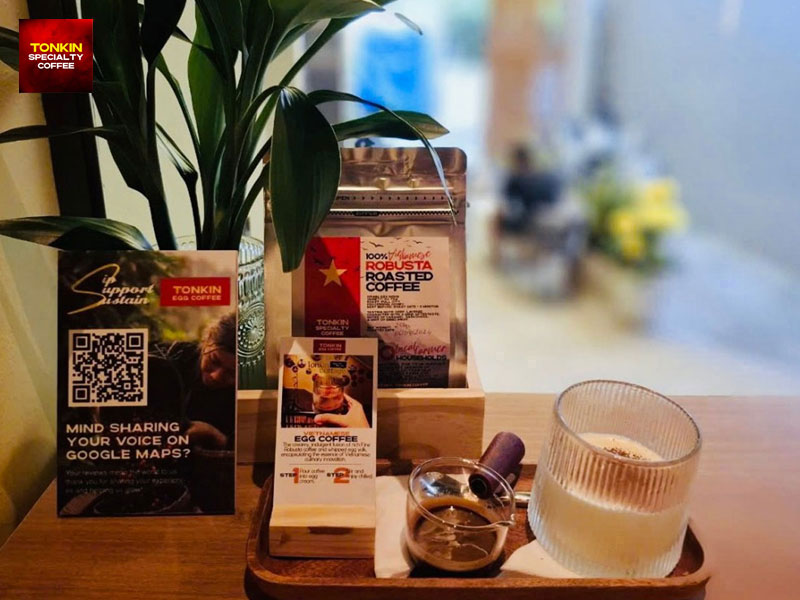
The objective is not to make Robusta taste like Arabica. Its strength, body and characteristic bitterness remain important parts of its identity.
At Tonkin Coffee, Fine Robusta from Gia Lai reflects this approach. The coffee develops a profile centered on dark chocolate, toasted nuts and a light touch of spice, with enough body to remain expressive in different brewing styles.
How Are Vietnamese Producers Changing the Image of Robusta?
Greater attention is now being placed on:
- Selective harvesting
- Controlled fermentation
- Slower and more even drying
- Lot separation
- Better defect sorting
- More precise roasting
These improvements allow producers to preserve Robusta’s natural intensity while bringing forward greater sweetness, cleanliness and flavor definition.
How Does Fine Robusta Work in Espresso, Black Coffee and Egg Coffee?
Fine Robusta is versatile because its flavor remains recognizable across both simple and richer preparations.
Why Is Fine Robusta Good for Espresso and Black Coffee?
Espresso concentrates the bean’s dense body, crema and chocolate-led character. When roasted carefully, Fine Robusta can produce a powerful shot without relying on an excessively dark or burnt profile.
Black coffee offers an even clearer way to evaluate the bean. Without milk or cream, the drinker can focus on aroma, sweetness, bitterness, body and aftertaste.
For a first tasting, try a few sips without sugar before making adjustments.
Why Does Fine Robusta Work Especially Well in Egg Coffee?
Egg coffee needs a coffee base strong enough to remain noticeable beneath rich, silky egg cream. A delicate coffee can easily disappear under the sweetness and texture.
Fine Robusta provides the structure needed to create balance.
At Tonkin, the coffee contributes dark chocolate, toasted-nut depth and a firm espresso character. The egg cream softens the intensity, while the coffee prevents the drink from becoming overly sweet.
This is why the espresso remains the foundation of the drink rather than simply serving as a bitter layer beneath the cream.
How Should First-Time Drinkers Experience Fine Robusta?
A formal cupping session is not necessary. A simple tasting sequence can reveal most of the important characteristics.
Start by smelling the coffee before drinking. Take the first sip without sugar and notice the body before focusing on bitterness. Then look for chocolate, nuts, caramel or spice and pay attention to how long the flavors remain after swallowing.
A useful sequence is:
- Espresso or black coffee
- Egg coffee
- Condensed-milk coffee or salt coffee
This makes it easier to understand how the same strong coffee character behaves with different ingredients.
For visitors exploring the city, a stop at one of Tonkin’s Cozy cafés in downtown Saigon can fit naturally between markets, museums, walking streets and riverfront attractions.
Where Can You Try Fine Robusta at Tonkin Coffee?
Tonkin Coffee has four central Ho Chi Minh City locations, each offering a slightly different atmosphere while sharing the same focus on Vietnamese coffee and Fine Robusta.
Tonkin Specialty Coffee – 91 Ly Tu Trong
This flagship location is convenient for Ben Thanh Market, Saigon Centre and the central sightseeing area. It is a good place to compare espresso, black coffee and Vietnamese signature drinks.
Tonkin Garden Cafe – 135/50 Tran Hung Dao
The Garden branch offers a quieter setting with greenery, making it suitable for a slower coffee break away from busier streets.
Tonkin Egg Coffee – 1 Le Thi Rieng
This location places egg coffee at the center of the experience and fits naturally into routes around Tao Dan Park, Ben Thanh and nearby local food streets.
Tonkin Egg Coffee & Herbal Tea – 27 Ngo Duc Ke
Located near Nguyen Hue Walking Street, Dong Khoi and Bach Dang Wharf, this branch works well when coffee becomes part of a central walking itinerary.
After several hours outdoors, choosing a café after sightseeing in Ho Chi Minh City is also a practical way to experience Fine Robusta while taking a break between attractions.
What Should You Remember About Fine Robusta Coffee?
Fine Robusta demonstrates that Robusta does not have to mean rough, burnt or purely industrial coffee. When ripe cherries, careful processing, controlled drying, sorting and thoughtful roasting come together, the bean can retain its natural intensity while developing greater sweetness, cleanliness and complexity.
Vietnamese Fine Robusta remains bold by nature. Its appeal lies in refining that strength rather than removing it.
At Tonkin Coffee, this character becomes especially clear when the same coffee is experienced as espresso, black coffee and egg coffee. The preparation changes, but the Fine Robusta remains at the center of the cup.
Visit Tonkin Coffee Today!
Tonkin Specialty Coffee
- Add: 91 Ly Tu Trong St., Ben Thanh Ward, Ho Chi Minh City, Vietnam.
- Hotline: 086 799 0125
Tonkin Garden Cafe
- Add: 135/50 Tran Hung Dao St., Cau Ong Lanh Ward, Ho Chi Minh City, Vietnam.
- Hotline: 087 992 4691
Tonkin Egg Coffee
- Add: 1 Le Thi Rieng St., Ben Thanh Ward, Ho Chi Minh City, Vietnam.
- Hotline: 0815 841 909
Tonkin Egg Coffee & Herbal Tea
- Add: 27 Ngo Duc Ke St., Sai Gon Ward, Ho Chi Minh City, Vietnam
Nestled in the heart of Ho Chi Minh City, Tonkin Specialty Coffee is one of the best coffee shops to experience authentic Vietnamese flavors. From the iconic egg coffee and refreshing coconut coffee to bold Vietnamese coffee and the unique salt coffee, every sip is a journey into tradition. For non-coffee lovers, our Vietnamese matcha offers a gentle alternative. Pair your drink with a freshly baked banh mi or a buttery croissant, and savor the true taste of Vietnam in a setting inspired by folk culture and Indochine charm.