
 한국어
 中文 (中国)
 日本語
 中文 (台灣)
Beyond Vietnam’s familiar Robusta and Arabica lies a less common coffee with a distinctive local identity. Understanding what cà phê mít (Liberica coffee) is reveals a species recognized for its vigorous trees, large leaves, unusual beans and expressive aroma. Its Vietnamese name refers to the plant’s jackfruit-like appearance, not a jackfruit ingredient or guaranteed flavor.
Why is Liberica called cà phê mít in Vietnam?
The name cà phê mít comes from the way Vietnamese growers traditionally recognize the coffee plant. Its broad leaves and vigorous tree-like growth can resemble characteristics associated with the jackfruit tree, creating an easy local name for distinguishing Liberica from other coffee plants.
This naming convention also reflects how coffee became part of everyday agricultural language in Vietnam rather than remaining defined only by botanical terminology.
Does cà phê mít contain jackfruit?
No. Cà phê mít is coffee rather than a mixture of coffee and jackfruit. The word “mít” functions as a familiar Vietnamese plant reference.
The name also does not guarantee a jackfruit flavor. Liberica can develop unusual fruit, floral, woody or spicy characteristics, but the sensory profile depends on much more than its Vietnamese nickname.
Is Liberica a separate coffee species?
Yes. Liberica belongs to Coffea liberica, making it botanically different from Arabica and Robusta.
This is different from cà phê Culi (peaberry coffee), which describes how a single rounded seed develops inside a coffee cherry rather than identifying a separate coffee species. A bean’s botanical identity and physical formation are two different concepts.
How can you recognize a Liberica coffee plant?
Liberica is distinctive before the beans ever reach a roaster. The plant can grow considerably taller than commonly managed coffee shrubs and is recognizable by its vigorous growth and large leaves.
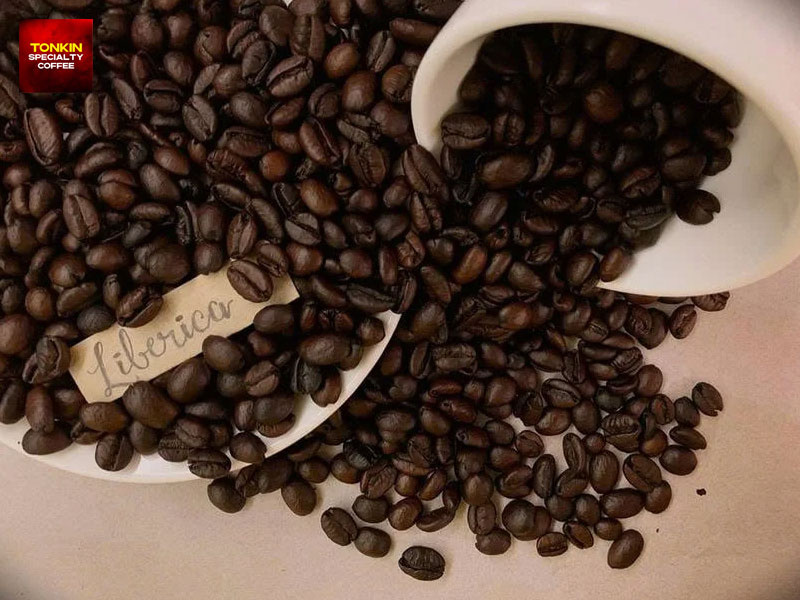
Its cherries and seeds can also appear larger than those of more familiar commercial coffees. The beans often have an irregular or asymmetrical appearance, providing another visual clue when comparing coffee types.
What do Liberica beans look like?
Liberica beans tend to be relatively large and can appear less uniformly shaped than typical Arabica or Robusta beans. However, appearance alone says little about how well a particular batch has been cultivated, processed or roasted.
This distinction matters because terms describing species, bean shape and quality are often mixed together when people first encounter Vietnamese coffee.
What does cà phê mít taste like?
Liberica can be highly aromatic and unconventional, but there is no single flavor that defines every cup. Depending on growing conditions, processing and roasting, the coffee can express fruity, floral, woody, smoky or spicy characteristics, sometimes accompanied by noticeable sweetness and body.
That unusual sensory range is part of Liberica’s appeal. Someone accustomed to chocolate-forward Robusta or brighter Arabica may find the first cup surprisingly different.
Is Liberica coffee bitter?
It can have bitterness, but bitterness is not the defining characteristic of Liberica. Roast development, extraction and raw coffee quality all influence how bitter a finished drink tastes.
Dark roasting can emphasize roasted or smoky qualities, while a different roast approach may reveal more aromatic characteristics.
Does Liberica always taste like jackfruit?
No. The Vietnamese name should not be interpreted as a tasting note.
Fruit character can occur in coffee, but Liberica from different farms and processed in different ways can produce very different cups. Cà phê mít describes the coffee plant, not a required jackfruit flavor.
How is Liberica different from Robusta and Arabica?
Liberica represents another branch of Vietnam’s coffee diversity rather than a variation of Robusta or Arabica. The three coffees differ botanically and can also differ substantially in plant structure, bean appearance and sensory character.
| Characteristic | Liberica | Robusta | Arabica |
| Botanical identity | Coffea liberica | Coffea canephora | Coffea arabica |
| Common Vietnamese name | Cà phê mít | Cà phê vối | Cà phê chè |
| Bean appearance | Larger, often irregular | Generally smaller and rounder | Generally more elongated |
| Typical impression | Distinctive, highly aromatic | Bold, full-bodied | Often brighter and aromatic |
| Role in Vietnam | Limited | Dominant | Smaller production share |
A broader guide to the types of coffee beans grown in Vietnam provides useful context for understanding how these coffees fit into the country’s agricultural landscape.
Is Liberica stronger than Robusta?
Not necessarily. “Strong” can describe flavor intensity, bitterness, caffeine or simply how concentrated a drink has been brewed.
For a clearer understanding of the country’s dominant species, learning what Vietnamese Robusta coffee is is more useful than assuming every bold Vietnamese cup has the same botanical origin.
Why is Liberica less common in Vietnam?
Liberica occupies a relatively small position in Vietnam’s modern coffee industry. Robusta became far more commercially important as coffee cultivation expanded across the Central Highlands and export-oriented production developed at scale.
Liberica still contributes to the diversity of Vietnamese coffee, but rarity should not be confused with quality.
Does rare coffee automatically mean better coffee?
No. A limited-production coffee can be fascinating because of its flavor or agricultural story, but scarcity is not a quality grade.
The same distinction applies when considering Does Vietnam produce specialty coffee? Quality depends on factors such as growing conditions, cherry selection, processing, sorting, roasting and preparation rather than rarity alone.
What do Vietnamese coffee names tell travelers?
Local terminology offers a useful window into Vietnamese coffee culture. Three traditional names can make conversations about coffee easier to understand:
- Cà phê mít commonly refers to Liberica.
- Cà phê vối commonly refers to Robusta.
- Cà phê chè commonly refers to Arabica.
Recognizing these names can be particularly useful when reading local coffee descriptions, visiting growing areas or discussing beans with café staff.
Does the bean type determine the Vietnamese coffee drink?
No. Coffee species and drink recipes describe different parts of the experience.
Vietnamese milk coffee, egg coffee and salt coffee can be prepared with different coffee bases depending on the café. Likewise, brewing through a phin does not automatically identify a particular species.
What should travelers expect when trying Liberica?
Liberica is worth approaching for its distinctive character rather than because it is supposedly better than more familiar coffee. A well-prepared cup may feel unusual to someone whose reference point is conventional Arabica or chocolate-forward Robusta.
Before ordering, useful questions include:
- Where was the coffee grown?
- How was the coffee processed?
- What roast level is used?
- What flavors should you expect?
- Is the drink 100% Liberica or a blend?
Visitors interested in specialty coffee in Saigon can also use these questions when comparing cafés, because clear information about origin and preparation is often more meaningful than an unusual bean name alone.
What can Liberica teach us about Vietnamese coffee?
Cà phê mít shows why Vietnamese coffee should not be reduced to one bean or one famous drink. Liberica, Robusta and Arabica contribute different botanical and sensory dimensions, while processing, roasting and local preparation create even more variation.
Understanding Liberica therefore adds context rather than replacing familiar Vietnamese coffee experiences. The lesson is simple: species matters, but origin, farming and preparation ultimately shape what reaches the cup.
Tonkin Coffee – From Gia Lai Fine Robusta to the Cup
Learning about Liberica highlights the diversity available within Vietnam, while individual cafés make deliberate choices about the coffee that best suits their drinks. Tonkin Coffee focuses on quality Fine Robusta from Gia Lai in Vietnam’s Central Highlands, rather than positioning Liberica as part of its coffee story.
Direct connections with farmers help maintain a clearer relationship between growing origin and the coffee served in central Ho Chi Minh City. Gia Lai Fine Robusta provides a full body with dark chocolate, roasted nuts, caramel and subtle spice.
How does Tonkin use Gia Lai Fine Robusta?
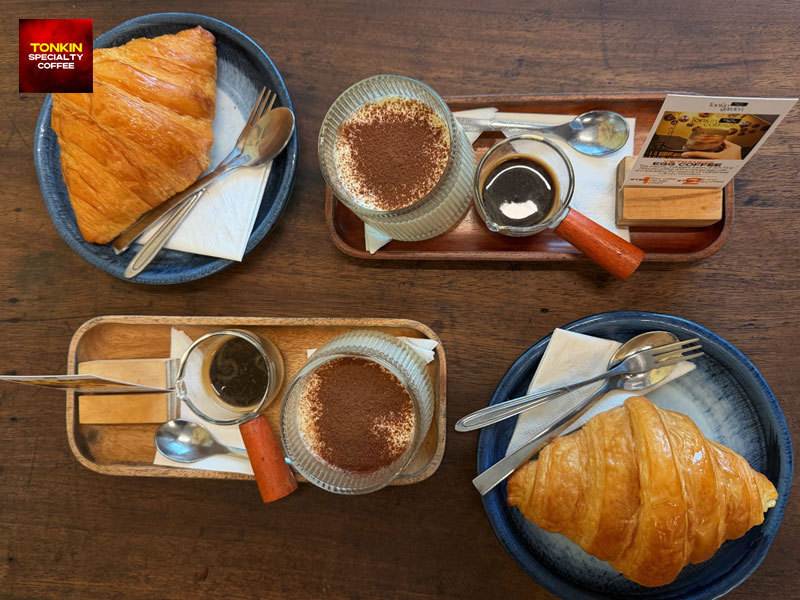
Fine Robusta is the coffee base across Tonkin’s signature drinks rather than a separate menu beverage. Its substantial body provides structure for egg coffee, salt coffee and Vietnamese milk coffee, allowing the coffee character to remain present alongside creamy or sweet ingredients.
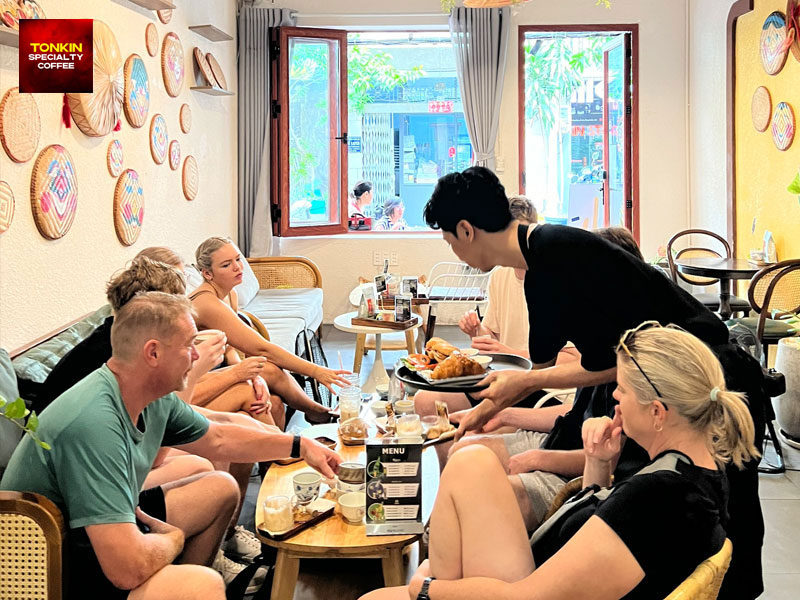
Visitors can experience this approach at four central locations: Tonkin Specialty Coffee at 91 Ly Tu Trong Street, Tonkin Garden Cafe at 135/50 Tran Hung Dao Street, Tonkin Egg Coffee at 1 Le Thi Rieng Street, and Tonkin Egg Coffee & Herbal Tea at 27 Ngo Duc Ke Street.
Cà phê mít reveals one less familiar side of Vietnam’s coffee diversity. Tonkin offers another: a contemporary Vietnamese coffee experience built around quality Gia Lai Fine Robusta, direct farmer connections and carefully prepared signature drinks.
Visit Tonkin Coffee Today!
Tonkin Specialty Coffee
- Add: 91 Ly Tu Trong St., Ben Thanh Ward, Ho Chi Minh City, Vietnam.
- Hotline: 086 799 0125
Tonkin Garden Cafe
- Add: 135/50 Tran Hung Dao St., Cau Ong Lanh Ward, Ho Chi Minh City, Vietnam.
- Hotline: 087 992 4691
Tonkin Egg Coffee
- Add: 1 Le Thi Rieng St., Ben Thanh Ward, Ho Chi Minh City, Vietnam.
- Hotline: 0815 841 909
Tonkin Egg Coffee & Herbal Tea
- Add: 27 Ngo Duc Ke St., Sai Gon Ward, Ho Chi Minh City, Vietnam
Nestled in the heart of Ho Chi Minh City, Tonkin Coffee is one of the best coffee shops to experience authentic Vietnamese flavors. From the iconic egg coffee and refreshing coconut coffee to bold Vietnamese coffee and the unique salt coffee, every sip is a journey into tradition. For non-coffee lovers, our Vietnamese matcha offers a gentle alternative. Pair your drink with a freshly baked banh mi or a buttery croissant, and savor the true taste of Vietnam in a setting inspired by folk culture and Indochine charm.