

 한국어
 中文 (中国)
 日本語
 中文 (台灣)
Behind every Vietnamese coffee is a farming cycle that begins months before the beans reach a café. Understanding how coffee is farmed in Vietnam reveals the work involved in caring for trees, managing water, harvesting ripe cherries, processing and drying. Tonkin Coffee continues that journey with quality Fine Robusta sourced from Gia Lai and prepared in signature Vietnamese drinks.
What Does a Year on a Vietnamese Coffee Farm Look Like?
A year on a Vietnamese coffee farm follows the natural cycle of flowering, cherry development, field maintenance, ripening and harvesting. The exact timing varies with region, elevation, weather and coffee species, so there is no single calendar that applies to every farm.
When do coffee trees flower in Vietnam?
Coffee flowering is one of the most striking stages of the farming cycle. White blossoms appear across the branches for a relatively short period, transforming rows of green coffee trees before the flowers eventually give way to developing cherries.
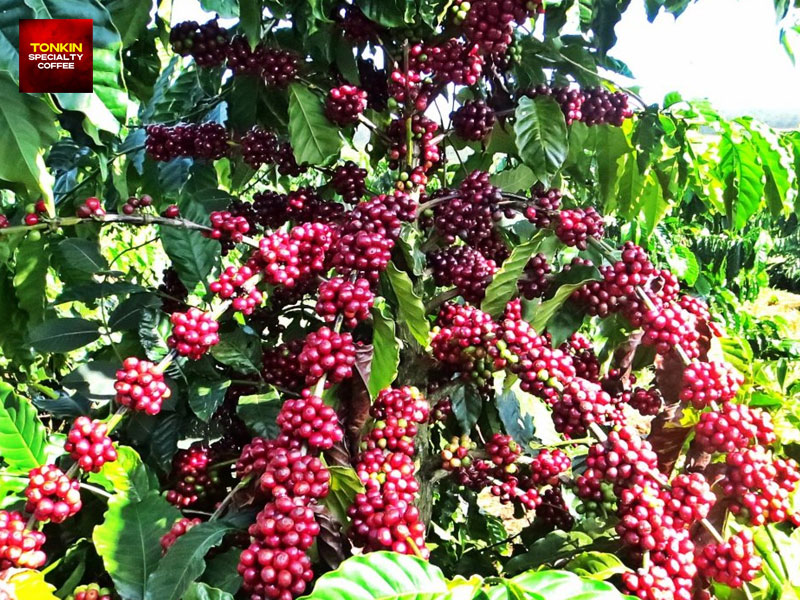
Rainfall and water management can influence flowering, especially in regions with distinct wet and dry seasons. Farmers therefore pay close attention to weather conditions rather than treating flowering as an automatic event on a fixed date.
How do coffee cherries develop before harvest?
After flowering, small green cherries begin to form and gradually develop over several months. The fruit eventually changes color as it reaches maturity.
This stage matters because cherry ripeness affects the raw material available for processing. Farmers aiming for greater consistency may pay closer attention to maturity rather than treating every cherry on a branch as identical.
How Do Vietnamese Farmers Care for Coffee Trees?
Vietnamese coffee farming requires ongoing attention to water, nutrition, tree structure, weeds, pests and fruit development. The work continues between harvests, when farmers prepare trees for the next production cycle.
How is water managed during the dry season?
Water management is particularly important in coffee-growing areas with distinct dry periods. Irrigation may be used to support tree development and help manage flowering, although water availability and irrigation practices differ from one farm to another.
Natural conditions also vary considerably across Vietnam. The farming experience in northern mountain regions, for example, is not identical to the warmer Central Highlands. This regional difference helps explain why questions such as Is Son La known for Arabica coffee? matter when understanding how geography and farming interact.
Why do farmers prune coffee trees?
Pruning helps farmers manage the structure of coffee trees by removing weak, damaged or unproductive growth. A better-managed canopy can improve airflow and light distribution while directing the tree’s energy toward productive branches.
Pruning decisions depend on tree age, condition and the farmer’s production goals. It is one of the less visible steps behind a healthy coffee crop, but an important part of long-term farm management.
Do coffee farms grow anything besides coffee?
Some Vietnamese farms combine coffee with fruit trees, pepper, shade plants or other crops. Intercropping can make a farm look very different from the image of endless rows of identical coffee trees.
Not every farm follows the same model. Crop combinations depend on local conditions, farm economics, available space and the grower’s approach.
How Is Coffee Harvested in Vietnam?
Coffee is harvested when cherries reach suitable maturity, but picking practices vary according to farm size, terrain, labor availability and quality goals. Hand harvesting remains common, particularly across smallholder farms.
When is coffee harvested?
In major Central Highlands production areas, the main harvest commonly takes place toward the end of the year, often around October through December. Weather, elevation, province and coffee variety can move the timing earlier or later.

Vietnam’s regional diversity becomes clearer farther south in Lam Dong. The article Is Da Lat coffee Arabica? explains why Da Lat and surrounding higher areas are strongly associated with Arabica, while much of the country’s commercial production follows a different Robusta-centered farming story.
Are Vietnamese coffee cherries picked by hand?
Yes, hand harvesting is common, but not every farm follows the same picking standard. Some harvests may contain cherries at different stages of maturity, while quality-focused production can place greater emphasis on collecting ripe fruit and sorting unsuitable cherries.
Selective harvesting is not exclusive to Arabica. Producers working with quality-focused Robusta can also pay close attention to cherry maturity.
Why does cherry ripeness matter?
Ripe, consistently selected cherries provide a more controlled starting point for processing. Mixed maturity can introduce greater variation before drying and roasting even begin.
However, ripe cherries alone do not guarantee an excellent cup. Harvesting – processing – drying – storage must work as a connected chain.
What Happens to Coffee Cherries After Harvest?
Harvesting is only the midpoint between the coffee tree and the roasted bean. Cherries still need to be sorted, processed, dried and stored before green coffee is ready to move further along the supply chain.
How does natural processing work?
In natural processing, the coffee cherry is dried with the fruit surrounding the seeds. Once drying is complete, the dried outer material is removed to reveal the green coffee inside.
Natural processing can contribute to fruitiness, sweetness and fuller body, but those characteristics are not guaranteed. Drying conditions and careful handling remain crucial.
How are washed and honey coffees different?
Washed processing removes more of the fruit before drying and can help emphasize clarity in the final cup. Honey processing leaves some mucilage around the coffee during drying.
Neither method is automatically superior. A carefully managed process is more meaningful than simply seeing “natural,” “washed” or “honey” on a coffee label.
Why Does Drying Matter So Much for Coffee Quality?
Drying protects the work already invested in growing and harvesting the coffee. Even good cherries can lose quality if moisture is reduced unevenly or the coffee is poorly handled after processing.
Depending on the producer, coffee may be dried on patios, raised drying surfaces or with mechanical assistance. Weather conditions and production scale influence the method used.
Unexpected rain, excessive moisture, contamination and unsuitable storage can all create problems. This is why coffee quality cannot be explained by species or origin alone.
Does Every Vietnamese Coffee Farm Work the Same Way?
No. Vietnam includes different climates, elevations, farm sizes, coffee species and production goals. A family farm growing Robusta in Gia Lai may make different decisions from an Arabica producer in a cooler mountain environment.
Dak Lak offers another useful example of regional specialization. Understanding What coffee is grown in Dak Lak? shows why the province and Buon Ma Thuot are so closely associated with Robusta, while other Vietnamese regions have developed stronger Arabica identities.
The important point is that “Vietnamese coffee farming” is not one standardized method. Species, geography, farmer knowledge and quality targets work together.
What Makes Quality-Focused Coffee Farming Different?
Quality-focused farming pays closer attention to consistency throughout the production chain. A famous origin or expensive roast cannot replace careful decisions made before the beans leave the farm.
A simple farm-to-cup sequence looks like this:
Healthy trees – suitable cherry maturity – careful harvesting – controlled processing – even drying – proper storage – roasting – brewing
Each stage can preserve or reduce the potential created at the previous stage.
Why do farmer relationships matter?
Long-term relationships between coffee buyers and farmers can improve communication about desired quality, harvesting and sourcing consistency. Direct relationships do not automatically guarantee sustainability or better coffee, but they can create a clearer connection between expectations at the café and decisions at origin.
In practical terms, a stable cup can begin with a stable relationship.
How Does Tonkin Coffee Connect the Farm With the Cup?
Tonkin Coffee uses quality Fine Robusta from Gia Lai in Vietnam’s Central Highlands and maintains direct connections with farmers. This sourcing relationship helps connect the agricultural work behind the harvest with the flavor eventually experienced in central Ho Chi Minh City.
Gia Lai Fine Robusta provides a profile of dark chocolate, roasted nuts, caramel, subtle spice and full body. Fine Robusta is not a separate drink on Tonkin’s menu; the coffee serves as the foundation for signature recipes.
How can you taste the result?
Egg coffee combines the Fine Robusta base with a silky cream made from fresh eggs, honey, sugar and a small amount of rum. The coffee remains noticeable underneath the smooth, sweet layer.
Salt coffee creates a different contrast through a creamy salted layer, while Vietnamese milk coffee combines the bold coffee base with condensed milk. Each drink shows how the character developed before roasting can continue to matter after other ingredients are added.
Which Tonkin Coffee Location Fits Your Ho Chi Minh City Route?
Tonkin Coffee has four cafés in central Ho Chi Minh City, making a coffee stop easy to combine with different sightseeing routes.
| Café | Address | Good to combine with |
| Tonkin Specialty Coffee | 91 Ly Tu Trong St. | Ben Thanh Market, Independence Palace |
| Tonkin Garden Cafe | 135/50 Tran Hung Dao St. | A quiet garden break |
| Tonkin Egg Coffee | 1 Le Thi Rieng St. | Huynh Hoa bánh mì, Tao Dan |
| Tonkin Egg Coffee & Herbal Tea | 27 Ngo Duc Ke St. | Nguyen Hue, Bitexco, Saigon River |
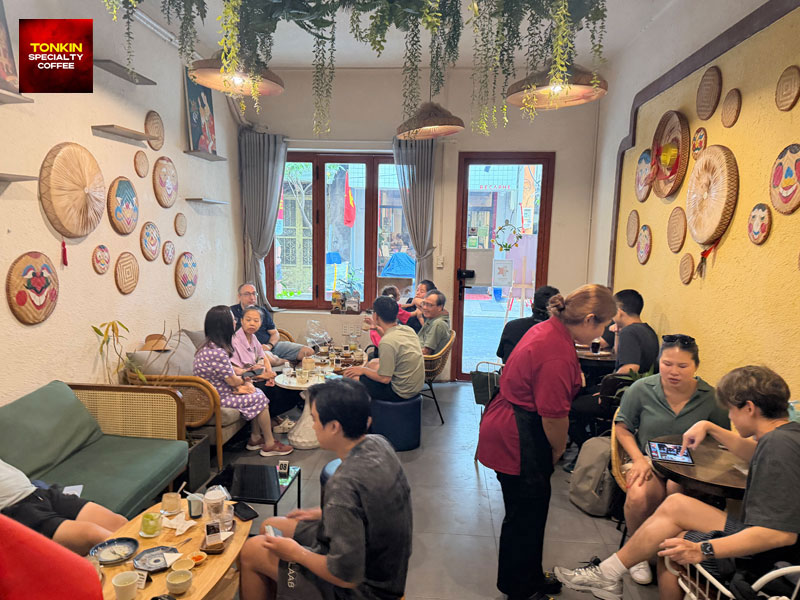
The four spaces have different atmospheres, from Vietnamese folk-inspired interiors and a quiet garden to a historic 1917 villa. The common thread is the journey of coffee from carefully sourced raw material to the finished drink.
From Vietnamese Coffee Farms to Your Cup
Understanding coffee farming changes the way a familiar cup can be experienced. Irrigation, pruning, cherry maturity, harvesting, processing and drying happen long before a barista starts preparing a drink.
That farm-to-cup connection is particularly meaningful when exploring Vietnamese coffee during a trip. At Tonkin, Gia Lai Fine Robusta carries part of that agricultural story into egg coffee, salt coffee and Vietnamese milk coffee, turning a café break in Ho Chi Minh City into an opportunity to taste where the coffee journey began.
Visit Tonkin Coffee Today!
Tonkin Specialty Coffee
- Add: 91 Ly Tu Trong St., Ben Thanh Ward, Ho Chi Minh City, Vietnam.
- Hotline: 086 799 0125
Tonkin Garden Cafe
- Add: 135/50 Tran Hung Dao St., Cau Ong Lanh Ward, Ho Chi Minh City, Vietnam.
- Hotline: 087 992 4691
Tonkin Egg Coffee
- Add: 1 Le Thi Rieng St., Ben Thanh Ward, Ho Chi Minh City, Vietnam.
- Hotline: 0815 841 909
Tonkin Egg Coffee & Herbal Tea
- Add: 27 Ngo Duc Ke St., Sai Gon Ward, Ho Chi Minh City, Vietnam

Nestled in the heart of Ho Chi Minh City, Tonkin Coffee is one of the best coffee shops to experience authentic Vietnamese flavors. From the iconic egg coffee and refreshing coconut coffee to bold Vietnamese coffee and the unique salt coffee, every sip is a journey into tradition. For non-coffee lovers, our Vietnamese matcha offers a gentle alternative. Pair your drink with a freshly baked banh mi or a buttery croissant, and savor the true taste of Vietnam in a setting inspired by folk culture and Indochine charm.