

 한국어
 中文 (中国)
 日本語
 中文 (台灣)
Hanoi’s egg coffee story continued beyond its original birthplace through cafés connected to the Giảng family. For travelers asking how Café Đinh is connected to Hanoi egg coffee culture, the answer lies in family heritage: the café was founded by Nguyễn Thị Bích, daughter of Nguyễn Văn Giảng, and became a later continuation of the tradition around Hoàn Kiếm Lake.
In Ho Chi Minh City, Tonkin Coffee carries that Hanoi-born idea forward through its own egg coffee style, combining bold Vietnamese coffee with freshly whipped egg cream across four central branches.
Who founded Café Đinh and why does that matter?
Café Đinh was founded by Nguyễn Thị Bích, a daughter of Nguyễn Văn Giảng. The café opened at 13 Đinh Tiên Hoàng in 1987 and later became one of the recognizable old-style coffee spaces around Hoàn Kiếm Lake.
Who was Nguyễn Thị Bích?
Nguyễn Thị Bích trained and worked as a literature teacher before returning to the family coffee tradition. Her decision to open Café Đinh gave the Giảng family story another branch beyond Café Giảng itself.
That family link matters because Hanoi egg coffee culture is not only about one recipe. It is also about people, repeated preparation, regular customers and cafés that carry memories across generations.
Readers who want to understand the father behind that family history can explore Who was Nguyễn Văn Giảng?.
Is Café Đinh the birthplace of egg coffee?
No. Café Đinh should not be described as the original birthplace of egg coffee.
Where does the origin story belong?
The earliest story is tied to Nguyễn Văn Giảng in Hanoi during the 1940s. Café Giảng became the long-term café home most closely associated with that origin, while later family cafés such as Café Đinh continued the tradition in their own way.
Vietnam Tourism still presents Hanoi egg coffee as a drink associated with Nguyễn Văn Giảng and Café Giảng, reinforcing the distinction between origin and later family continuity.
Why is this distinction important?
It keeps the history clear:
-
Nguyễn Văn Giảng represents the creator figure.
-
Café Giảng represents the founder-linked café tradition.
-
Café Đinh represents a later family continuation through his daughter.
The cafés are connected, but they do not play identical historical roles.
What is Café Đinh’s relationship with Café Giảng?
The connection is familial rather than simply commercial.
Are Café Đinh and Café Giảng part of the same family history?
Yes. Nguyễn Văn Giảng stands at the center of the original egg coffee story, while Nguyễn Thị Bích later opened Café Đinh.
For readers who want a closer look at what is Café Giảng’s connection to egg coffee?, the key difference is that Café Giảng represents the founder-linked heritage, while Café Đinh represents a later branch of the same family tradition.
Do the two cafés have to taste exactly the same?
No. Historical reporting notes that different Giảng-family cafés developed their own flavor preferences over time. Café Đinh therefore matters because it continues the cultural lineage, not because it must reproduce one fixed formula.
That is a useful way to understand food heritage: continuity does not always mean complete uniformity.
Where is Café Đinh and why does the location matter?
Café Đinh is located at 13 Đinh Tiên Hoàng, near Hoàn Kiếm Lake.
What is the setting like?
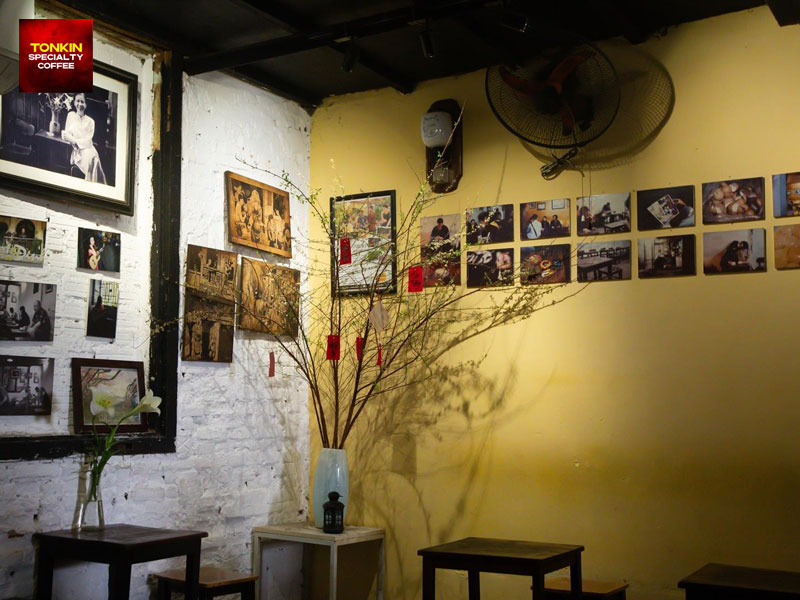
The café occupies an upper-floor space in an old French-era building. Visitors reach it through a narrow entrance and staircase, and the original room retains dark wooden elements, aged walls and old photographs.
The setting feels very different from a polished contemporary coffee shop.
Why does Hoàn Kiếm matter to the experience?
Hoàn Kiếm is central to everyday and visitor life in Hanoi. A coffee stop here naturally connects with walks around the lake, Old Quarter streets and nearby historic neighborhoods.
That geographic context gives Café Đinh a strong sense of place.
What kind of atmosphere defines Café Đinh?
Café Đinh is known more for nostalgia and continuity than for modern design.
Is Café Đinh a luxury café?
No. The small room, low furniture, aged walls and old photographs are part of the appeal.
The café was once frequented by retirees and intellectuals, and later by students, showing how the space became part of everyday Hanoi social life rather than simply a tourist attraction.
Why does that social history matter?
Because coffee culture is built through repetition.
A café becomes meaningful when people return, meet friends, study, talk and associate the space with different stages of life.
Café Đinh’s role in Hanoi coffee culture therefore extends beyond one drink.
How does Café Đinh represent a different side of Hanoi egg coffee culture?
Café Đinh shows how a famous drink can move from an origin story into everyday cultural memory.
What does Café Giảng represent?
Café Giảng is most strongly associated with:
-
Nguyễn Văn Giảng;
-
the original egg coffee story;
-
founder-led heritage;
-
long-term preservation.
What does Café Đinh represent?
Café Đinh is more closely associated with:
-
the next generation of the family;
-
Nguyễn Thị Bích;
-
Hoàn Kiếm café life;
-
student and local memory;
-
a later interpretation of the family tradition.
That difference is what makes the two cafés complementary rather than interchangeable.
What should travelers expect from egg coffee at Café Đinh?
The broad structure remains recognizable: strong coffee beneath a whipped egg-based layer.
What should the texture feel like?
A satisfying egg coffee usually depends on contrast:
-
smooth cream;
-
rich mouthfeel;
-
clear coffee bitterness;
-
controlled sweetness;
-
limited egg aroma.
The upper layer should feel creamy and cohesive rather than like raw egg added to coffee.
Is the experience only about taste?
No. At Café Đinh, family history and location contribute just as much as the drink itself.
Knowing that the café comes from the next generation of the Giảng family changes the meaning of the cup.
How should traditional egg coffee be drunk?
There is no single compulsory method, but tasting the layers separately first makes the structure easier to understand.
Should you stir it immediately?
Not necessarily.
Try:
-
tasting a little of the cream;
-
reaching the stronger coffee below;
-
gently combining the two near the end.
This makes the transition from sweetness to bitterness more noticeable.
Anyone interested in the preparation side can also explore How to make authentic Hanoi-style egg coffee for a closer look at texture, coffee strength and serving method.
How does Café Đinh fit into the larger Hanoi egg coffee story?
A useful way to understand the sequence is:
Nguyễn Văn Giảng – Café Giảng – family tradition – Nguyễn Thị Bích – Café Đinh
The value of Café Đinh lies in showing that egg coffee heritage did not remain frozen at one café.
Where does the Metropole story fit?
Historical accounts also connect Nguyễn Văn Giảng’s early development of egg coffee with his work at Hanoi’s Metropole Hotel before the Café Giảng tradition became established.
For that earlier chapter, was egg coffee first made at the Metropole Hotel? examines the distinction between the experimental setting and the later café legacy.
This helps keep the timeline clear rather than forcing every location into the same “birthplace” label.
Where can travelers experience this culture in the Old Quarter?
Café Đinh is one important stop around Hoàn Kiếm, while Café Giảng remains another central reference point.
For travelers wondering where can you find traditional egg coffee in Hanoi’s Old Quarter?, the best approach is to think in terms of historical context rather than one universal winner.
Café Giảng offers the strongest origin connection; Café Đinh offers a family-linked continuation shaped by a different atmosphere and generation.
Can travelers experience Hanoi-born egg coffee in Ho Chi Minh City?
Yes. Egg coffee began in Hanoi, but the drink has since become part of a broader Vietnamese coffee culture.
How does Tonkin Coffee approach the tradition?
Tonkin Coffee offers its own Ho Chi Minh City interpretation rather than presenting the drink as an exact Café Giảng or Café Đinh recipe.
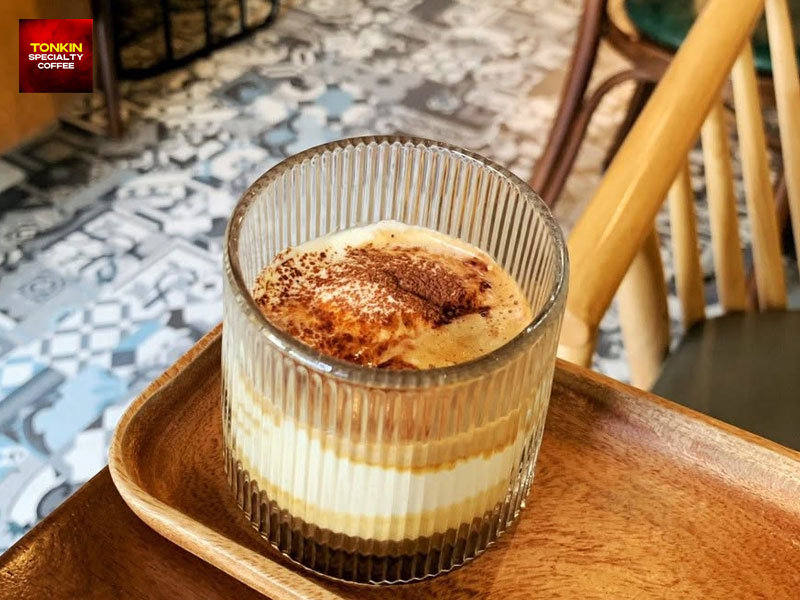
The coffee base uses Fine Robusta from Gia Lai, while the cream is freshly whipped with egg, honey, sugar and a small amount of rum to soften unwanted egg aroma.
The result keeps the recognizable structure of rich egg cream over bold coffee while expressing a distinct house style.
Why does Café Đinh still matter to egg coffee culture today?
Café Đinh matters because it shows how cultural traditions survive through people, places and repeated everyday experience.
The café is not the birthplace of egg coffee. Its importance comes from something different: Nguyễn Thị Bích carried her father’s coffee heritage into another space, where generations of Hanoi customers created new memories around it.
Understanding that distinction makes the broader story richer. Café Giảng represents origin, Café Đinh represents family continuity, and modern cafés such as Tonkin Coffee show how a Hanoi-born idea can travel to Ho Chi Minh City while remaining recognizable as part of Vietnamese coffee culture.
Visit Tonkin Coffee Today!
Tonkin Specialty Coffee
-
Add: 91 Ly Tu Trong St., Ben Thanh Ward, Ho Chi Minh City, Vietnam.
-
Hotline: 086 799 0125
Tonkin Garden Cafe
-
Add: 135/50 Tran Hung Dao St., Cau Ong Lanh Ward, Ho Chi Minh City, Vietnam.
-
Hotline: 087 992 4691
Tonkin Egg Coffee
-
Add: 1 Le Thi Rieng St., Ben Thanh Ward, Ho Chi Minh City, Vietnam.
-
Hotline: 0815 841 909
Tonkin Egg Coffee & Herbal Tea
-
Add: 27 Ngo Duc Ke St., Sai Gon Ward, Ho Chi Minh City, Vietnam

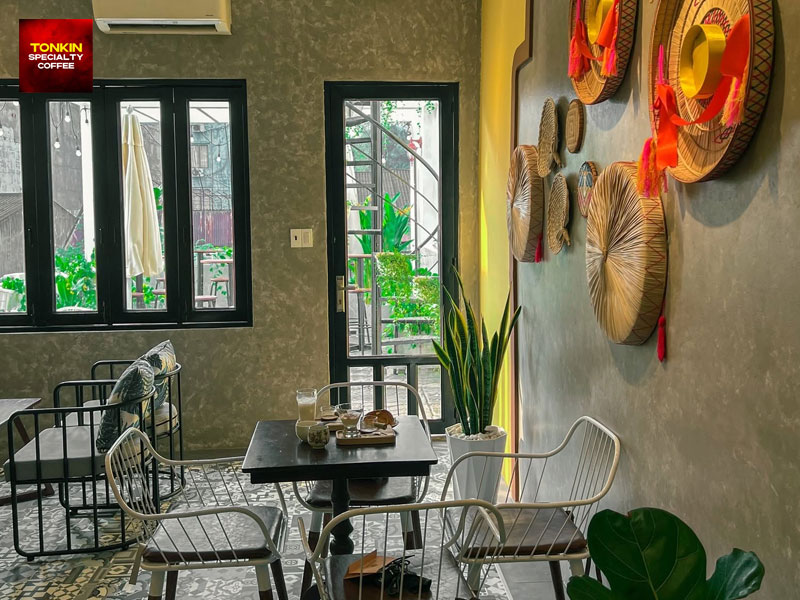
Nestled in the heart of Ho Chi Minh City, Tonkin Coffee is one of the best coffee shops to experience authentic Vietnamese flavors. From the iconic egg coffee and refreshing coconut coffee to bold Vietnamese coffee and the unique salt coffee, every sip is a journey into tradition. For non-coffee lovers, our Vietnamese matcha offers a gentle alternative. Pair your drink with a freshly baked banh mi or a buttery croissant, and savor the true taste of Vietnam in a setting inspired by folk culture and Indochine charm.