

 한국어
 中文 (中国)
 日本語
 中文 (台灣)
Hanoi’s Old Quarter remains one of the most meaningful places to experience the history and flavor of Vietnamese egg coffee. For travelers asking where can you find traditional egg coffee in Hanoi’s Old Quarter?, Café Giảng provides the clearest connection to the drink’s heritage, while other nearby cafés offer different settings and interpretations.
Further south, Tonkin Coffee brings that Hanoi-born tradition into Ho Chi Minh City through its own style of egg coffee, combining bold Vietnamese coffee with freshly whipped egg cream across four central branches.
Why is Hanoi’s Old Quarter the natural place to try traditional egg coffee?
Hanoi’s Old Quarter is one of the most meaningful places to experience egg coffee because the drink grew within the city’s long-standing coffee culture. Narrow streets, old shop houses and compact café spaces make coffee drinking part of everyday urban life rather than a separate attraction.
How did egg coffee become connected with Hanoi?
The drink emerged in Hanoi in the 1940s, when Nguyễn Văn Giảng developed a whipped egg-based topping to create richness in coffee during a period when fresh milk was difficult to obtain.
That practical idea eventually became something more distinctive. The contrast between thick egg cream and strong coffee gave the drink a character that survived long after ingredient shortages ended.
Readers who want the personal history behind the drink can explore Who was Nguyễn Văn Giảng?, which focuses on the man rather than the location.
Why does the Old Quarter matter culturally?
The Old Quarter gives egg coffee a setting that matches its history. Traditional cafés sit close to Hoàn Kiếm Lake, Nguyễn Hữu Huân Street and other historic streets where coffee has long been part of daily social life.
That makes the experience feel different from ordering the same drink in a modern shopping complex.
Where should you start for a traditional egg coffee experience?
For historical context, Café Giảng is the strongest place to begin.
Why is Café Giảng the most important stop?
Café Giảng became the long-term home of Nguyễn Văn Giảng’s creation and helped turn egg coffee from an inventive drink into a lasting café tradition.
Its importance lies in continuity: the drink was served, remembered and passed through generations in one recognizable place.
For a deeper explanation of what is Café Giảng’s connection to egg coffee?, the key point is that Café Giảng helped give the drink a permanent public identity in Hanoi.
What should travelers expect there?
The experience is more about heritage than polished modern café design.
Expect a compact, traditional setting where egg coffee is the main reason to visit. The drink itself should feel rich and creamy on top, with strong coffee underneath.
Was the drink first developed somewhere else before Café Giảng?
Yes, the historical story begins slightly earlier.
Nguyễn Văn Giảng worked at the Metropole Hotel in Hanoi before establishing Café Giảng. Historical accounts connect his early experiments with egg coffee to that period.
Readers interested in the location of those first experiments can explore Was egg coffee first made at the Metropole Hotel?, which separates the hotel development story from the later Café Giảng tradition.
This distinction is useful:
-
Metropole Hotel: early experimentation and development
-
Café Giảng: long-term public identity and café tradition
Both places matter, but for different reasons.
Are there other places in the Old Quarter to try egg coffee?
Yes. Café Giảng is the strongest historical reference point, but it is not the only place serving the drink.
Should travelers only visit Café Giảng?
Not necessarily.
If historical significance matters most, Café Giảng is the clearest choice. If atmosphere, views or hidden entrances matter more, other Old Quarter cafés can offer different experiences.
For example, some cafés near Hoàn Kiếm Lake combine egg coffee with rooftop or upper-floor settings. The drink may be interpreted differently, but the Old Quarter context still adds something to the experience.
How should travelers choose between cafés?
A simple framework works well:
-
For history: choose Café Giảng
-
For atmosphere: choose a hidden Old Quarter café
-
For views: choose a rooftop or lake-facing café
-
For convenience: choose a stop already on your walking route
What makes an egg coffee feel traditional?
Traditional egg coffee is not simply black coffee with a raw egg added.
What should the cream feel like?
The whipped layer should be:
-
smooth
-
thick
-
airy
-
rich without feeling heavy
-
free from an overpowering egg smell
The cream should sit above the coffee rather than disappear into it immediately.
Why does the coffee underneath need to be strong?
Because the cream is sweet and rich.
A weak coffee base can make the drink feel flat or overly dessert-like. Strong coffee adds bitterness and roasted depth, creating the contrast that makes the drink memorable.
How should you drink traditional egg coffee?
There is no single mandatory method, but tasting the layers separately first makes the structure easier to understand.
Should you stir everything immediately?
Not necessarily.
A useful sequence is:
-
Taste the cream first
-
Reach the coffee underneath
-
Gently mix both layers near the end
This shows how the flavor changes from creamy sweetness to strong coffee and then to a balanced combination.
Why is it often served warm?
Warmth helps maintain the drink’s smooth texture and keeps the coffee aromatic.
Traditional presentations may also use a warm serving method to stop the drink from cooling too quickly.
What does traditional Hanoi egg coffee taste like?
It sits somewhere between coffee and dessert, but the coffee should still be clearly present.
What flavors should you expect?
Typical characteristics include:
-
creamy sweetness
-
roasted bitterness
-
soft custard-like richness
-
dense mouthfeel
-
a warm coffee finish
Sweetness varies by café, so one version may feel more dessert-like while another is more coffee-forward.
Can you make it at home?
Yes, although texture is one of the hardest parts to reproduce well.
Anyone interested in the preparation side can read How to make authentic Hanoi-style egg coffee for a more detailed look at the cream, coffee base and serving method.
Why has egg coffee remained so strongly associated with Hanoi?
The drink began as a practical solution, but it lasted because people genuinely enjoyed the flavor and texture.
Why did it survive after fresh milk became easier to find?
Because egg coffee developed its own identity.
The whipped cream layer, strong coffee base and café ritual became more than a substitute for milk. Over time, the drink became part of Hanoi’s culinary memory.
That wider cultural story also helps explain Why egg coffee is popular in Hanoi: history, taste and place all reinforce each other.
How can you build an Old Quarter egg coffee route?
The easiest approach is to combine coffee with a walking itinerary.
A heritage-focused route
Hoàn Kiếm Lake – Café Giảng – Nguyễn Hữu Huân Street – Old Quarter lanes
This works well for travelers who want historical context without making coffee a separate detour.
A broader Old Quarter route
You can also combine:
Egg coffee – Hàng Đào – Đồng Xuân Market – Long Biên area
This makes the coffee stop part of a larger exploration of central Hanoi.
Can you experience egg coffee outside Hanoi?
Yes. Egg coffee began in Hanoi, but modern interpretations are now available in other parts of Vietnam.
Does a modern version need to copy Café Giảng?
No.
A respectful modern interpretation can preserve the basic idea: strong coffee, whipped egg cream and sweet-bitter contrast, without claiming to reproduce an original family formula.
What matters is acknowledging the Hanoi origin while being clear about the café’s own style.
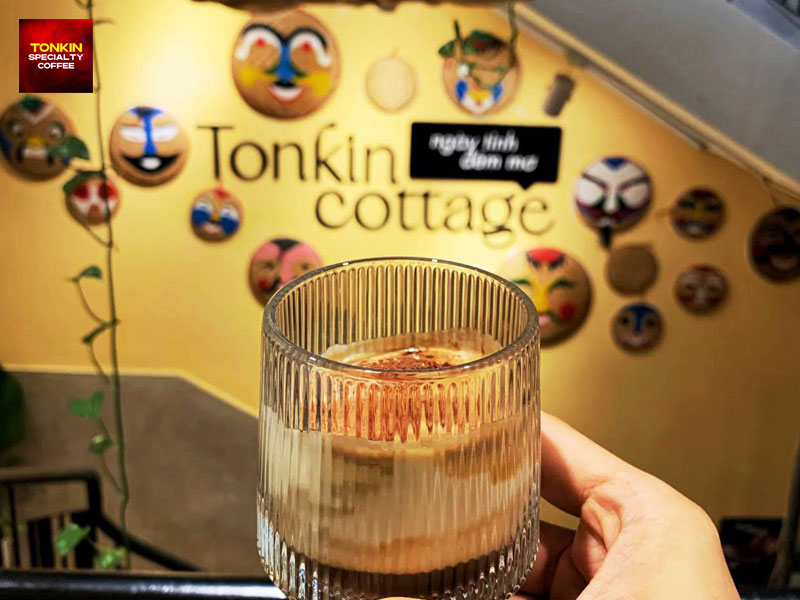
How does Tonkin Coffee interpret egg coffee in Ho Chi Minh City?
Tonkin Coffee presents its own Ho Chi Minh City interpretation of this Hanoi-born drink.
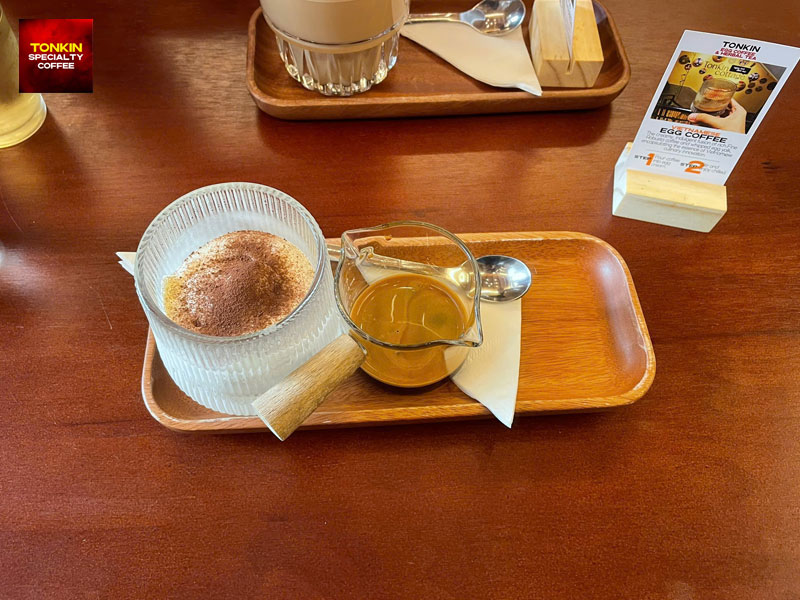
The coffee base uses Fine Robusta from Gia Lai, while the egg cream is freshly whipped with egg, honey, sugar and a small amount of rum to soften unwanted egg aroma.
Tonkin Coffee does not present this as a reproduction of Café Giảng’s original recipe. The focus is on carrying the core idea forward through a distinct house style.
Which Tonkin Coffee branch fits your Ho Chi Minh City route?
|
Branch |
Address |
Best for |
|
Tonkin Specialty Coffee |
91 Ly Tu Trong |
Ben Thanh Market, Independence Palace |
|
Tonkin Garden Cafe |
135/50 Tran Hung Dao |
Bui Vien, Pham Ngu Lao |
|
Tonkin Egg Coffee |
1 Le Thi Rieng |
Egg-coffee-focused visit, Tao Dan |
|
Tonkin Egg Coffee & Herbal Tea |
27 Ngo Duc Ke |
Nguyen Hue, Dong Khoi, Bitexco, Saigon River |
Which branch is most direct for egg coffee?
Tonkin Egg Coffee at 1 Le Thi Rieng is the most straightforward choice if the drink itself is the main reason for your visit.
For sightseeing routes, 91 Ly Tu Trong works naturally with Ben Thanh Market, while 27 Ngo Duc Ke fits Nguyen Hue and the Saigon River area.
What should travelers remember about traditional egg coffee?
The most useful way to understand the drink is to connect three elements:
Hanoi origin – Café Giảng tradition – modern interpretations
The Old Quarter remains the strongest place to experience egg coffee in its historical context. Café Giảng provides the clearest connection to the drink’s heritage, while other nearby cafés offer different views, atmospheres and serving styles.
Travelers continuing south to Ho Chi Minh City can then experience how the same Hanoi-born idea has evolved through Tonkin Coffee’s own approach. That contrast makes egg coffee more interesting: not as one fixed recipe, but as a Vietnamese coffee tradition that has traveled, adapted and remained recognizable.
Visit Tonkin Coffee Today!
Tonkin Specialty Coffee
-
Add: 91 Ly Tu Trong St., Ben Thanh Ward, Ho Chi Minh City, Vietnam.
-
Hotline: 086 799 0125
Tonkin Garden Cafe
-
Add: 135/50 Tran Hung Dao St., Cau Ong Lanh Ward, Ho Chi Minh City, Vietnam.
-
Hotline: 087 992 4691
Tonkin Egg Coffee
-
Add: 1 Le Thi Rieng St., Ben Thanh Ward, Ho Chi Minh City, Vietnam.
-
Hotline: 0815 841 909
Tonkin Egg Coffee & Herbal Tea
-
Add: 27 Ngo Duc Ke St., Sai Gon Ward, Ho Chi Minh City, Vietnam
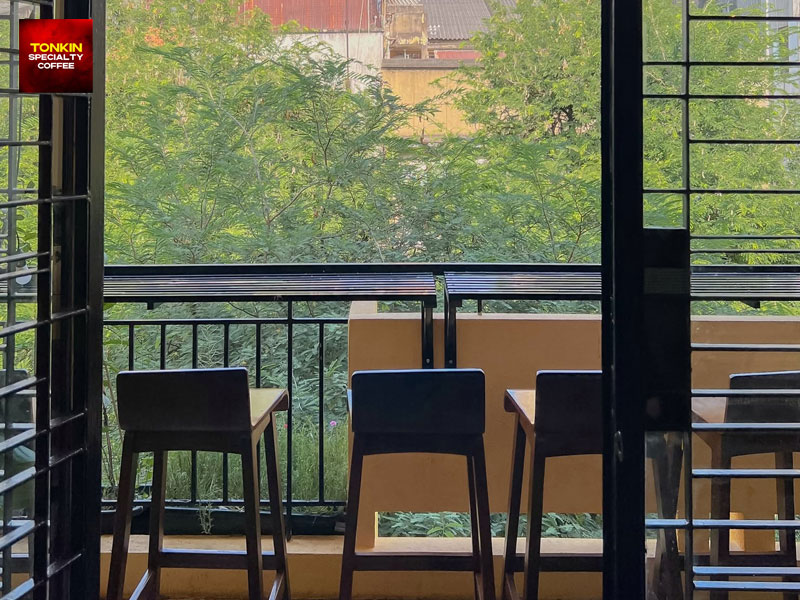
Nestled in the heart of Ho Chi Minh City, Tonkin Coffee is one of the best coffee shops to experience authentic Vietnamese flavors. From the iconic egg coffee and refreshing coconut coffee to bold Vietnamese coffee and the unique salt coffee, every sip is a journey into tradition. For non-coffee lovers, our Vietnamese matcha offers a gentle alternative. Pair your drink with a freshly baked banh mi or a buttery croissant, and savor the true taste of Vietnam in a setting inspired by folk culture and Indochine charm.