

 한국어
 中文 (中国)
 日本語
 中文 (台灣)
Who was Nguyễn Văn Giảng? He was the Hanoi bartender widely credited with creating Vietnamese egg coffee in the 1940s, turning whipped egg yolk and strong coffee into one of Vietnam’s most recognizable café traditions.
At Tonkin Coffee, that Hanoi-born idea is experienced in Ho Chi Minh City through a distinct Tonkin interpretation: bold Vietnamese coffee, freshly whipped egg cream, and a balance of sweetness, richness and coffee depth across four central branches.
Who was Nguyễn Văn Giảng before egg coffee became famous?
Nguyễn Văn Giảng worked as a bartender in Hanoi before opening his own café. His professional background mattered because he already understood how texture, sweetness and strong coffee could be balanced in a drink.
Where did Nguyễn Văn Giảng work?
He is commonly associated with the Metropole Hotel in Hanoi, where he worked before establishing Café Giảng. The hotel environment exposed him to European-style coffee service at a time when imported ingredients were not always easy to obtain.
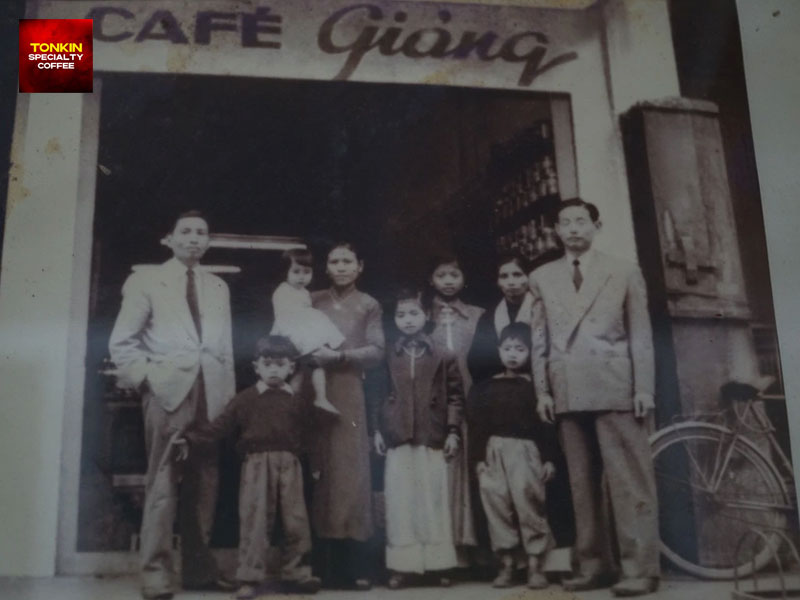
That practical experience helped shape the idea that later became cà phê trứng.
What problem was Nguyễn Văn Giảng trying to solve?
The core challenge was simple: coffee drinkers still wanted richness even when fresh milk was difficult to obtain.
For readers who want to explore the context in more detail, Tonkin Coffee explains why fresh milk scarcity helped shape the creation of egg coffee and why the drink should be understood as a practical invention rather than a novelty.
How did Nguyễn Văn Giảng create Vietnamese egg coffee?
The idea was to whip egg yolk with sugar until it became light and creamy, then pair that mixture with strong coffee.
Why did whipped egg work so well with coffee?
Egg yolk provides richness, while whipping adds air and gives the mixture a mousse-like texture. Sugar softens the egg flavor and helps create a smooth, dessert-like cream.
The coffee underneath needs to remain bold. Without enough bitterness and roast character, the upper layer can dominate the drink.
Was egg coffee simply a replacement for milk?
At first, the idea was connected to ingredient scarcity. But once the drink developed its own texture, flavor and ritual, it became much more than a substitute.
That distinction is important because Vietnamese egg coffee survived long after milk became easier to find. People continued drinking it because they liked the taste, not because they had no other option.
When did Vietnamese egg coffee first appear?
Egg coffee is generally traced to Hanoi in the 1940s, with Café Giảng closely tied to its early development.
Readers who want a more focused timeline can see Tonkin Coffee’s guide to when Vietnamese egg coffee was invented, which places the drink within the broader history of mid-20th-century Hanoi café culture.
What happened in 1946?
Café Giảng was established in Hanoi in 1946. That year is significant because it marks the moment Nguyễn Văn Giảng’s experiment moved from a practical idea into a café tradition associated with his own name.
Over time, Café Giảng became one of the strongest historical reference points for understanding the origins of cà phê trứng.
Why did Café Giảng become important to Hanoi coffee culture?
Café Giảng helped turn egg coffee from a creative workaround into a recognizable part of Hanoi’s identity.
Why did people continue drinking egg coffee?
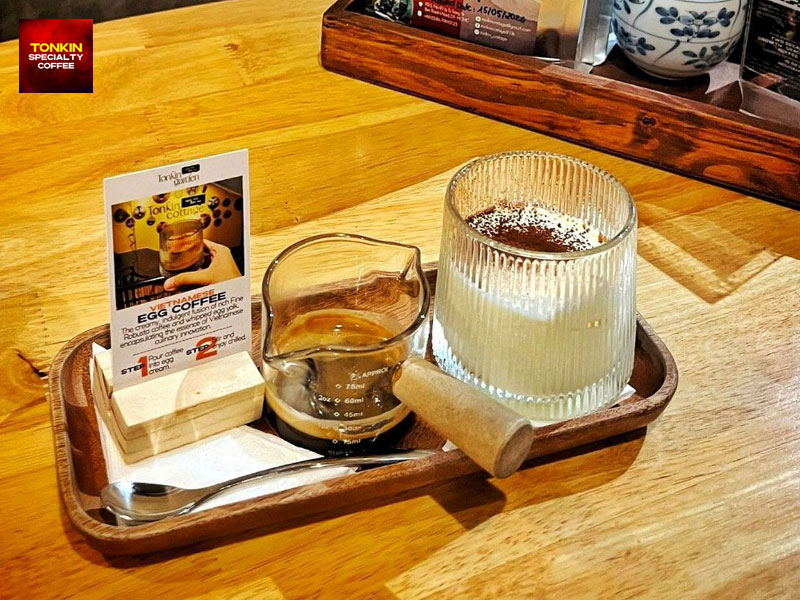
The drink offered something that ordinary milk coffee did not: a thick, airy top layer with a strong coffee base underneath.
That contrast made the drink memorable. The experience was rich enough to feel almost like dessert, yet the coffee still remained central.
How did egg coffee become part of cultural memory?
As generations of customers continued ordering the drink, egg coffee became linked with Hanoi itself.
This is why questions such as who invented Vietnamese egg coffee are not only about identifying one person. They also help explain how a practical café experiment became part of a city’s food culture.
What does Nguyễn Văn Giảng’s story tell us about Vietnamese coffee culture?
His story shows that Vietnamese coffee culture has never been only about beans or brewing equipment. It is also about adaptation.
Is Vietnamese coffee culture only about phin filters?
No. Phin brewing is important, but Vietnamese coffee has developed through local ingredients, changing tastes and creative responses to everyday circumstances.
Egg coffee is one of the clearest examples. Later drinks such as Salt Coffee and Coconut Coffee follow the same broader pattern of building new flavors around a strong coffee base.
Why does innovation matter in Vietnamese coffee?
Innovation allows coffee traditions to remain recognizable without becoming static.
The best new interpretations still respect the structure of the drink. In egg coffee, that means maintaining the contrast between a rich cream layer and a bold coffee base.
How is traditional Hanoi egg coffee meant to taste?
A good egg coffee should be rich, smooth and creamy, but it should not taste like raw egg.
Should egg coffee smell strongly of egg?
No. The upper layer should feel closer to custard, mousse or light cream than to uncooked egg.
Fresh ingredients and proper whipping technique make a major difference.
Why must the coffee underneath remain bold?
The coffee provides bitterness, roast character and depth. Those flavors stop the drink from becoming overly sweet.
A well-made cup should move from soft, sweet cream into darker coffee notes.
How should first-time travelers drink egg coffee?
The easiest way to understand the drink is to taste its layers before mixing everything together.
-
Taste a small amount of the egg cream.
-
Reach the coffee underneath.
-
Lightly combine both layers.
Why does this method work?
It allows you to notice how the drink changes from creamy and sweet to bitter and coffee-forward.
Once the two layers are blended, you can understand why egg coffee is more than just coffee with a topping.
What is the broader history of Vietnamese egg coffee?
The history begins with Nguyễn Văn Giảng in Hanoi, but the drink did not stay confined to one café or one city.
Tonkin Coffee’s guide to the history of Vietnamese egg coffee explores how the drink moved from a 1940s Hanoi invention into a symbol of Vietnamese café culture recognized far beyond the capital.
Why did the drink spread outside Hanoi?
Visitors carried the memory of the drink with them, while cafés in other cities developed their own interpretations.
That spread helped transform egg coffee from a Hanoi specialty into a broader Vietnamese coffee experience.
Can travelers experience a Hanoi-inspired egg coffee in Ho Chi Minh City?
Yes. Egg coffee may have been born in Hanoi, but today it can be enjoyed across Vietnam in different forms.

Tonkin Coffee offers its own interpretation in Ho Chi Minh City, preserving the essential idea of a creamy egg layer paired with a bold coffee base.
How does Tonkin Coffee interpret the drink?
Tonkin Coffee uses Fine Robusta from Gia Lai, known for a bold body and chocolate-like character. The coffee gives the drink enough strength to balance the cream above.
The egg cream is whipped fresh with egg, honey, sugar and a small amount of rum to reduce unwanted egg aroma. The goal is not to imitate another café’s formula, but to keep the drink recognizable while giving it a Tonkin identity.
What is the difference between honoring an origin and copying a recipe?
Respecting the origin means keeping Nguyễn Văn Giảng and Hanoi central to the story while being clear about how modern cafés make their own versions.
Why should Nguyễn Văn Giảng remain central to the origin story?
Because his name is historically linked to the creation of egg coffee and to Café Giảng, where the drink became established.
How can modern cafés build on that heritage respectfully?
Modern cafés can acknowledge Hanoi as the birthplace, explain their own ingredients and avoid claiming to use the original formula.
That approach allows egg coffee to evolve while keeping its historical roots visible.
Why does Nguyễn Văn Giảng still matter today?
Nguyễn Văn Giảng matters because the drink he helped create is still being ordered, discussed and reinterpreted decades later.
For travelers, knowing his story changes the experience. Egg coffee stops feeling like a strange combination and starts making sense as a creative response to scarcity, shaped by Hanoi and carried forward through Vietnamese coffee culture.
At Tonkin Coffee in Ho Chi Minh City, that legacy can be experienced in a different setting: not as a copy of Café Giảng, but as a modern southern interpretation of a drink born from the ingenuity of a Hanoi bartender.
Visit Tonkin Coffee Today!
Tonkin Specialty Coffee
-
Add: 91 Ly Tu Trong St., Ben Thanh Ward, Ho Chi Minh City, Vietnam.
-
Hotline: 086 799 0125
Tonkin Garden Cafe
-
Add: 135/50 Tran Hung Dao St., Cau Ong Lanh Ward, Ho Chi Minh City, Vietnam.
-
Hotline: 087 992 4691
Tonkin Egg Coffee
-
Add: 1 Le Thi Rieng St., Ben Thanh Ward, Ho Chi Minh City, Vietnam.
-
Hotline: 0815 841 909
Tonkin Egg Coffee & Herbal Tea
-
Add: 27 Ngo Duc Ke St., Sai Gon Ward, Ho Chi Minh City, Vietnam

Nestled in the heart of Ho Chi Minh City, Tonkin Coffee is one of the best coffee shops to experience authentic Vietnamese flavors. From the iconic egg coffee and refreshing coconut coffee to bold Vietnamese coffee and the unique salt coffee, every sip is a journey into tradition. For non-coffee lovers, our Vietnamese matcha offers a gentle alternative. Pair your drink with a freshly baked banh mi or a buttery croissant, and savor the true taste of Vietnam in a setting inspired by folk culture and Indochine charm.