

 한국어
 中文 (中国)
 日本語
 中文 (台灣)
Hanoi’s egg coffee story is closely linked to Café Giảng, where Nguyễn Văn Giảng’s creation developed from an inventive drink into a tradition remembered across generations. For travelers wondering what is Café Giảng’s connection to egg coffee, the answer goes beyond the original recipe: the café helped give cà phê trứng a permanent home, cultural identity and lasting place in Hanoi’s coffee history.
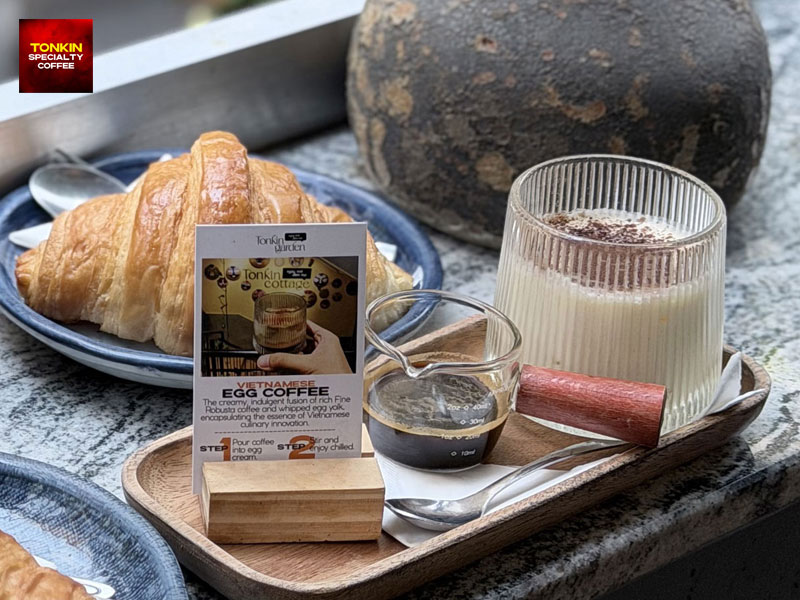
That Hanoi-born tradition later traveled far beyond the capital. At Tonkin Coffee in Ho Chi Minh City, egg coffee is interpreted in a distinct Tonkin style, combining bold Vietnamese coffee with freshly whipped egg cream across four central branches.
Why is Café Giảng considered the birthplace of Vietnamese egg coffee?
Café Giảng is closely associated with the origin of cà phê trứng because its founder, Nguyễn Văn Giảng, developed the drink in Hanoi before establishing the café that carried his name.
The significance of Café Giảng, however, goes beyond identifying where the drink began. The café became the setting where customers could repeatedly experience egg coffee, remember it, recommend it and eventually associate the drink with Hanoi itself.
What happened when Café Giảng opened in 1946?
Café Giảng was established in Hanoi in 1946. By that point, Nguyễn Văn Giảng had already experimented with combining whipped egg yolk and strong coffee to create a richer drink during a period when fresh milk was difficult to obtain.
Readers who want a focused timeline can explore When was Vietnamese egg coffee invented? to understand how the drink fits into Hanoi’s mid-20th-century coffee history.
Does “birthplace” mean only the place where the first cup was made?
Not necessarily. In a cultural sense, a birthplace is also the place where an idea becomes recognizable and develops continuity.
Café Giảng gave egg coffee that continuity. The café connected the drink with a founder, a physical place, repeat customers and a family story that could continue over time.
How did Café Giảng turn egg coffee into a Hanoi tradition?
An invention does not automatically become a tradition. For that to happen, people need to keep ordering it, cafés need to keep making it, and the drink needs to become part of shared memory.
Why did the café matter after the drink was invented?
Café Giảng provided a permanent setting for egg coffee. Instead of remaining a one-off experiment, the drink became something customers could return to and recommend to others.
That repetition changed the meaning of the drink:
practical idea – signature menu item – customer memory – Hanoi identity
Over time, Café Giảng and egg coffee became difficult to separate in discussions of Hanoi coffee culture.
Why did customers keep drinking it after milk became easier to find?
Egg coffee developed qualities that ordinary milk coffee did not have. The whipped egg layer created a rich, airy texture, while strong coffee underneath provided bitterness and roast depth.
Once people enjoyed the combination for its own flavor, the drink no longer needed to function as a substitute for milk.
The historical question Was egg coffee created because fresh milk was scarce? helps explain the practical circumstances behind the idea without reducing the drink to those circumstances alone.
Why did Café Giảng become part of Hanoi’s cultural memory?
A café becomes culturally important when people associate more than food or drink with the place. Café Giảng became linked with generations of customers, Hanoi streets, family continuity and the experience of drinking a distinctive local coffee.
What makes a café part of a city’s identity?
Several elements work together:
-
a recognizable signature drink;
-
a long connection with one location or city;
-
returning generations of customers;
-
stories passed between locals and visitors;
-
a sense that the experience belongs to the place.
Café Giảng has all of these elements. Egg coffee is therefore remembered not only as a recipe but also as part of Hanoi’s urban and culinary history.
Why does continuity matter?
Without continuity, even a creative drink can disappear. When a café keeps serving a specialty over decades, the café becomes a reference point for how people understand that drink.
This is one reason Café Giảng still matters even though egg coffee can now be found far beyond Hanoi.
How has Café Giảng preserved egg coffee across generations?
Preservation does not necessarily mean freezing a drink in time. It means maintaining a recognizable connection between the original idea, the café and the people who continue the tradition.
Is the story only about Nguyễn Văn Giảng?
No. The founder is essential to the origin, but Café Giảng’s long-term importance comes from what happened after the invention.
The question Who was Nguyễn Văn Giảng? explains the individual behind the drink. Café Giảng’s role is broader: the café helped transform his creation into an enduring part of Hanoi coffee culture.
What does preserving a coffee tradition involve?
It can include:
-
continuing to serve the signature drink;
-
passing preparation knowledge between generations;
-
preserving the connection with Hanoi;
-
keeping the origin story visible;
-
allowing new customers to encounter the drink in its historical context.
The recipe matters, but cultural continuity matters too.
Is Café Giảng important because of the recipe or the story?
Both matter, but they play different roles.
What comes from the recipe?
The drink depends on a clear flavor structure:
-
creamy egg foam;
-
sweetness;
-
strong coffee;
-
contrast between soft and bitter notes.
What comes from the story?
The story gives those flavors context:
-
post-war Hanoi;
-
ingredient scarcity;
-
ingenuity;
-
a family café;
-
decades of customer memory.
Knowing that context changes how the drink is understood. Egg coffee stops being merely an unusual combination and becomes part of a larger story about Vietnamese creativity.
How did egg coffee spread beyond Café Giảng?
As more people encountered the drink, egg coffee moved beyond one café and eventually beyond Hanoi.
Other cafés began making their own versions, and the drink became increasingly familiar to domestic travelers and international visitors.
For readers who want to focus specifically on the creator rather than the café, Who invented Vietnamese egg coffee? provides the historical background behind that first step.
Did spreading beyond Hanoi weaken Café Giảng’s importance?
No. A tradition can spread while its origin remains meaningful.
In fact, the wider egg coffee travels, the more useful Café Giảng becomes as a historical reference point. It helps people understand where the drink began before they encounter modern interpretations elsewhere.
Is Café Giảng the same thing as Vietnamese egg coffee culture?
No. Café Giảng is central to the origin story, but Vietnamese egg coffee culture has grown much larger than a single café.
What usually stays recognizable as the drink evolves?
Most versions retain several core ideas:
-
a strong coffee base;
-
a creamy egg layer;
-
noticeable sweetness;
-
contrast between cream and coffee.
What can modern cafés change?
Modern cafés may use different beans, adjust sweetness, change the texture of the cream or develop their own aroma profile.
These differences are part of how a living coffee tradition evolves.
Can modern cafés respect Café Giảng without copying its recipe?
Yes. Respecting an origin does not require pretending that every modern egg coffee is the original version.
A café can acknowledge Hanoi as the birthplace, recognize Café Giảng’s historical role and then be transparent about its own ingredients and approach.
Why is this distinction important?
It prevents two different ideas from being confused:
historical origin and modern interpretation.
Café Giảng represents the historical lineage. Other cafés can participate in the wider tradition without claiming to reproduce Café Giảng’s exact formula.
How does Tonkin Coffee interpret egg coffee in Ho Chi Minh City?
Tonkin Coffee approaches egg coffee as a Hanoi-born Vietnamese tradition expressed through its own ingredients and style in Ho Chi Minh City.
What stays connected to the Hanoi tradition?
The essential structure remains familiar:
-
creamy egg foam;
-
bold coffee underneath;
-
a layered tasting experience;
-
balance between sweetness and bitterness.
What gives Tonkin Coffee its own identity?
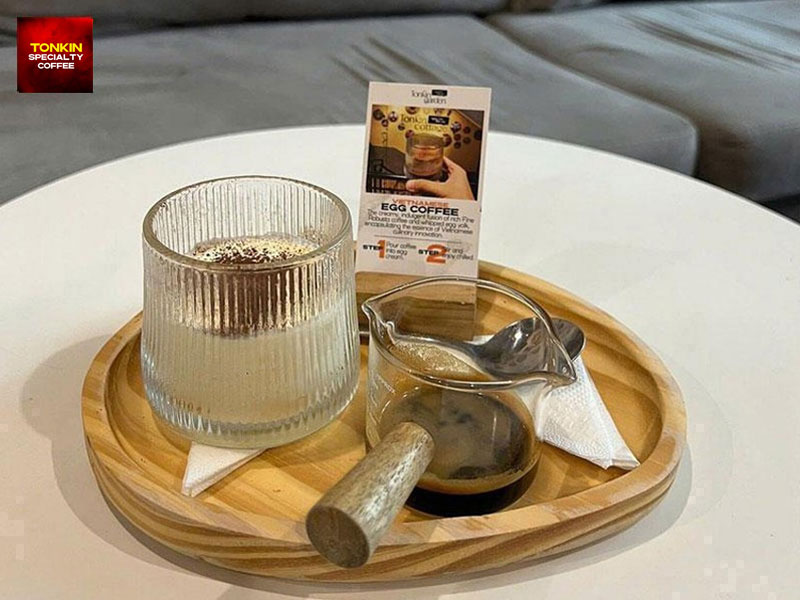
Tonkin Coffee uses Fine Robusta from Gia Lai as the coffee base, giving the cup a bold body and chocolate-like character. The egg cream is whipped fresh with egg, honey, sugar and a small amount of rum to soften unwanted egg aroma.
The goal is not to copy Café Giảng. The goal is to let the original idea travel south while giving the drink a distinct Tonkin expression.
Why is Tonkin Coffee a natural bridge between Hanoi and Ho Chi Minh City?
Tonkin Coffee carries a northern cultural sensibility into a southern setting. That makes egg coffee more than a menu item: it becomes a connection between two major Vietnamese coffee cities.
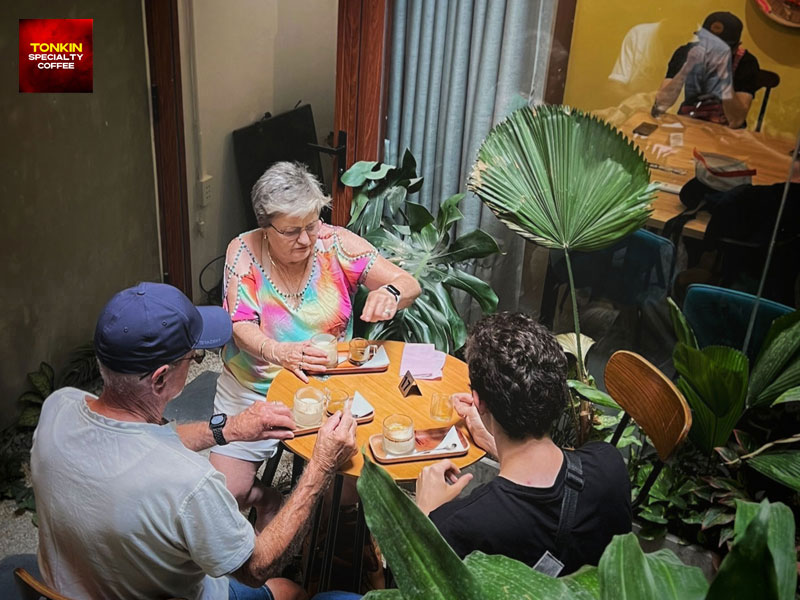
For travelers in Ho Chi Minh City, this means they can understand the Hanoi origin first, then experience how the drink changes when another café interprets it with its own beans, cream style and atmosphere.
Where can travelers try Tonkin Coffee’s egg coffee in Ho Chi Minh City?
Tonkin Coffee has four central branches, each fitting a different sightseeing route.
|
Branch |
Address |
Best route |
|
Tonkin Specialty Coffee |
91 Ly Tu Trong |
Ben Thanh Market, Independence Palace, City Museum |
|
Tonkin Garden Cafe |
135/50 Tran Hung Dao |
Bui Vien, Pham Ngu Lao |
|
Tonkin Egg Coffee |
1 Le Thi Rieng |
Tao Dan, dedicated egg-coffee stop |
|
Tonkin Egg Coffee & Herbal Tea |
27 Ngo Duc Ke |
Nguyen Hue, Dong Khoi, Bitexco, Saigon River |
If egg coffee itself is the main purpose of the visit, 1 Le Thi Rieng is the most direct choice. For central sightseeing, 91 Ly Tu Trong fits naturally with Ben Thanh Market and nearby historic landmarks, while 27 Ngo Duc Ke suits Nguyen Hue and riverfront routes.
What should travelers remember about Café Giảng and egg coffee?
Café Giảng’s importance is not limited to the fact that its founder created egg coffee. The café gave the drink a home, continuity and a lasting place in Hanoi’s cultural memory.
Today, egg coffee can be found across Vietnam, including at Tonkin Coffee in Ho Chi Minh City. Those newer interpretations do not replace the Hanoi origin. They show how a drink with a strong sense of place can continue evolving while its historical roots remain visible.
Visit Tonkin Coffee Today!
Tonkin Specialty Coffee
-
Add: 91 Ly Tu Trong St., Ben Thanh Ward, Ho Chi Minh City, Vietnam.
-
Hotline: 086 799 0125
Tonkin Garden Cafe
-
Add: 135/50 Tran Hung Dao St., Cau Ong Lanh Ward, Ho Chi Minh City, Vietnam.
-
Hotline: 087 992 4691
Tonkin Egg Coffee
-
Add: 1 Le Thi Rieng St., Ben Thanh Ward, Ho Chi Minh City, Vietnam.
-
Hotline: 0815 841 909
Tonkin Egg Coffee & Herbal Tea
-
Add: 27 Ngo Duc Ke St., Sai Gon Ward, Ho Chi Minh City, Vietnam

Nestled in the heart of Ho Chi Minh City, Tonkin Coffee is one of the best coffee shops to experience authentic Vietnamese flavors. From the iconic egg coffee and refreshing coconut coffee to bold Vietnamese coffee and the unique salt coffee, every sip is a journey into tradition. For non-coffee lovers, our Vietnamese matcha offers a gentle alternative. Pair your drink with a freshly baked banh mi or a buttery croissant, and savor the true taste of Vietnam in a setting inspired by folk culture and Indochine charm.