

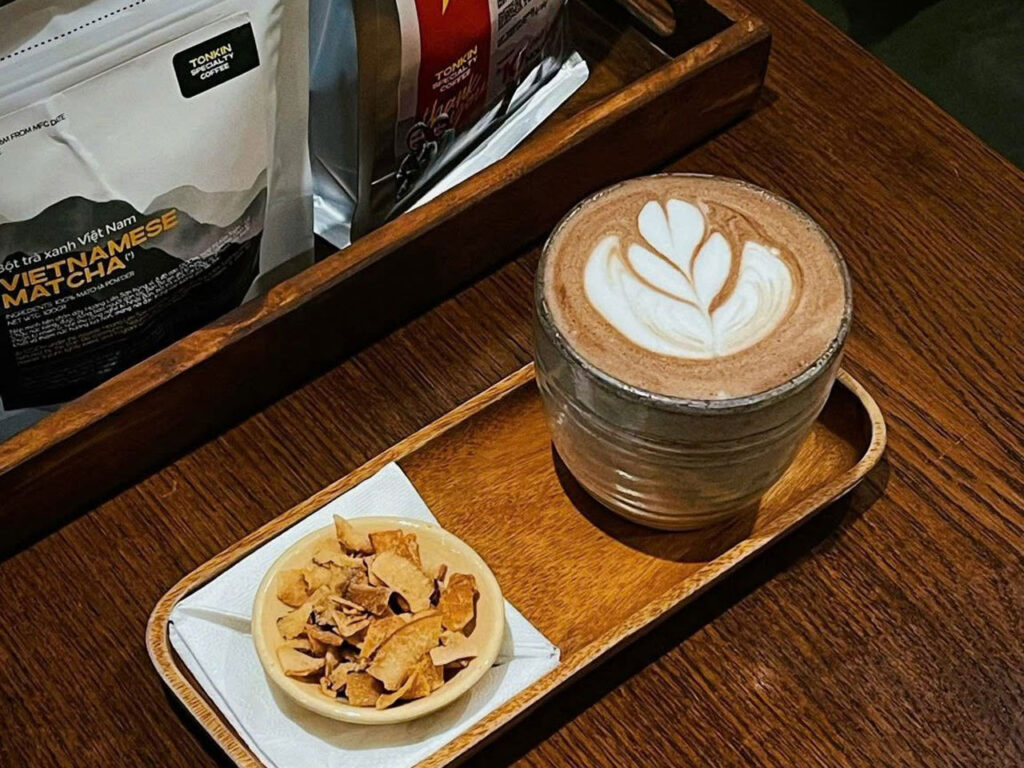
Vietnamese coconut coffee should still taste recognizably like coffee when it is made with a concentrated base. For anyone wondering does coconut coffee still taste like coffee, the answer depends on the strength of the espresso, the amount of coconut milk, and the serving style. At Tonkin Coffee, espresso provides a clear roasted foundation beneath creamy coconut milk and coconut flakes, creating a smooth drink without losing its coffee character.
Can you clearly taste coffee in Vietnamese coconut coffee?
In a balanced cup, coconut may appear first in the aroma, but the coffee becomes clearer through the middle and end of the sip.
The drinking experience often develops in stages:
| Stage | Most noticeable character |
| Aroma | Coconut milk or coconut flakes |
| First sip | Smoothness and mild sweetness |
| Mid-palate | Espresso body and roasted notes |
| Finish | Gentle bitterness and coconut |
| Aftertaste | A combination of coffee and tropical aroma |
The coconut layer changes how the coffee feels, but it should not remove its identity. A properly made drink still carries the roasted depth associated with Vietnamese coffee.
A broader explanation of what does Vietnamese coconut coffee taste like includes sweetness, creaminess, bitterness, temperature, and aftertaste, while the main concern here is how clearly the coffee remains present.
Why does the coffee not disappear beneath coconut milk?
Three factors help preserve the coffee character.
Concentrated coffee provides structure
Espresso and strong Vietnamese coffee contain enough flavor intensity to remain noticeable after coconut milk and ice are added. A weak filter coffee may become diluted, but concentrated coffee provides a stable roasted foundation.
Roasted notes contrast with coconut
Coffee contributes dark, nutty, cocoa-like, or caramelized notes. Coconut adds a softer tropical aroma. Because these profiles are different, they can remain recognizable instead of blending into one flat flavor.
Mild bitterness prevents the drink from becoming too sweet
Bitterness gives the drink depth and keeps it connected to coffee. It balances the coconut component and stops the cup from tasting only like cream, syrup, or a smoothie.
Which coffee base keeps the coffee flavor strongest?
The clearest coffee presence usually comes from espresso, concentrated Robusta, or phin-brewed coffee.
Does Robusta work well with coconut milk?
Robusta is well suited to creamy Vietnamese drinks because it generally has:
- A fuller body
- A deeper roasted profile
- More noticeable bitterness
- Enough intensity to remain present under milk or cream
Its strength makes it easier to maintain balance after sweet or creamy ingredients are introduced.
Can espresso remain recognizable?
Yes. Espresso is concentrated, clearly defined, and consistent. It adds enough roasted intensity without increasing the liquid volume too much.
This is particularly useful in iced coconut coffee, where melting ice can gradually reduce the drink’s concentration.
Can phin coffee also be used?
Phin-brewed coffee can create a dense body and traditional Vietnamese aroma. It may feel slower and heavier than espresso, but both methods can work when the extraction is strong enough.
The key factor is concentration rather than whether the coffee is prepared with an espresso machine or a phin filter.
Does coconut milk hide the bitterness of coffee?
Coconut milk softens bitterness, but it does not necessarily hide the coffee itself.
Its natural fat and creamy texture make sharp notes feel rounder. Sweetener may also reduce the perception of bitterness, yet the roasted aroma and coffee finish can remain clear.
| Coconut milk may | It does not have to |
| Reduce sharp bitterness | Remove roasted aroma |
| Add smoothness | Cover the entire coffee flavor |
| Make the body rounder | Turn the drink into a milkshake |
| Add mild sweetness | Make every cup very sweet |
This is one reason coconut coffee can appeal to people who find black Vietnamese coffee too intense but still want a drink that feels unmistakably coffee-based.
When does coconut coffee stop tasting like coffee?
The coffee becomes difficult to identify when the creamy and sweet components become too dominant.
This may happen when:
- The coffee base is weak
- Too much coconut cream is used
- Coconut syrup overwhelms the drink
- Condensed milk makes it excessively sweet
- A thick topping covers every sip
- Too much crushed ice dilutes the coffee
- The recipe is designed mainly as a dessert
Signs of a balanced cup include a roasted aroma, noticeable coffee body, mild bitterness in the finish, and sweetness that supports rather than replaces the coffee.
By contrast, a drink that tastes only of syrup, cream, and coconut may be pleasant as a dessert, but it is no longer especially coffee-forward.
Does coconut milk preserve more coffee flavor than coconut cream?
Usually, yes. Coconut milk is lighter and allows more coffee definition, while coconut cream creates a thicker and richer result.
| Coconut milk | Coconut cream |
| Lighter texture | Denser texture |
| Softer tropical character | Stronger coconut presence |
| Lets espresso remain clearer | Covers bitterness more heavily |
| Suitable for hot or iced coffee | Common in blended drinks |
| Shorter creamy finish | Longer dessert-like finish |
The difference becomes easier to understand when considering what is Vietnamese coconut coffee made of. Some versions rely mainly on coconut milk, while others add coconut cream, condensed milk, syrup, or frozen coconut mixtures.
Which serving style tastes most like coffee?
Temperature and texture can change how strongly the coffee comes through.
Hot coconut coffee
A hot version often preserves aroma and body because there is no dilution from ice. Both the roasted coffee and coconut fragrance become more expressive with warmth.
The drink may feel rounder, richer, and more unified.
Iced coconut coffee
An iced version often remains balanced and refreshing. Cold temperature can make the initial aroma feel softer, but the espresso may become clearer in the finish.
Gradual dilution also makes the texture lighter, which can help the drink feel less dessert-like.
The contrast between a rich first sip and a cooler finish explains why people sometimes debate whether coconut coffee sweet or refreshing. It can be both, depending on the recipe and serving style.
Blended coconut coffee
Blended versions are usually the least coffee-forward. They often contain more coconut cream, sweetened base, crushed ice, or condensed milk.
The thick frozen texture can surround the palate and make the coffee feel secondary. This style is better suited to people who prefer a dessert drink rather than a clearly roasted coffee experience.
Does a strong coconut aroma mean the coffee is hidden?
Not necessarily. Aroma and flavor dominance are not the same.
Coconut flakes or warm coconut milk may create a strong fragrance before the first sip, but the espresso can still remain clear once the drink reaches the palate.
The question does Vietnamese coconut coffee taste strongly of coconut depends on more than aroma alone. Coconut may be highly noticeable in the smell while still remaining balanced against the coffee body and finish.

Aroma, sweetness, texture, and roasted depth should be evaluated separately.
Is coconut coffee suitable for serious coffee drinkers?
Yes, provided the drink uses a strong coffee base and restrained coconut sweetness.
It may appeal to people who:
- Enjoy espresso with milk
- Like a smoother alternative to black coffee
- Want a tropical variation on a latte
- Prefer a noticeable roasted finish
- Enjoy both hot and iced coffee
It may be less suitable for drinkers who only enjoy unsweetened black coffee or strongly dislike coconut aroma.
A useful approach is to ask whether the drink uses espresso or concentrated Vietnamese coffee, and whether the creamy component is coconut milk or thick coconut cream.
How does Tonkin Coffee keep the coffee flavor clear?
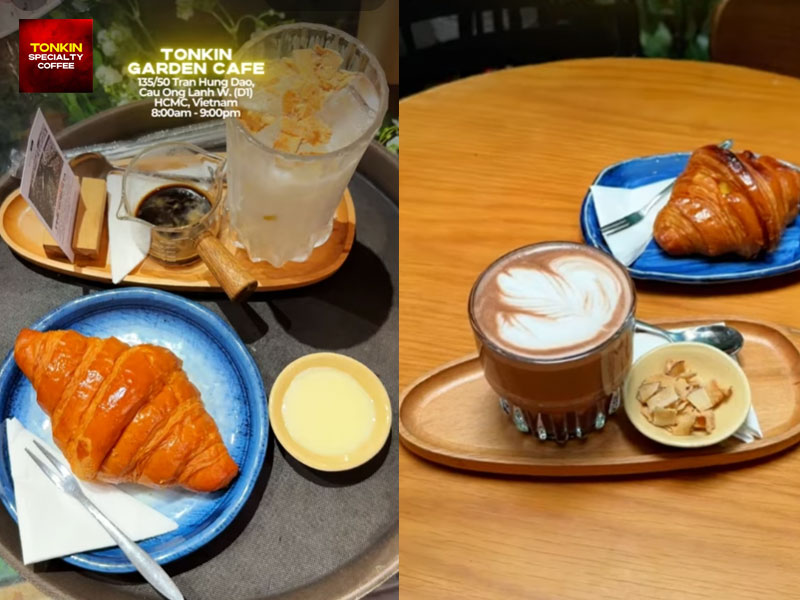
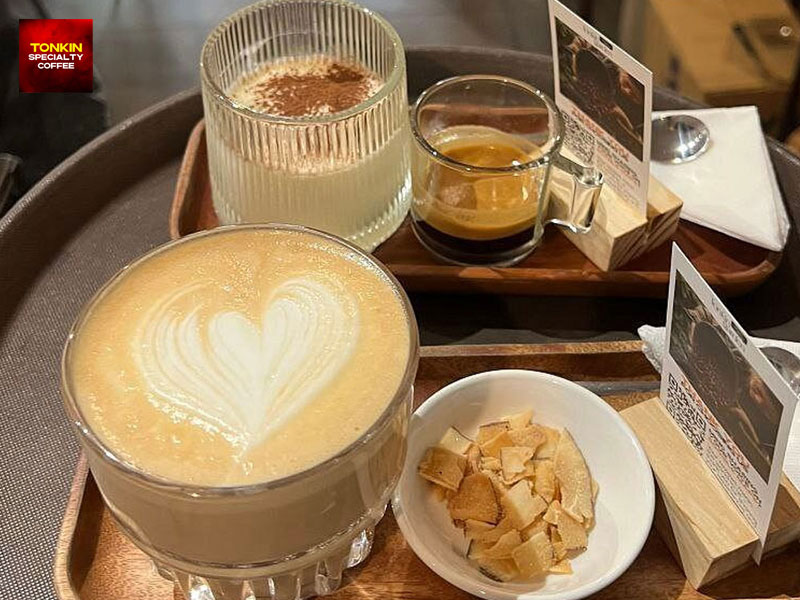
At Tonkin Coffee, Cà Phê Sữa Dừa combines espresso, creamy coconut milk, and coconut flakes. The espresso creates a concentrated roasted base, while the coconut milk softens the drink without completely covering its coffee character.
Coconut flakes add aroma and light texture rather than turning the cup into a heavy blended dessert.
| Tonkin Coffee component | Role in the drink |
| Espresso | Provides roasted strength and definition |
| Coconut milk | Adds smooth tropical creaminess |
| Coconut flakes | Enhances aroma and texture |
| Hot service | Highlights body and aroma |
| Iced service | Creates a cooler, lighter finish |
This format allows guests to recognize both sides of the drink: the espresso remains clear beneath a gentle coconut layer.
Where can travelers try Tonkin Coconut Coffee?
Tonkin Coffee has four central Ho Chi Minh City branches:
- Tonkin Specialty Coffee – 91 Ly Tu Trong Street
- Tonkin Garden Cafe – 135/50 Tran Hung Dao Street
- Tonkin Egg Coffee & Herbal Tea – 27 Ngo Duc Ke Street
- Tonkin Egg Coffee – 1 Le Thi Rieng Street
Their locations fit naturally into routes around Ben Thanh Market, Nguyen Hue Walking Street, Bitexco Financial Tower, Tao Dan Park, and central District 1.
For visitors comparing the best coffee for tourists in downtown Saigon, Coconut Coffee offers a useful middle ground between strong black coffee and a fully dessert-style drink. It introduces Vietnamese coffee intensity in a softer, more approachable format.
So, does coconut coffee still taste like coffee?
Yes. A properly balanced coconut coffee still carries clear roasted aroma, body, and mild bitterness. Coconut milk smooths the sharper edges and introduces tropical creaminess, but concentrated espresso or strong Vietnamese coffee keeps the drink recognizable as coffee.
Coconut-milk versions usually remain more coffee-forward than coconut-cream-heavy blended drinks. At Tonkin Coffee, espresso forms the base beneath coconut milk and coconut flakes, allowing the coconut to complement rather than replace the coffee.
Visit Tonkin Coffee Today!
Tonkin Specialty Coffee
- Add: 91 Ly Tu Trong St., Ben Thanh Ward, Ho Chi Minh City, Vietnam.
- Hotline: 086 799 0125
Tonkin Garden Cafe
- Add: 135/50 Tran Hung Dao St., Cau Ong Lanh Ward, Ho Chi Minh City, Vietnam.
- Hotline: 087 992 4691
Tonkin Egg Coffee
- Add: 1 Le Thi Rieng St., Ben Thanh Ward, Ho Chi Minh City, Vietnam.
- Hotline: 0815 841 909
Tonkin Egg Coffee & Herbal Tea
- Add: 27 Ngo Duc Ke St., Sai Gon Ward, Ho Chi Minh City, Vietnam
Nestled in the heart of Ho Chi Minh City, Tonkin Specialty Coffee is one of the best coffee shops to experience authentic Vietnamese flavors. From the iconic egg coffee and refreshing coconut coffee to bold Vietnamese coffee and the unique salt coffee, every sip is a journey into tradition. For non-coffee lovers, our Vietnamese matcha offers a gentle alternative. Pair your drink with a freshly baked banh mi or a buttery croissant, and savor the true taste of Vietnam in a setting inspired by folk culture and Indochine charm.