

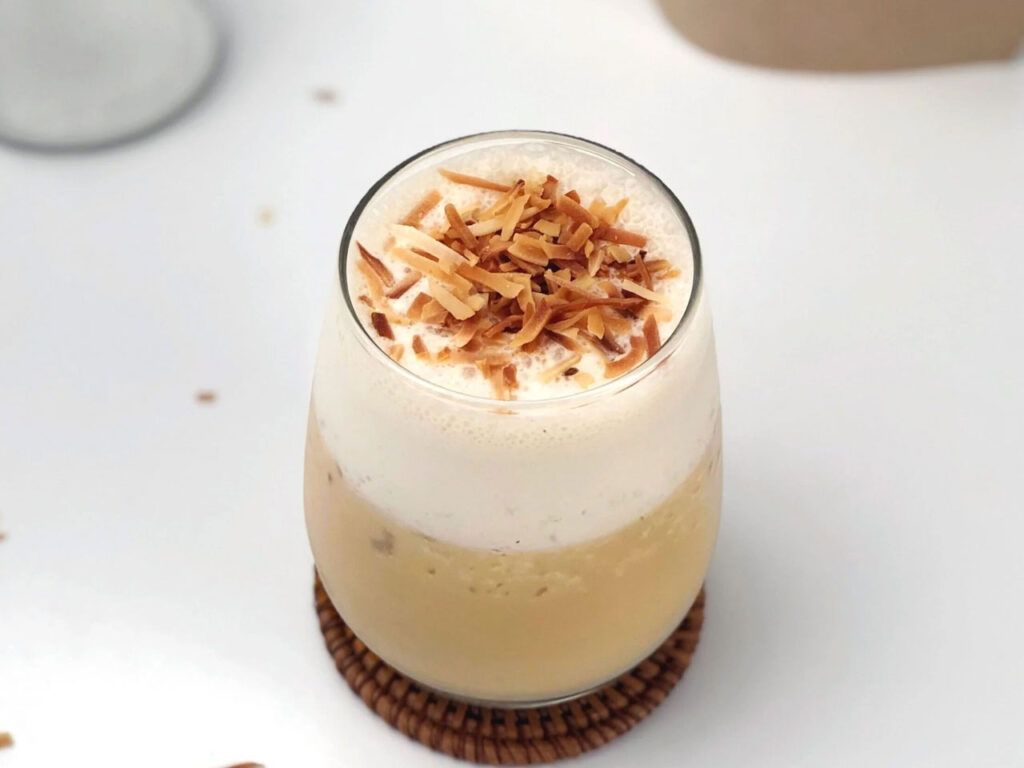
Vietnamese coconut coffee combines concentrated coffee with coconut milk or coconut cream, creating a smooth drink that can be served hot, iced, or blended. For anyone wondering what is Vietnamese coconut coffee made of, the basic recipe may also include condensed milk, sweetener, ice, or coconut flakes, depending on the café. At Tonkin Coffee, the drink is prepared with espresso, creamy coconut milk, and coconut flakes, keeping the coconut character clear without completely covering the coffee.
What are the main ingredients in Vietnamese coconut coffee?
Most Vietnamese coconut coffee contains four basic components.
| Ingredient | Purpose in the drink | Essential or optional? |
| Concentrated coffee | Provides bitterness, roasted aroma, and structure | Essential |
| Coconut milk or coconut cream | Adds coconut aroma and a smooth texture | Essential |
| Sweetener | Balances the bitterness of the coffee | Usually included |
| Ice | Chills and slightly dilutes the drink | Essential for iced versions |
| Coconut flakes | Adds aroma and light texture | Optional |
| Condensed milk | Adds sweetness and dairy richness | Optional |
The exact ingredient combination depends on the café. A lighter drink may use coconut milk, while a thick blended version may rely more heavily on coconut cream and crushed ice.
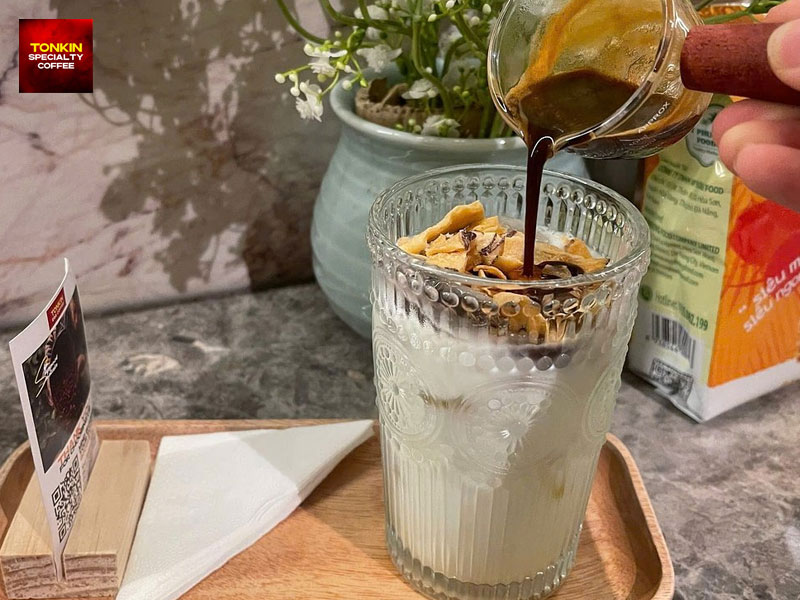
The most important point is that coconut coffee should still contain a noticeable coffee base. Without sufficiently concentrated coffee, the coconut component can easily dominate the drink.
What type of coffee is used in Vietnamese coconut coffee?
Vietnamese coconut coffee is normally made with a strong coffee base rather than regular filter coffee. This may include:
- Phin-brewed Vietnamese coffee
- Robusta coffee
- Fine Robusta
- Espresso
- A blend of Robusta and Arabica
Robusta is particularly suitable because its deeper roasted character can remain recognizable beneath coconut milk and sweetener. Its naturally fuller body also prevents the drink from becoming thin after ice is added.
Some cafés use a traditional phin filter, while others use espresso machines. Neither method is compulsory. What matters is concentration. The coffee needs enough intensity to provide contrast against the creamy coconut layer.
At Tonkin Coffee, espresso creates a defined foundation for Cà Phê Sữa Dừa, allowing the coconut milk to soften the drink without completely covering its roasted coffee character.
Is coconut milk or coconut cream used?
Both coconut milk and coconut cream can be used, but they produce different results.
What does coconut milk add?
Coconut milk has a relatively fluid consistency. It blends easily with coffee and creates a smooth, drinkable texture without making the cup excessively heavy.
It is especially practical for:
- Iced coconut coffee
- Hot coconut coffee
- Layered café drinks
- Coffee-forward recipes
Because coconut milk is lighter than coconut cream, it allows more of the coffee aroma to remain noticeable.
What does coconut cream add?
Coconut cream contains more coconut fat and has a denser texture. It can make the drink feel richer, thicker, and more dessert-like.
It is commonly used in:
- Frozen coconut coffee
- Blended drinks
- Thick coconut foam
- Dessert-style presentations
A large amount of coconut cream can overwhelm a weak coffee base, so cafés often pair it with concentrated espresso or strong phin coffee.
| Coconut milk | Coconut cream |
| Lighter texture | Thicker texture |
| Easier to drink | More dessert-like |
| Mixes easily with espresso | Suited to blended drinks |
| Keeps coffee clearer | Can soften bitterness more strongly |
Some recipes combine the two ingredients to achieve both drinkability and richness.
Does Vietnamese coconut coffee contain condensed milk?
Condensed milk is common, but it is not required in every version.

Traditional Vietnamese coffee drinks often use condensed milk because it adds sweetness, body, and a familiar dairy note. In coconut coffee, however, the coconut base may already contain enough sweetness and richness.
A café may use:
- Sweetened condensed milk
- Sugar syrup
- Coconut syrup
- Sweetened coconut milk
- No additional sweetener
The choice affects both sweetness and texture. Condensed milk creates a rounder, denser mouthfeel, while sugar syrup adds sweetness without as much dairy richness.
For readers wondering what does Vietnamese coconut coffee taste like, the amount of condensed milk or coconut sweetener is one of the main reasons the drink can vary from balanced and coffee-forward to noticeably dessert-like.
Does Vietnamese coconut coffee contain real coconut?
Most authentic versions contain coconut milk, coconut cream, or both. These ingredients are produced from coconut flesh and water, so they provide genuine coconut aroma and natural fat.
Coconut flakes may also be added as a topping. They are not essential, but they can provide:
- A stronger coconut aroma
- A light chewy texture
- A visual finishing element
- A contrast with the liquid coffee
Not every coconut-flavored coffee contains the same quality of coconut ingredients. Some commercial versions may depend heavily on coconut syrup or a premixed powder.
A well-balanced café version usually uses a real coconut-based liquid as the main creamy component rather than relying only on artificial flavoring.
Which ingredients are optional?
Several additions can change the character of the drink without defining it.
Optional ingredients include:
- Condensed milk
- Coconut flakes
- Shredded coconut
- Coconut syrup
- Dairy cream
- Coffee foam
- Cocoa powder
- Cinnamon
- Crushed ice
- Vanilla
These additions should support the central combination of coffee and coconut rather than distract from it.
For example, coconut flakes can enhance aroma without changing the drink significantly. Heavy whipped cream, chocolate sauce, or excessive syrup may move the drink closer to a dessert beverage.
Do hot, iced, and blended coconut coffees use different ingredients?
The core ingredients are usually similar, but their proportions and preparation formats differ.
| Serving style | Typical composition | Main characteristic |
| Hot | Coffee, coconut milk, sweetener | Smooth and aromatic |
| Iced | Coffee, coconut milk, ice | Lighter and easy to drink |
| Blended | Coffee, coconut cream, sweetener, crushed ice | Thick and frozen |
| Layered | Espresso and a separate coconut layer | Distinct visual contrast |
A hot version generally requires a coconut mixture that remains smooth when warmed. An iced version can use a lighter coconut milk base because ice naturally adds dilution.
Blended coconut coffee often contains more coconut cream or frozen coconut mixture to maintain its thick consistency. This format usually feels richer than a simple iced version.

The distinction also explains why people may disagree over whether coconut coffee sweet or refreshing. A blended recipe may feel rich and dessert-like, while an iced coffee with a lighter coconut base can be noticeably more refreshing.
Is Vietnamese coconut coffee dairy-free or vegan?
Coconut milk itself is plant-based, but coconut coffee is not automatically dairy-free or vegan.
The drink may contain:
- Dairy-based condensed milk
- Milk powder
- Dairy cream
- Premixed coconut bases containing milk
- Toppings produced with dairy ingredients
Anyone avoiding dairy should ask whether condensed milk or dairy cream is included. People with allergies should also ask about premixed ingredients and possible cross-contact behind the bar.
A vegan version is possible when the café uses coffee, coconut milk, plant-based sweetener, and dairy-free toppings. However, customers should confirm the ingredient list rather than assuming every coconut coffee is vegan.
How does Tonkin Coffee prepare its Coconut Coffee?
Tonkin Coffee’s Cà Phê Sữa Dừa is built around espresso, creamy coconut milk, and coconut flakes. The espresso provides enough concentration to remain present beneath the coconut layer, while the coconut milk creates a softer and smoother mouthfeel.
Coconut flakes add a subtle aromatic texture without turning the drink into an overly elaborate dessert. Guests can choose between hot and iced formats depending on how they prefer to experience the same core ingredients.
This composition keeps the ingredient list relatively focused:
| Tonkin component | Role in the drink |
| Espresso | Provides a strong coffee base |
| Coconut milk | Adds smoothness and coconut aroma |
| Coconut flakes | Adds light texture and aroma |
| Hot or iced service | Changes temperature and drinking style |
Visitors comparing places for the best coconut coffee in Ho Chi Minh City can consider not only sweetness but also whether the coffee remains clear beneath the coconut component.
Can Vietnamese coconut coffee be made at home?
Yes. A home version generally begins with strong coffee, coconut milk or coconut cream, sweetener, and ice. The main challenge is creating enough coffee concentration and preventing the coconut mixture from becoming too heavy.
A detailed coconut coffee recipe can help clarify ingredient ratios and serving options. Those who need a more practical process can also follow a guide explaining how to make coconut coffee using common kitchen equipment.
For home preparation, it is better to adjust sweetness gradually. Coconut milk brands vary significantly, and some are already sweetened.
Where can you try Coconut Coffee at Tonkin Coffee?
Tonkin Coffee has four central Ho Chi Minh City locations where visitors can explore Vietnamese coffee drinks:
Tonkin Specialty Coffee – 91 Ly Tu Trong Street
This location is convenient for travelers exploring Ben Thanh Market and central District 1.
Tonkin Garden Cafe – 135/50 Tran Hung Dao Street
The garden setting offers a quieter stop between city activities.
Tonkin Egg Coffee & Herbal Tea – 27 Ngo Duc Ke Street
This branch is close to Nguyen Hue Walking Street, Bitexco, and the riverfront area.
Tonkin Egg Coffee – 1 Le Thi Rieng Street
The location works well with visits to Tao Dan Park and nearby food streets.
Across its branches, Tonkin Coffee serves Coconut Coffee hot or iced, allowing guests to experience how temperature changes the same balanced combination of espresso, coconut milk, and coconut flakes.
Frequently asked questions
Is Vietnamese coconut coffee made with coconut water?
Usually not. Coconut water is too light to create the creamy texture associated with the drink. Coconut milk or coconut cream is more commonly used.
Does coconut coffee always contain condensed milk?
No. Some versions use condensed milk, while others use sweetened coconut milk, syrup, or a coconut base that is already sweet.
Is Vietnamese coconut coffee made with espresso?
It can be. Espresso is common in modern cafés, while some traditional versions use concentrated phin-brewed coffee.
Does coconut coffee contain coconut flakes?
Not always. Coconut flakes are an optional topping rather than a required ingredient.
Can coconut coffee be served hot?
Yes. Vietnamese coconut coffee may be served hot, iced, layered, or blended, provided the coconut mixture is suitable for the chosen format.
Visit Tonkin Coffee Today!
Tonkin Specialty Coffee
- Add: 91 Ly Tu Trong St., Ben Thanh Ward, Ho Chi Minh City, Vietnam.
- Hotline: 086 799 0125
Tonkin Garden Cafe
- Add: 135/50 Tran Hung Dao St., Cau Ong Lanh Ward, Ho Chi Minh City, Vietnam.
- Hotline: 087 992 4691
Tonkin Egg Coffee
- Add: 1 Le Thi Rieng St., Ben Thanh Ward, Ho Chi Minh City, Vietnam.
- Hotline: 0815 841 909
Tonkin Egg Coffee & Herbal Tea
- Add: 27 Ngo Duc Ke St., Sai Gon Ward, Ho Chi Minh City, Vietnam
Nestled in the heart of Ho Chi Minh City, Tonkin Specialty Coffee is one of the best coffee shops to experience authentic Vietnamese flavors. From the iconic egg coffee and refreshing coconut coffee to bold Vietnamese coffee and the unique salt coffee, every sip is a journey into tradition. For non-coffee lovers, our Vietnamese matcha offers a gentle alternative. Pair your drink with a freshly baked banh mi or a buttery croissant, and savor the true taste of Vietnam in a setting inspired by folk culture and Indochine charm.