

 한국어
 中文 (中国)
 日本語
 中文 (台灣)
Every cup of Vietnamese coffee reflects a journey through farms, processors, traders and roasters. Understanding how Vietnam’s coffee supply chain works connects these stages with the flavors visitors experience in local cafés. At Tonkin Coffee in Ho Chi Minh City, Fine Robusta from Gia Lai brings that agricultural story into black coffee, milk coffee and signature egg coffee.
How does Vietnamese coffee travel from farms to buyers?
Who grows the coffee at the beginning of the chain?
Smallholder farmers form an important foundation of Vietnam’s coffee industry. Family farms manage planting, crop care and harvesting, particularly across the Central Highlands, where Robusta dominates production.
For a closer explanation of how coffee is farmed in Vietnam, cultivation includes managing water, soil, pruning and harvest timing. These decisions establish the raw material that processors and roasters later work with.
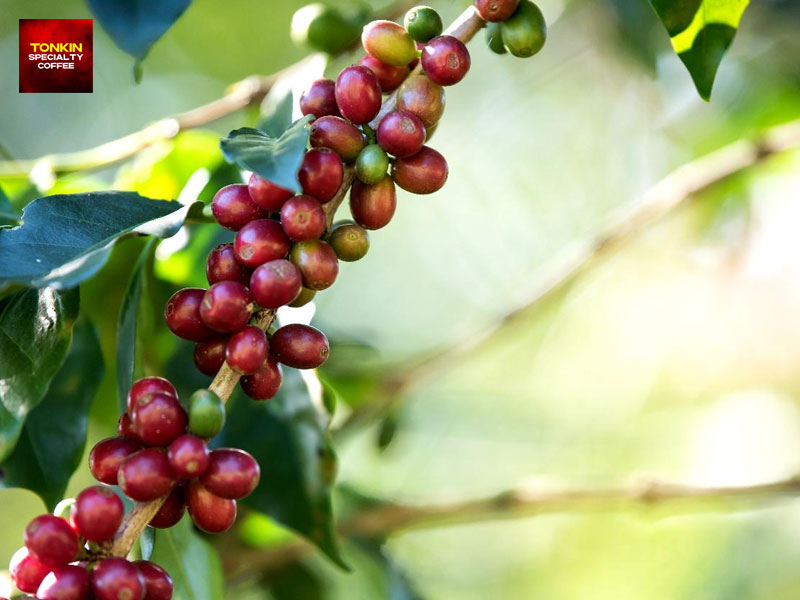
Farmers may sell fresh cherries, dried cherries or partly processed coffee, depending on local practices and available equipment. Processing therefore sometimes begins before coffee leaves the farm.
Why do collectors and cooperatives connect farms with larger buyers?
Individual farms may produce less coffee than a commercial buyer needs. Local collectors, buying stations and cooperatives help assemble larger quantities and coordinate movement between producers and processors.
Buyers assess factors such as weight, moisture and visible quality when purchasing coffee. Aggregation makes trading practical, although combining lots can make detailed origin tracking more demanding.
Not every transaction involves the same intermediaries. Some farmers work through established buying networks, while others supply cooperatives, processors or roasters through closer relationships.
| Stage | Main activity | Result |
| Farming | Growing and harvesting cherries | Raw coffee material |
| Collection | Purchasing and assembling lots | Commercial quantities |
| Processing | Drying and removing outer layers | Green coffee |
| Trading | Matching lots with buyers | Domestic or export distribution |
| Roasting | Applying controlled heat | Aromatic roasted beans |
| Brewing | Extracting coffee into water | A finished drink |
How do processing and origin influence coffee quality?
How do coffee cherries become green beans?
A coffee bean is the seed inside a coffee cherry. Before roasting, producers remove the surrounding fruit layers and dry the coffee sufficiently for storage.
The sequence depends on the processing method. Natural processing generally dries the whole cherry before hulling, while washed processing removes much of the fruit before subsequent processing and drying.
The resulting green coffee beans are unroasted seeds. “Green” describes the coffee’s condition, rather than a separate species or a particular brewing style. The International Trade Centre distinguishes processing, trade and roasting as separate parts of the coffee value chain.
Why do drying, sorting and storage matter?
Careful drying helps protect coffee during storage. Sorting removes unwanted material and defective beans, while suitable packaging and storage reduce exposure to damaging conditions.
Good farming alone cannot guarantee a good cup. Quality must also survive transport, warehousing and roasting before the beans reach a café.
Does every Vietnamese region supply the same coffee?
Vietnam’s coffee supply includes different species and growing environments. Robusta is central to the national industry, but Arabica provides another important part of the country’s coffee story.
The connection between Son La and Arabica coffee introduces a northern growing region with a different identity from the Central Highlands’ dominant Robusta sector. Meanwhile, Da Lat’s association with Arabica reflects the role of cooler highland environments.
Origin provides useful context, but a place name does not reveal every detail. Species, processing, roast level and freshness still deserve attention.
Where does Vietnamese coffee go after processing?
Why do international buyers purchase green coffee?
Green beans allow overseas roasters to develop products for their own customers. A buyer might use Vietnamese coffee in an espresso blend, a packaged product or further manufacturing.
The country’s position in the Vietnam coffee export ranking helps explain the scale of these trading networks. However, export position alone does not measure the quality of an individual coffee lot.
Export figures also require context. Production, shipments, imports and stock changes are different measurements, so a single export percentage should not be treated as a permanent rule.
How do domestic roasting and manufacturing create additional value?
Vietnam also retains coffee for domestic roasting, retail and café consumption. Other businesses manufacture roasted products or soluble coffee, commonly called instant coffee.
These activities create value beyond selling an unroasted agricultural product. USDA’s 2025 annual report identified growth prospects for Vietnamese roasted and soluble coffee exports, illustrating the industry’s expanding product range.
For travelers, the domestic route is especially visible. Coffee moves from agricultural production into neighborhood cafés, where brewing techniques and local recipes create familiar daily rituals.
Why does coffee traceability matter?
What can traceability reveal about a coffee?
Coffee traceability connects a product with information about its origin and movement. Depending on the system, records may identify a supplier, cooperative, processing lot or individual growing plot.
Knowing a region is useful, but regional identification is not the same as complete farm-level tracking. Clear records become particularly important when coffee from several producers is combined.
Does a shorter supply chain guarantee better coffee?
A shorter chain can make communication easier, but fewer intermediaries do not automatically produce better flavor or fairer payments. Quality control, purchasing terms and reliable relationships remain essential.
Traceability is also becoming more important for environmental requirements. The EU’s Deforestation Regulation addresses deforestation risks associated with commodities including coffee, making documented sourcing relevant beyond taste alone.
Experience Vietnam’s Farm-to-Cup Journey at Tonkin Coffee
Which drinks help reveal the coffee underneath?
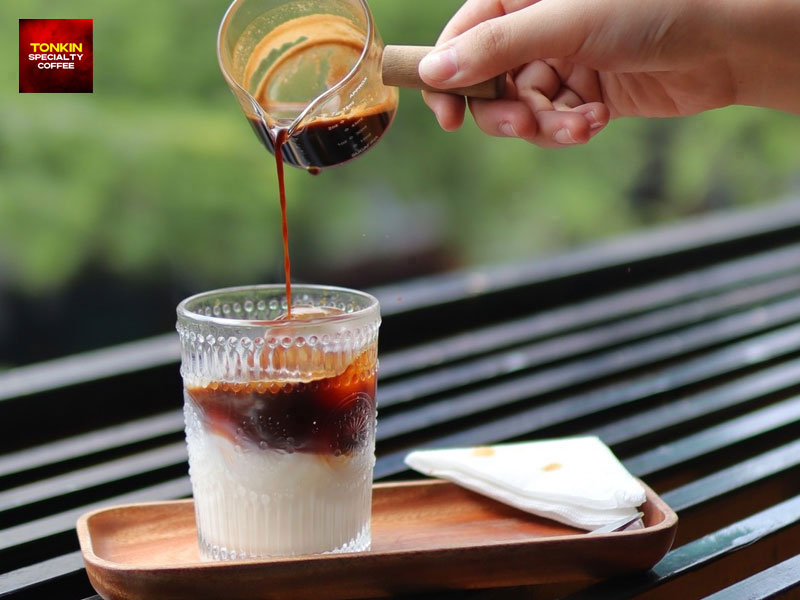
Tonkin uses Fine Robusta from Gia Lai, bringing a Central Highlands origin into the café experience. The brand describes this coffee as the foundation for drinks including black coffee and its signature egg coffee.
Start with a drink that matches your usual preferences. Black coffee makes the coffee base easier to notice, while milk or cream changes the balance and texture.
- Black Coffee: Notice body, bitterness and the lingering finish.
- Nâu Tonkin: Observe how milk sweetness interacts with coffee.
- Egg Coffee: Taste the cream first, then combine it with coffee.
- Salt Coffee: Notice how sweetness and a gentle salty contrast interact.
Sharing two drinks can make comparison easier without ordering several coffees per person.
Which Tonkin branch fits your sightseeing route?
Choose a branch according to the places already on your itinerary. A café visit should give you time to enjoy the drink, rather than become another rushed stop.
| Branch | Address | Suggested connection |
| Tonkin Specialty Coffee | 91 Ly Tu Trong Street | Ben Thanh area and central sightseeing |
| Tonkin Garden Cafe | 135/50 Tran Hung Dao Street | A slower garden café break |
| Tonkin Egg Coffee | 1 Le Thi Rieng Street | Huynh Hoa bánh mì |
| Tonkin Egg Coffee & Herbal Tea | 27 Ngo Duc Ke Street | Nguyen Hue, Cafe Apartment and Bitexco |
Vietnam’s coffee supply chain becomes easier to understand when agricultural knowledge meets actual tasting.
Visit Tonkin Coffee, choose a drink you enjoy, and notice how origin, preparation and Vietnamese café culture come together in the cup.
Visit Tonkin Coffee Today!
Tonkin Specialty Coffee
- Add: 91 Ly Tu Trong St., Ben Thanh Ward, Ho Chi Minh City, Vietnam.
- Hotline: 086 799 0125
Tonkin Garden Cafe
- Add: 135/50 Tran Hung Dao St., Cau Ong Lanh Ward, Ho Chi Minh City, Vietnam.
- Hotline: 087 992 4691
Tonkin Egg Coffee
- Add: 1 Le Thi Rieng St., Ben Thanh Ward, Ho Chi Minh City, Vietnam.
- Hotline: 0815 841 909
Tonkin Egg Coffee & Herbal Tea
- Add: 27 Ngo Duc Ke St., Sai Gon Ward, Ho Chi Minh City, Vietnam
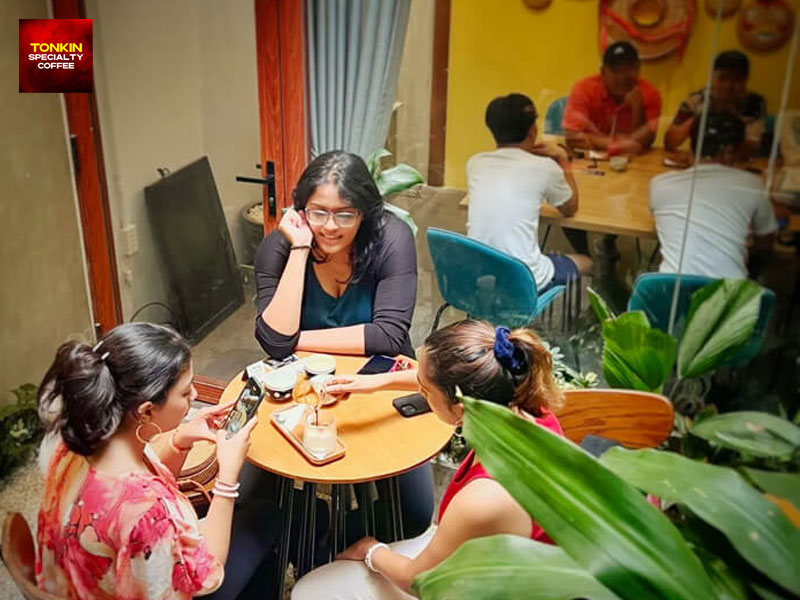
Nestled in the heart of Ho Chi Minh City, Tonkin Coffee is one of the best coffee shops to experience authentic Vietnamese flavors. From the iconic egg coffee and refreshing coconut coffee to bold Vietnamese coffee and the unique salt coffee, every sip is a journey into tradition. For non-coffee lovers, our Vietnamese matcha offers a gentle alternative. Pair your drink with a freshly baked banh mi or a buttery croissant, and savor the true taste of Vietnam in a setting inspired by folk culture and Indochine charm.