

 한국어
 中文 (中国)
 日本語
 中文 (台灣)
A silky layer of egg cream carries a story that began in Hanoi in 1946. What Is the History of Vietnamese Egg Coffee? Bartender Nguyễn Văn Giảng created the drink using whipped egg yolks as an alternative to scarce fresh milk. Today, Tonkin Coffee in Ho Chi Minh City connects that inventive spirit with freshly whipped egg cream and bold Gia Lai Fine Robusta.
How did a milk shortage inspire Vietnamese egg coffee?
A shortage of fresh milk in 1940s Hanoi prompted Nguyễn Văn Giảng to experiment with whipped egg yolks. The creamy topping balanced strong coffee and gave a practical substitution an identity of its own.
Who was the bartender behind the first cup?
Nguyễn Văn Giảng worked as a bartender at Hanoi’s Metropole Hotel. During a period when fresh milk was difficult to obtain, he experimented with whipped egg yolks to recreate the richness that milk usually brought to coffee.
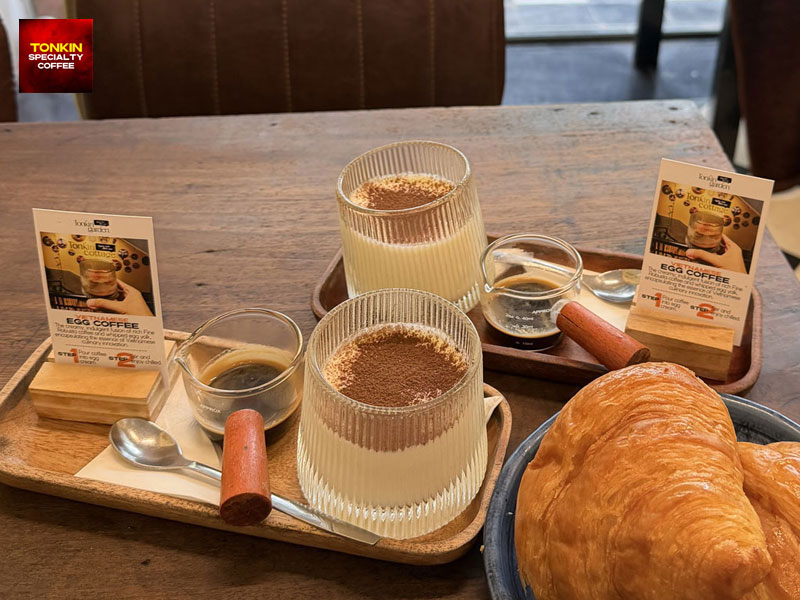
The story of who invented egg coffee leads back to this practical adjustment. Giảng was responding to an ingredient shortage, yet the result developed a character beyond its original purpose.
In 1946, Giảng opened his own café in Hanoi. Café Giảng became closely associated with the drink, and subsequent generations helped preserve the preparation and its connection with the city.
Why did whipped egg yolks work with strong coffee?
Whipping transforms egg yolks into a lighter mixture with a smooth, creamy texture. Sweetness softens the coffee’s bitterness, while the concentrated coffee prevents the cream from feeling overwhelming.
The appeal comes from contrast. The upper layer feels soft and indulgent; the coffee underneath supplies depth and structure.
That relationship explains why egg coffee survived beyond the shortage that inspired it. Customers returned for a distinctive drink, rather than simply a substitute for milk.
How did egg coffee become a Hanoi tradition?
Egg coffee became a Hanoi tradition through Café Giảng, family knowledge and generations of returning customers. Careful preparation and the pleasure of lingering over a warm cup helped the drink outlast its original purpose.
What helped the drink endure across generations?
A recipe becomes a tradition when people continue making, sharing and remembering it. Café Giảng gave egg coffee a lasting home, while family knowledge helped carry the preparation forward.
The wider history of egg coffee in Vietnam connects the drink with Hanoi’s intimate café spaces and unhurried conversations. A small cup could become the reason to sit down, pause and spend time together.
Traditional warm servings are often placed in a bowl of hot water to maintain temperature. The presentation encourages slow tasting and keeps attention on the balance between cream and coffee.
How did egg coffee move beyond its birthplace?
As Vietnamese café culture developed, egg coffee appeared beyond Hanoi, including in Ho Chi Minh City. Different cafés introduced their own textures, sweetness levels and brewing approaches.
The recognizable foundation remained: whipped egg cream paired with strong coffee. Modern interpretations can respect that foundation while offering a different experience.
|
Chapter |
What changed |
What remained |
|
Hanoi, 1946 |
Egg yolks offered an alternative to scarce fresh milk |
Creaminess balanced strong coffee |
|
A lasting café tradition |
Families preserved and refined preparation |
Careful technique remained important |
|
Wider Vietnamese café culture |
Cafés developed individual interpretations |
Egg cream and coffee stayed central |
|
Tonkin Coffee today |
Gia Lai Fine Robusta meets freshly whipped cream |
Contrast and balance define the drink |
What connects traditional egg coffee with modern preparation?
Traditional and modern egg coffee share the same foundation: strong coffee balanced with sweet, whipped egg cream. Cafés may adjust ingredients and brewing methods, but the contrast between the two components remains central.
Which ingredients define the familiar experience?
Coffee, egg yolks and sweetening ingredients establish the drink’s basic identity. However, ingredient proportions and preparation vary between cafés.
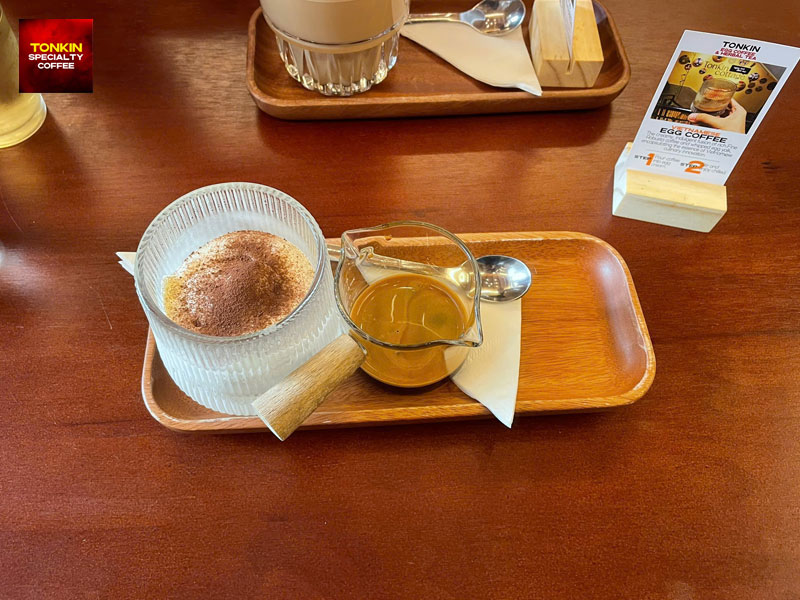
A traditional egg coffee recipe helps explain how concentrated coffee supports a sweet, whipped topping. The finished drink depends on technique as much as the ingredient list.
Too little whipping can leave a dense mixture. Excessive sweetness can hide the coffee, while an overly weak base may disappear beneath the cream.
Why does the coffee deserve as much attention as the topping?
The cream catches the eye, but the coffee gives the drink direction. A balanced base contributes aroma, body and a finish that remains noticeable after the sweetness fades.
Descriptions of what Vietnamese egg coffee tastes like often compare the experience with custard, mousse or a coffee dessert. Those comparisons describe the texture well, but a satisfying cup should still taste clearly of coffee.
What makes Tonkin’s egg coffee distinctive?
Tonkin pairs Gia Lai Fine Robusta with egg cream whipped fresh for each order. Bold chocolate notes support the airy topping, while honey, sugar and a little rum create a smooth, gently sweet finish.
How does Gia Lai Fine Robusta shape the cup?
Tonkin Coffee uses Fine Robusta from Gia Lai, in Vietnam’s Central Highlands. The coffee brings bold flavor, chocolate notes and a smooth, substantial body.
That structure matters beneath the egg cream. The coffee can hold its own without turning the drink into a contest between bitterness and sweetness.
Tonkin’s selected coffee has earned an 87.5-point CQI score and recognition among the top three worldwide. In the finished drink, the practical pleasure is simpler: the coffee remains expressive beneath the cream.
What does freshly whipped egg cream add?
Tonkin prepares the cream with fresh eggs whipped for each order, alongside honey, sugar and a small amount of rum. The preparation creates an airy texture and helps keep unwanted eggy aromas from dominating.
The cream should feel silky rather than heavy. A gentle sweetness brings the components together while leaving space for the coffee.
This is Tonkin’s interpretation of the tradition. Honey and rum belong to the brand’s preparation, rather than being presented as compulsory ingredients in every historical recipe.
How should first-time visitors taste egg coffee?
Taste a little egg cream and coffee separately before combining them gradually. This simple approach reveals the contrast in texture and flavor, then lets you choose how much sweetness to bring into each sip.
What should you notice before mixing?
Give the cream and coffee a moment separately before combining them. That small pause makes the contrast easier to understand.
-
Notice the aroma of the coffee and cream.
-
Taste a little egg cream with the spoon.
-
Try the coffee on its own.
-
Combine small amounts of cream and coffee.
-
Adjust the balance to suit your preference.
The first taste may feel dessert-like. As the coffee joins the cream, the flavor should become deeper and more rounded.
What if you prefer less sweetness?
Mix only part of the cream into the coffee. Keeping the components partly separate gives you more control over each sip.
Tell the staff about egg or dairy allergies before ordering, and mention any need to avoid alcohol. Fresh preparation does not automatically mean the egg mixture is fully cooked.
Taste Vietnamese Coffee History at Tonkin Coffee
Experience the drink’s heritage at Tonkin Coffee in Ho Chi Minh City, where freshly whipped egg cream meets Gia Lai Fine Robusta. Choose a branch along your sightseeing route and take time to enjoy both components.
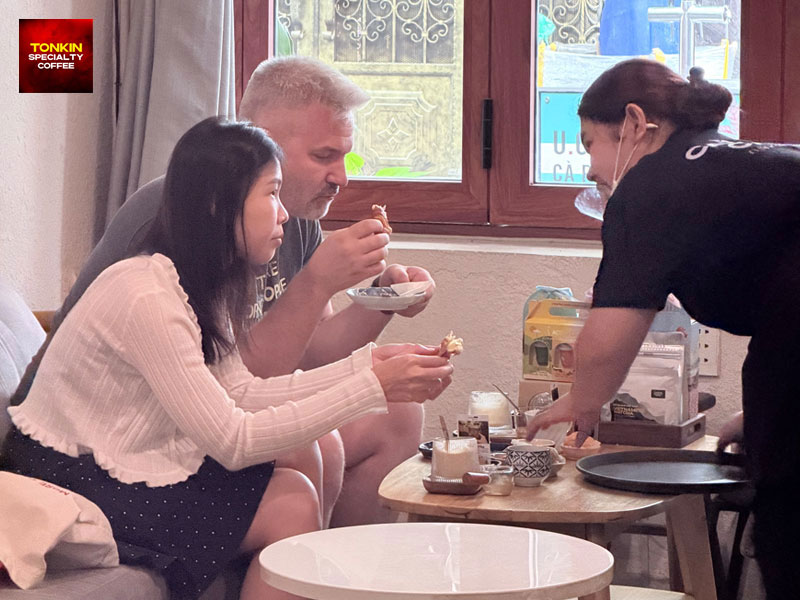
Begin with the atmosphere at 91 Ly Tu Trong
At Tonkin Specialty Coffee, 91 Ly Tu Trong Street, Vietnamese folk-inspired décor gives the tasting a cultural setting. Traditional masks, artwork and warm surroundings invite visitors to slow down.
Order an egg coffee, taste the cream first, and let the Gia Lai Fine Robusta follow. The historical story becomes tangible through texture, aroma and the changing balance in the cup.
Choose a branch along your sightseeing route
Tonkin’s four locations offer different settings for the same coffee discovery.
|
Branch |
Address |
Ideal connection |
|
Tonkin Specialty Coffee |
91 Ly Tu Trong St. |
Central sightseeing and folk-inspired surroundings |
|
Tonkin Garden Cafe |
135/50 Tran Hung Dao St. |
A relaxed garden break |
|
Tonkin Egg Coffee |
1 Le Thi Rieng St. |
Huynh Hoa bánh mì pairing |
|
Tonkin Egg Coffee & Herbal Tea |
27 Ngo Duc Ke St. |
Nguyen Hue and Bitexco |
Visit Tonkin Coffee in Ho Chi Minh City and experience how a resourceful Hanoi invention became a lasting Vietnamese pleasure, one spoonful of cream and one sip of coffee at a time.
Visit Tonkin Coffee Today!
Tonkin Specialty Coffee
-
Add: 91 Ly Tu Trong St., Ben Thanh Ward, Ho Chi Minh City, Vietnam.
-
Hotline: 086 799 0125
Tonkin Garden Cafe
-
Add: 135/50 Tran Hung Dao St., Cau Ong Lanh Ward, Ho Chi Minh City, Vietnam.
-
Hotline: 087 992 4691
Tonkin Egg Coffee
-
Add: 1 Le Thi Rieng St., Ben Thanh Ward, Ho Chi Minh City, Vietnam.
-
Hotline: 0815 841 909
Tonkin Egg Coffee & Herbal Tea
-
Add: 27 Ngo Duc Ke St., Sai Gon Ward, Ho Chi Minh City, Vietnam

Nestled in the heart of Ho Chi Minh City, Tonkin Coffee is one of the best coffee shops to experience authentic Vietnamese flavors. From the iconic egg coffee and refreshing coconut coffee to bold Vietnamese coffee and the unique salt coffee, every sip is a journey into tradition. For non-coffee lovers, our Vietnamese matcha offers a gentle alternative. Pair your drink with a freshly baked banh mi or a buttery croissant, and savor the true taste of Vietnam in a setting inspired by folk culture and Indochine charm.