

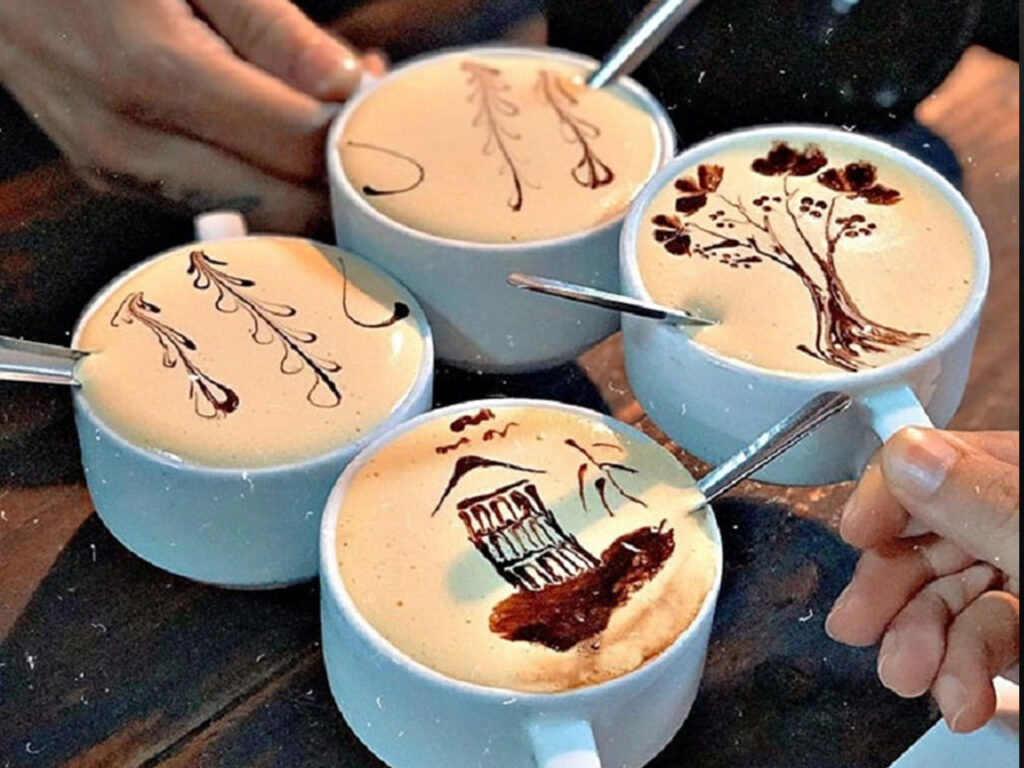
A simple reason behind why egg coffee is popular in Hanoi is its perfect contrast between bold Vietnamese Robusta and a silky, lightly sweet egg foam that feels both rich and balanced. Created in the 1940s during a milk shortage, the drink gradually became part of the city’s café identity. Today, places like Tonkin Coffee continue to refine this classic with careful technique and high-quality beans.
How egg coffee began and its roots in Hanoi?
Egg coffee first appeared in Hanoi out of both necessity and creativity, and it quickly became more than just a drink, it became a local institution that speaks to the city’s style of slow sipping and reflective conversation. At its simplest, egg coffee combines strong, rich coffee with a creamy foam made from egg yolks and sweetened condensed milk. This unusual pairing of ingredients feels familiar yet distinctive, offering warmth, texture, and a comforting kind of balance.
The origin story in the 1940s
In the mid-20th century, fresh milk was hard to come by in Hanoi. Condensed milk and other dairy alternatives were expensive or scarce, especially during wartime shortages. It was in this context that Mr. Nguyen Van Giang, a bartender working in Hanoi, invented egg coffee as a creative substitute for fresh milk. By whisking egg yolks with sweetened condensed milk and spooning the result over a cup of hot, dark Vietnamese coffee, they created a topping that was thick, velvety, and surprisingly harmonious with the coffee beneath.
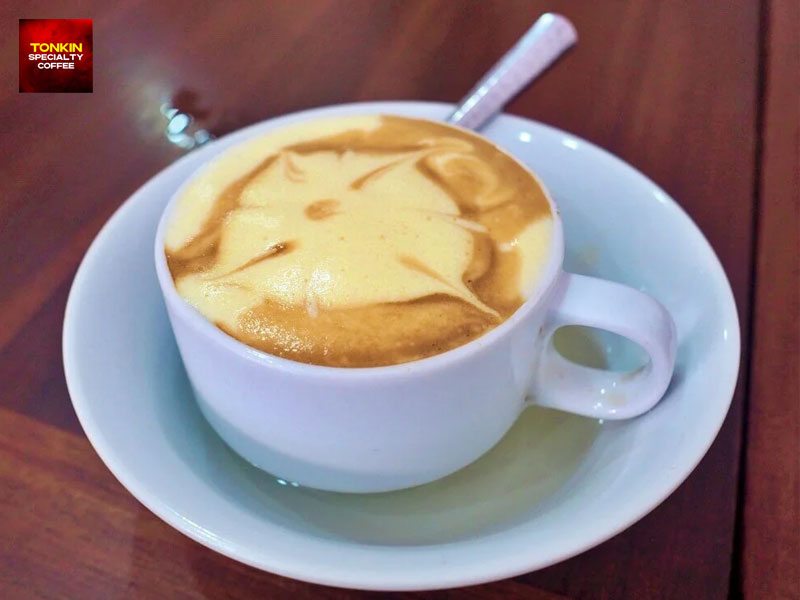
While this first version was born of practicality, it quickly took on a life of its own as locals and visitors alike found something uniquely satisfying in its soft texture and bold flavor.
Turning a local drink into legend
The story of egg coffee’s creation is part of why the drink feels so connected to Hanoi. People don’t just drink it for caffeine, they drink it for the story behind it, the context of the place, and the way it fits into the rhythm of Hanoi’s streets, cafés, and conversations. Over time, this narrative became woven into the broader History of egg coffee, with cafés around the Old Quarter and beyond claiming their own versions of the classic recipe.
What makes the flavor so distinctive and beloved?
The popularity of egg coffee doesn’t come only from its origin story. Its flavor and texture are central to why people keep coming back to it, long after the first sip.
Contrast of rich and creamy
Vietnamese coffee is often brewed using robusta beans and a phin filter, creating a cup that is strong, bold, and sometimes slightly bitter. Against that foundation, the whipped egg yolk foam adds a layer that is sweet and creamy without being cloying. The result is a drink with two distinct personalities: the bright, punchy character of the coffee and the soft, custard-like foam on top.
This contrast: bitter and sweet, rich and light is part of what makes egg coffee feel so complete. It doesn’t rely on sugar alone to be enjoyable. Instead, the interplay of textures gives it depth and nuance.
Texture matters: custard in a cup
Many people describe egg coffee as enjoying dessert and coffee in one cup, because the foam resembles a light custard: smooth, airy, and gently sweet rather than heavy. This texture does not happen by accident. It depends on fresh egg yolks, balanced sweetness from condensed milk, and precise whisking until the cream becomes silky and stable enough to rest naturally over the hot coffee.
For readers exploring the story and preparation behind this drink in more detail, guides focused on the history and recipe of Vietnamese egg coffee often highlight how technique defines the final result. When the texture is done correctly, it transforms the experience, making the drink feel refined and layered instead of simply sweet.
Why egg coffee reflects Hanoi’s café culture and social rhythm?
Egg coffee reflects Hanoi’s café culture because it matches the city’s slow, unhurried rhythm of drinking coffee, where people sit, talk, and linger rather than rush.
More than just a flavorful drink, it naturally fits into the habit of spending quiet time in small cafés, making it part of daily social life rather than just a beverage choice.
A drink that invites lingering and conversation
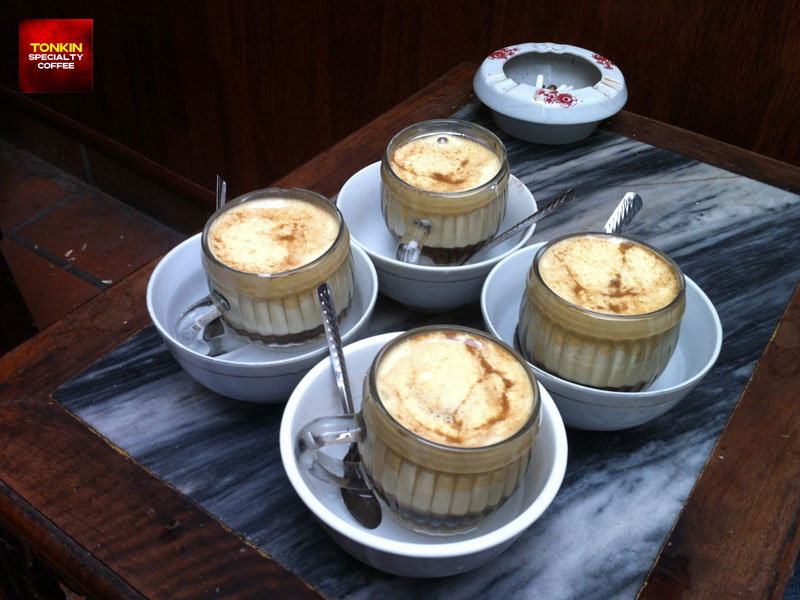
Hanoi’s café culture tends to be unhurried. Wherever you sit whether on a narrow balcony overlooking an old street or inside a small urban café, coffee is something you take time with, not rush through. Egg coffee fits this rhythm instinctively. It’s served slowly, often in a small cup placed in a saucer or bowl of warm water so that the foam stays warm and the drink holds its texture as you sip. The act of drinking becomes a moment to pause, reflect, or talk with a friend rather than merely a quick caffeine fix.
This cultural landscape, where taking time matters is part of what has sustained the drink’s popularity over decades, and why many people see egg coffee and Vietnamese café culture as tightly linked rather than separate phenomena.
Tradition meets everyday life
Over the years, egg coffee moved from being a curious local specialty to something woven into daily life. Students study with it, colleagues meet over it, families catch up with it, and tourists treat it as a must-try while exploring the city. It feels at home in Hanoi’s time-worn cafés, and that sense of belonging matters almost as much as taste.
How the tradition continues today across Vietnam?
Although egg coffee began in Hanoi, its tradition has expanded across Vietnam while still preserving its original structure and spirit. Different regions may adjust sweetness or serving style, but the core elements remain unchanged: strong coffee balanced by creamy egg foam.
Traditional versus modern interpretations
In many traditional cafés, egg coffee is served hot, with a thick layer of whipped egg foam resting over bold, freshly brewed coffee. The cup is often placed in a bowl of warm water to maintain temperature and texture.
In southern cities, especially where the climate is warmer, iced versions have become more common. Some cafés slightly adjust sweetness levels or foam density, but the essential contrast between rich coffee and smooth topping remains intact.
For those curious about how to make authentic Hanoi-style egg coffee, the fundamentals stay consistent: slow-brewed strong coffee, fresh egg yolks whipped with condensed milk and sugar, and careful temperature control so the layers complement rather than collapse. Beyond ingredients, the ritual of preparation and slow enjoyment is what keeps the tradition alive.
Experiencing egg coffee at Tonkin Coffee in Ho Chi Minh City
In Ho Chi Minh City, egg coffee continues to evolve through thoughtful craftsmanship, and one notable example is Tonkin Coffee.
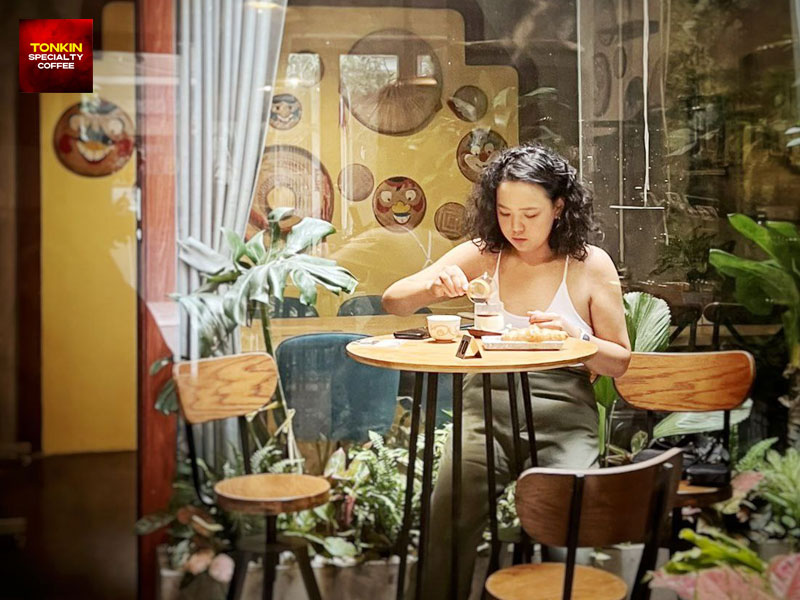
Often mentioned among places serving famous egg coffee in Saigon, the café approaches the drink with respect for tradition while incorporating modern precision and high-quality ingredients.
A refined approach to tradition
Tonkin Coffee uses carefully selected beans sourced from Vietnam’s Central Highlands to create a bold, structured base. The egg foam is prepared fresh daily, whipped to achieve a silky texture that feels light yet stable. The focus is on balance, ensuring the sweetness enhances rather than overwhelms the coffee.
Space, atmosphere, and intention
Beyond technique, the experience matters. The café blends traditional Vietnamese design elements with contemporary simplicity, creating a space that feels warm and grounded. Egg coffee here is not treated as a novelty; it reflects a broader commitment to celebrating Vietnamese coffee heritage with clarity and care.
Sustaining quality and connection
What distinguishes Tonkin Coffee is not only the recipe but the intention behind each cup. By sourcing beans responsibly and emphasizing craftsmanship, the café highlights that coffee is shaped by land, people, and process.
The continued popularity of egg coffee, whether in Hanoi or Ho Chi Minh City shows how a drink rooted in history can remain relevant when quality and authenticity are preserved.
Visit Tonkin Coffee Today!
Tonkin Specialty Coffee
- Add: 91 Ly Tu Trong St, Ben Thanh Ward, District 1, Ho Chi Minh City, Vietnam.
- Hotline: 086 799 0125
Tonkin Garden Cafe
- Add: 135/50 Tran Hung Dao St, Ben Thanh Ward, District 1, Ho Chi Minh City, Vietnam.
- Hotline: 087 992 4691
Tonkin Egg Coffee
- Add: 1 Le Thi Rieng, Ben Thanh Ward, District 1, Ho Chi Minh City, Vietnam.
- Hotline: 0815 841 909

Nestled in the heart of Ho Chi Minh City, Tonkin Specialty Coffee is one of the best coffee shops to experience authentic Vietnamese flavors. From the iconic egg coffee and refreshing coconut coffee to bold Vietnamese coffee and the unique salt coffee, every sip is a journey into tradition. For non-coffee lovers, our Vietnamese matcha offers a gentle alternative. Pair your drink with a freshly baked banh mi or a buttery croissant, and savor the true taste of Vietnam in a setting inspired by folk culture and Indochine charm.