


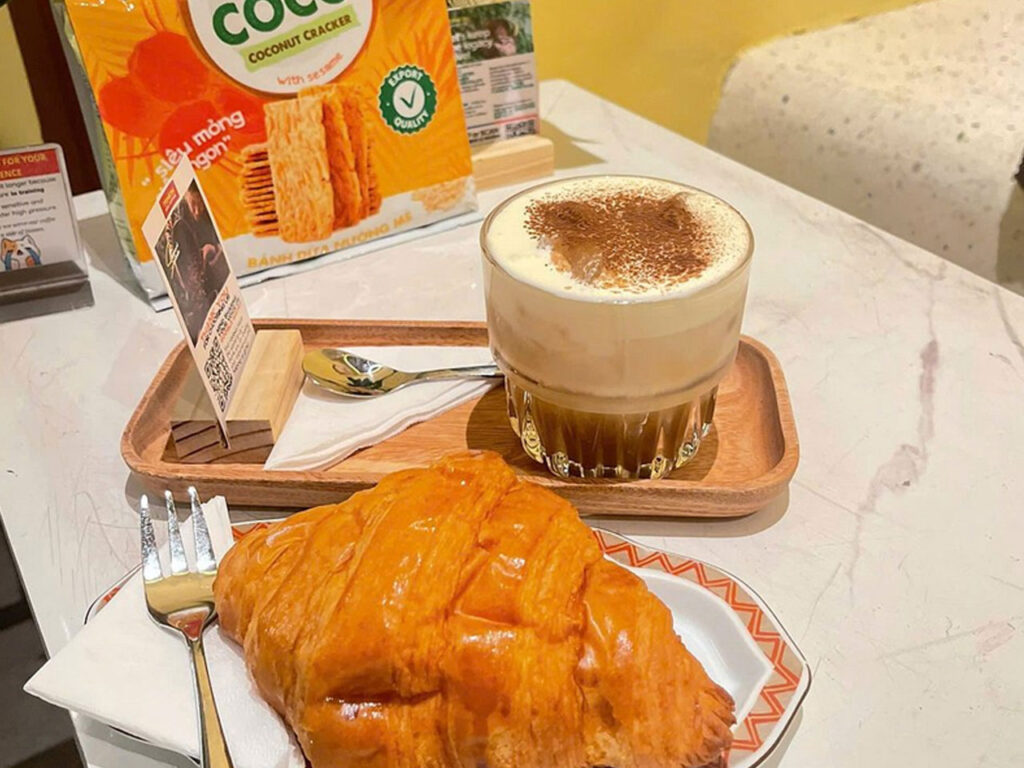
A balanced cup of Vietnamese salt coffee depends on more than simply adding salt to coffee. To understand what Vietnamese salt coffee is made of, it helps to look at the role of each component, from the concentrated coffee base and creamy topping to the sweetener and carefully measured salt. At Tonkin Coffee, these elements are combined to keep the drink smooth, lightly creamy, and distinctly coffee-forward.
What Are the Main Ingredients in Vietnamese Salt Coffee?
Most Vietnamese salt coffee contains a strong coffee base, cream or milk, fine salt, and some form of sweetener. The exact ingredients and proportions are not standardised, so one café’s version may be lighter, richer, sweeter, or more coffee-forward than another.
| Component | Common form | Role in the drink |
| Coffee base | Concentrated Vietnamese coffee or espresso | Provides body, aroma, and roasted depth |
| Creamy layer | Cream, milk, or a dairy mixture | Creates a smooth and softer texture |
| Salt | Fine salt or sea salt | Rounds out sharper bitter notes |
| Sweetener | Sugar or condensed milk | Connects the coffee and creamy layer |
The quality of the final cup depends less on the number of ingredients than on how carefully they are balanced.
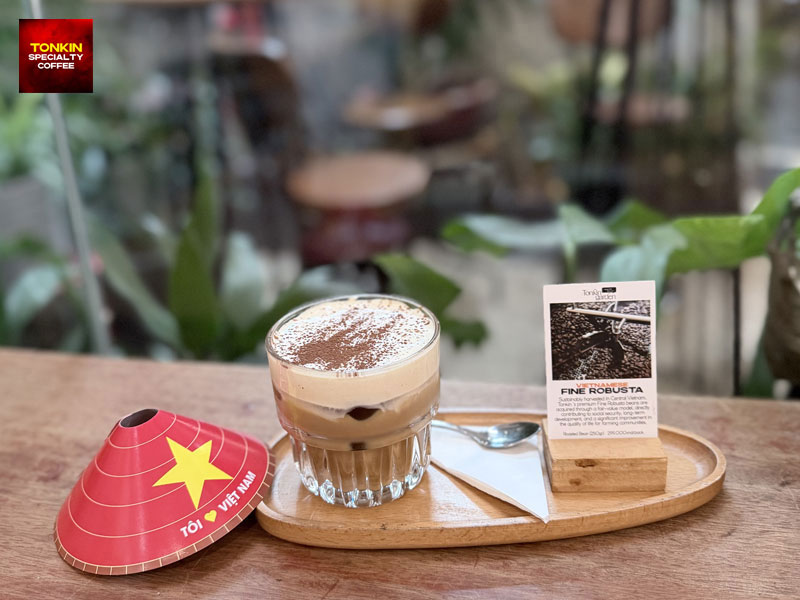
Salt should support the coffee rather than become a clearly separate flavour.
What Kind of Coffee Is Used as the Base?
Vietnamese salt coffee needs a concentrated base that remains noticeable after cream is added. Robusta is commonly suited to this style because it offers a full body and enough depth to hold its character beneath a creamy topping.
Why does the coffee need to be strong?
Cream and milk soften the perceived intensity of coffee. If the base is too light, the finished drink can taste mostly of dairy and sweetness.
A properly extracted coffee gives the drink structure. Its roasted, chocolate-like, nutty, or caramel-like characteristics remain present as the cream gradually blends into the cup.
Strength does not mean the coffee should be harsh. Over-extracted coffee may introduce dryness or excessive bitterness that cream cannot fully correct. The goal is a bold but clean foundation.
Is salt coffee always prepared with a phin?
No. Some cafés use a traditional Vietnamese phin to produce a slowly brewed, concentrated coffee. Others use espresso machines for greater control and consistency.
Both methods can work when the extraction is strong and clean. Tonkin Coffee prepares its version with two shots of Fine Robusta espresso, allowing the coffee to remain central even after the cream is introduced.
What Is the Creamy Layer Made From?
The topping may contain whipping cream, fresh milk, condensed milk, or a café-specific dairy mixture. There is no single cream formula followed by every coffee shop.
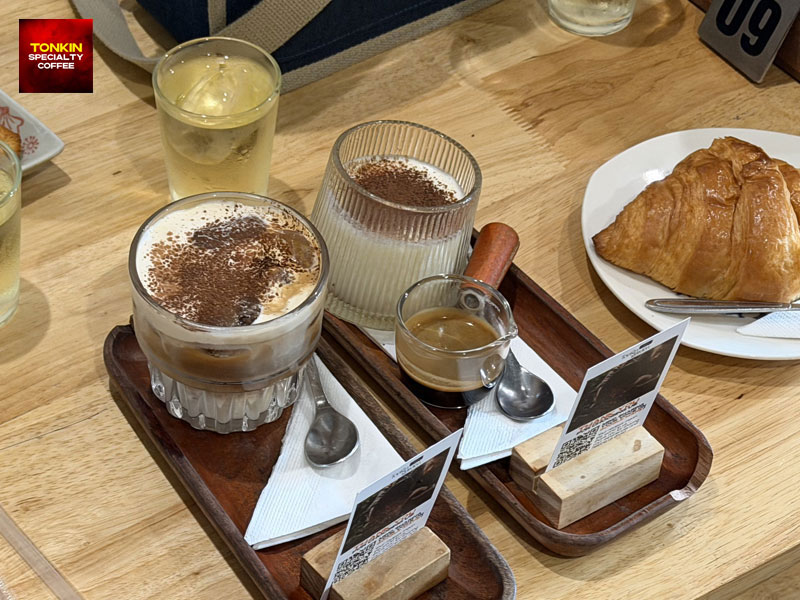
Some versions have a thick, whipped topping that sits visibly above the coffee. Others use a lighter cream that flows slowly and blends more easily into the espresso.
Does salt coffee always contain condensed milk?
Condensed milk is used in many home and café recipes, but it is not compulsory. Sweetness can also come from sugar or from a lightly sweetened cream mixture.
This distinction matters for customers who expect every Vietnamese coffee to contain condensed milk. Salt coffee is defined more by the relationship between strong coffee and salted cream than by one mandatory sweetening ingredient.
Because ingredients differ, people with dairy allergies or dietary restrictions should confirm the recipe directly with the café before ordering.
Where Is the Salt Added?
In many versions, salt is blended into the creamy topping rather than added directly to the brewed coffee. Mixing it with the cream helps distribute a very small quantity more evenly across the drink.
The salt works like seasoning in food. It can soften the perception of harsh bitterness and make other flavours easier to notice, but it should not make the entire cup taste like salt water.
This is also why the question is salt coffee sweet salty or bitter cannot be answered by selecting only one taste. A balanced cup contains elements of all three, with none intended to dominate.
What Type of Salt Can Be Used?
Fine salt or sea salt may be used as long as it dissolves evenly and is measured carefully. Fine grains are practical because they integrate into the dairy mixture without leaving noticeable crystals.
Sea salt is sometimes chosen for a clean salinity, but the label itself does not guarantee a better cup. Quantity and distribution matter more than choosing an expensive or unusual variety.
Adding more salt does not create a more authentic drink. Too much can cover the coffee, make the cream unpleasant, and remove the gentle balance that defines a well-made version.
What Makes Vietnamese Salt Coffee Sweet?
Sweetness can come from condensed milk, sugar, or a sweetened cream preparation. Its role is to connect the bold coffee with the richness of the dairy and the light seasoning of salt.
Salt does not replace sweetener. Instead, a controlled amount may change how the palate perceives bitterness and sweetness. This allows a café to create a rounded cup without making it feel excessively sugary.
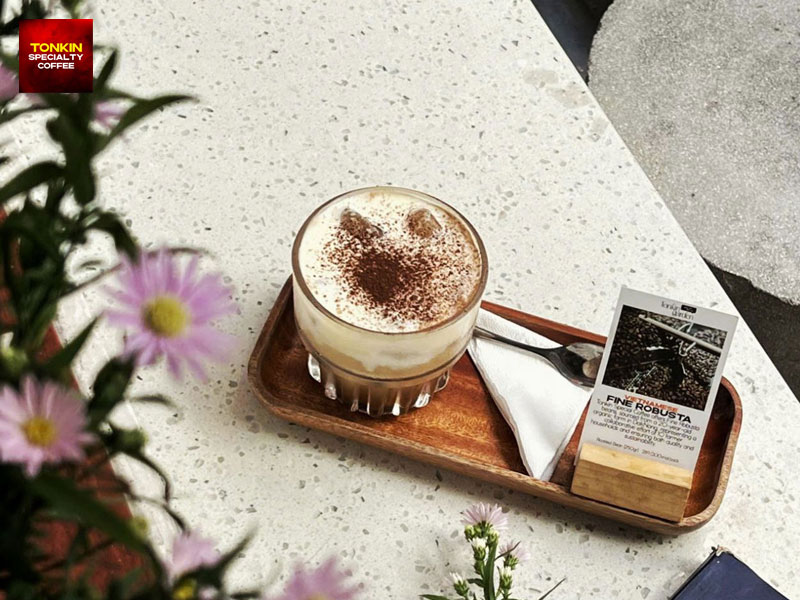
Readers who want a fuller sensory explanation can explore what does Vietnamese salt coffee taste like, where the interaction between cream, sea salt, espresso, and roasted flavours is examined in greater detail.
Does Vietnamese Salt Coffee Contain Cheese, Egg, or Butter?
Cheese, egg, and butter are not defining ingredients in Vietnamese salt coffee. However, café-specific recipes can vary, which occasionally creates confusion.
Does it contain cheese?
The cream may visually resemble cheese foam used in some tea drinks, but traditional salt coffee does not require cheese. Individual cafés may create their own variations, so the appearance of a thick topping alone does not reveal its ingredients.
Does it contain egg?
Egg is not a standard component of salt coffee. Vietnamese egg coffee is a separate drink made with an egg-based cream, while salt coffee is recognised by its lightly salted dairy layer.
Does it contain butter?
Butter is also not necessary. Some commercial cream mixtures may contain additional stabilisers or fats, but a basic version can be produced without butter, cheese, or eggs.
Are All Vietnamese Salt Coffee Recipes the Same?
No. Although the central idea remains consistent, each salted coffee Vietnam recipe may vary depending on the café’s choice of brewing method, dairy base, sweetness level, foam texture, and serving temperature.
| Recipe element | Possible variations |
| Coffee | Phin-brewed coffee, espresso, or a Robusta blend |
| Dairy | Whipping cream, milk, or condensed milk |
| Sweetener | Sugar, condensed milk, or sweetened cream |
| Salt | Fine table salt or sea salt |
| Texture | Fluid, foamy, lightly whipped, or thick |
| Serving style | Hot, chilled, iced, or layered |
These differences explain why one experience may feel gentle while another seems richer or more dessert-like. The guide on what does salt coffee taste like for first time drinkers offers additional context for visitors who are unsure what to expect from their first cup.
What Is Tonkin Coffee’s Salt Coffee Made With?
Tonkin Coffee builds its Salt Coffee around two shots of Vietnamese Fine Robusta espresso, lightly whipped cream, and a carefully controlled touch of sea salt.
The espresso provides a full-bodied foundation, while the cream adds softness without turning the drink into a heavy dessert. Salt is kept subtle so it supports the coffee rather than announcing itself as a dominant taste.
This approach reflects Tonkin Coffee’s wider focus on smooth Vietnamese coffee. The cream and salt frame the espresso, but the natural depth of the Fine Robusta remains identifiable throughout the cup.
Guests can also view Salt Coffee alongside Egg Coffee, Nâu Tonkin, Coconut Coffee, Bạc Xỉu, and other drinks on the Tonkin Coffee menu.
How Should the Ingredients Be Experienced Together?
The first sip may include more cream, while later sips reveal a stronger coffee presence as the layers combine. Stirring produces a more uniform texture, whereas tasting the layers separately creates greater contrast.
Neither approach is universally correct. This practical guide to how to drink Vietnamese salt coffee explains how stirring, sipping, and temperature can influence the experience without imposing a rigid ritual.
What matters most is that no single ingredient overwhelms the others. Coffee provides structure, cream creates texture, sweetness connects the layers, and salt rounds out sharper edges.
Visit Tonkin Coffee Today!
Tonkin Specialty Coffee
- Add: 91 Ly Tu Trong St., Ben Thanh Ward, Ho Chi Minh City, Vietnam.
- Hotline: 086 799 0125
Tonkin Garden Cafe
- Add: 135/50 Tran Hung Dao St., Cau Ong Lanh Ward, Ho Chi Minh City, Vietnam.
- Hotline: 087 992 4691
Tonkin Egg Coffee
- Add: 1 Le Thi Rieng St., Ben Thanh Ward, Ho Chi Minh City, Vietnam.
- Hotline: 0815 841 909
Tonkin Egg Coffee & Herbal Tea
- Add: 27 Ngo Duc Ke St., Sai Gon Ward, Ho Chi Minh City, Vietnam
Nestled in the heart of Ho Chi Minh City, Tonkin Specialty Coffee is one of the best coffee shops to experience authentic Vietnamese flavors. From the iconic egg coffee and refreshing coconut coffee to bold Vietnamese coffee and the unique salt coffee, every sip is a journey into tradition. For non-coffee lovers, our Vietnamese matcha offers a gentle alternative. Pair your drink with a freshly baked banh mi or a buttery croissant, and savor the true taste of Vietnam in a setting inspired by folk culture and Indochine charm.