

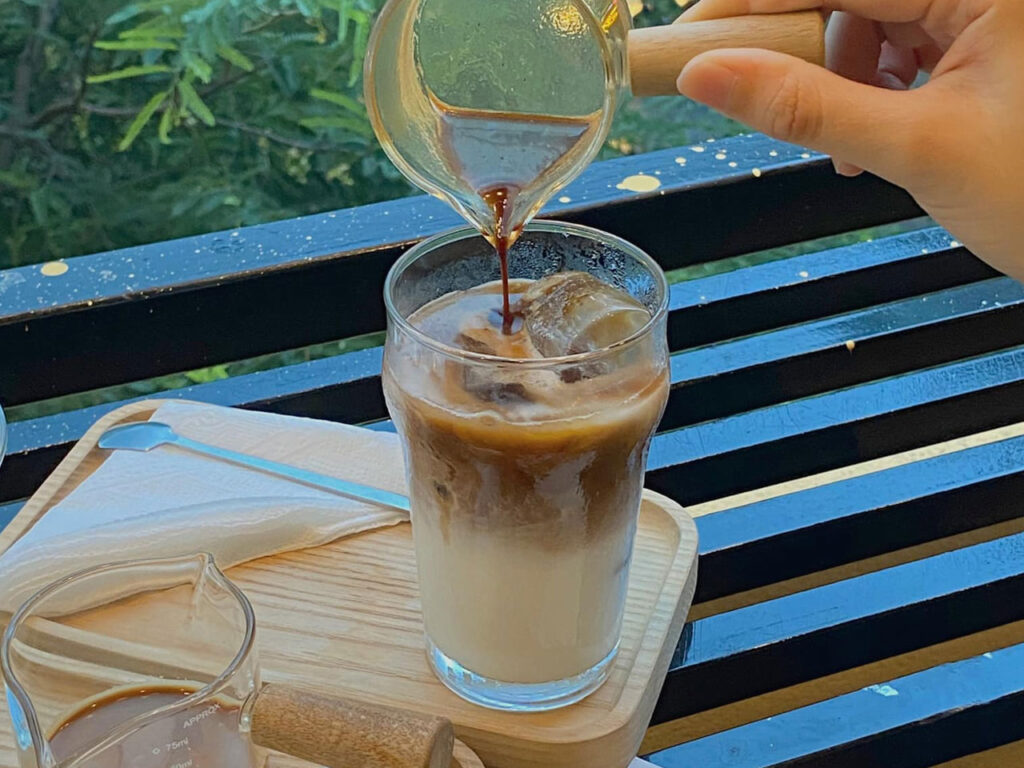
Many people exploring Vietnam’s coffee culture eventually ask, What is Vietnamese iced coffee, and why has it become such an enduring part of daily life. Known locally as cà phê sữa đá, this drink blends strong coffee, sweetened condensed milk, and ice into a flavor that feels both bold and refreshing. While it is commonly associated with street-side cafés and traditional phin brewing, Vietnamese iced coffee today can also be experienced through a more considered approach at places like Tonkin Coffee, where careful extraction and balance shape a smoother, more refined interpretation.
The essence of Vietnamese iced coffee
Vietnamese iced coffee is defined by its structure: strong coffee brewed with intention, balanced by condensed milk, and cooled with ice to create a bold yet approachable drink.
At its core, Vietnamese iced coffee is built around strength. The coffee is meant to be assertive enough to remain expressive even after milk and ice are added. Traditionally, this role has been filled by Robusta beans, which naturally offer higher caffeine and a heavier body than many other coffee varieties.
Coffee beans and flavor character
Robusta coffee forms the backbone of classic Vietnamese iced coffee. Its flavor tends to lean toward roasted grains, cocoa, and nuts, often with a firm bitterness. This intensity is not a flaw; it is a design choice. When paired with sweetened condensed milk, the bitterness becomes a counterbalance rather than an obstacle.
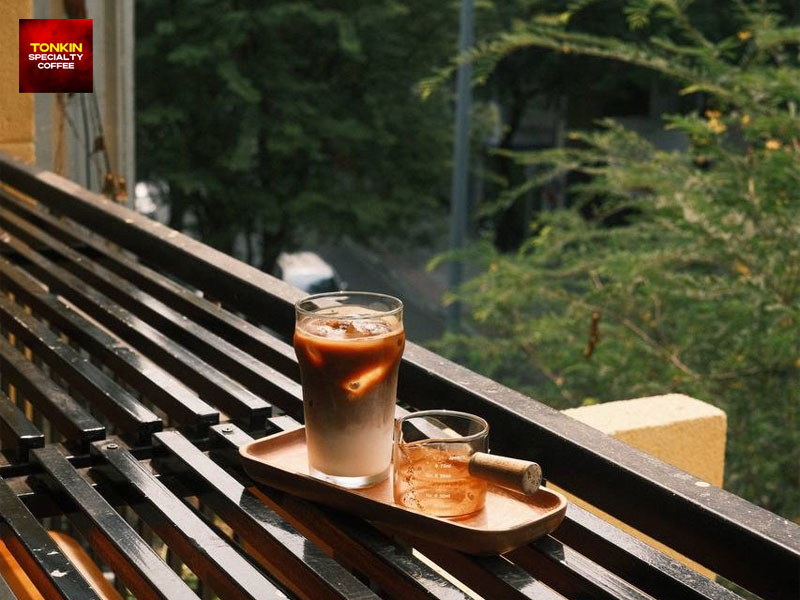
Instead of chasing acidity or floral aromas, Vietnamese iced coffee focuses on depth and structure. The goal is not delicacy, but clarity—clear coffee presence, clear sweetness, and a satisfying finish.
Brewing with the phin filter
One of the most iconic elements of Vietnamese coffee culture is the phin filter. This small metal brewer sits directly on top of a glass, allowing hot water to drip slowly through finely ground coffee. The process is unhurried, producing a concentrated brew with a thick mouthfeel.
In many traditional settings, the coffee drips directly onto condensed milk at the bottom of the glass. Once the brewing is complete, the mixture is stirred and poured over ice. The result is a drink that evolves as it melts, strong at first, gradually softer and smoother.
Why condensed milk matters
Condensed milk is not simply a sweetener; it is an integral part of the drink’s identity. Historically, it became popular because fresh milk was difficult to store in Vietnam’s climate. Over time, its rich texture and caramel-like sweetness became inseparable from the coffee itself.
In Vietnamese iced coffee, sweetness is measured and intentional. It rounds out bitterness, enhances body, and creates a creamy sensation without overpowering the coffee’s core flavor.
Popular varieties of Vietnamese iced coffee
While cà phê sữa đá remains the most iconic and widely recognized form, Vietnamese iced coffee exists in many variations, each reflecting regional habits and personal preferences. These styles share the same foundation, strong coffee and deliberate balance but express it in different ways.
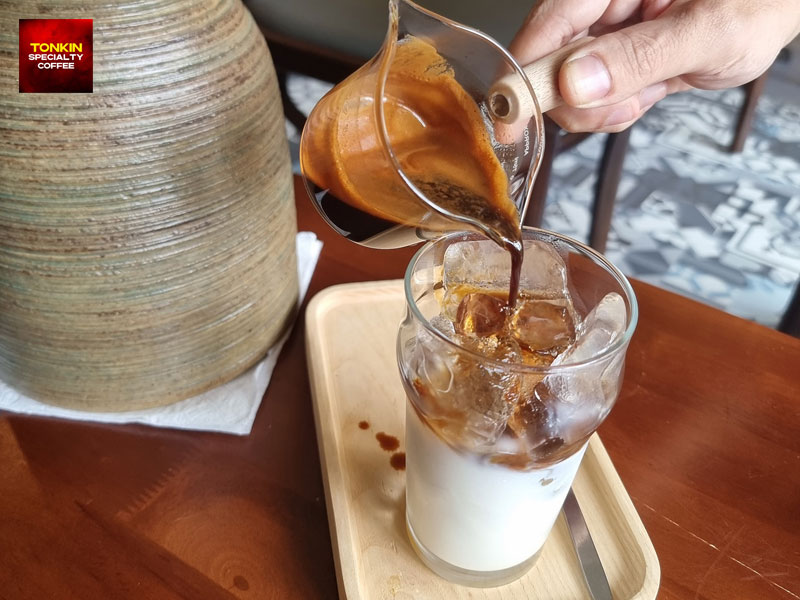
Cà Phê Đen Đá ( Black coffee)
Cà phê đen đá is the simplest expression of Vietnamese iced coffee. Made with black coffee poured over ice, it may be lightly sweetened with sugar but contains no condensed milk. The result is sharp, cooling, and direct. This version highlights the raw strength of the coffee itself and is often favored by those who enjoy a clean, uncompromising profile.
Bạc Xỉu ( While coffee)
Bạc xỉu offers a gentler, milk-forward interpretation. With a higher ratio of condensed milk to coffee, it appears pale and creamy, sometimes described as a Vietnamese-style latte. The coffee still provides structure, but sweetness and softness take the lead. Bạc xỉu is especially popular in the south, where lighter, dessert-like flavors are often preferred.
Cà Phê Trứng (Egg Coffee)
Originating in Hanoi, egg coffee transforms Vietnamese coffee into something closer to a dessert. Hot or iced egg coffee is topped with a thick, airy cream made from egg yolks whipped with condensed milk. The result is rich and custard-like, with coffee serving as a bitter backbone beneath the sweet, velvety foam. It is one of the most distinctive drinks in Vietnamese coffee culture.
Cà Phê Muối (Salt Coffee)
Cà phê muối comes from Hue and introduces a small amount of salt to the drink. Rather than making the coffee salty, this subtle addition enhances sweetness and softens bitterness, much like salted caramel. The balance feels rounder and smoother, creating a surprisingly gentle finish despite the coffee’s intensity.
Cà Phê Dừa (Coconut Coffee)
Coconut coffee reflects Vietnam’s tropical climate and love for rich textures. Coffee is combined with coconut milk or coconut-infused condensed milk, often served over ice or blended. The coconut adds natural sweetness and a creamy mouthfeel, turning the drink into something indulgent and refreshing at the same time.
Together, these variations show how Vietnamese iced coffee adapts while remaining recognizable. They form part of the broader landscape of famous coffee in vietnam, where tradition and creativity coexist, allowing a single coffee culture to express itself in many distinct yet familiar ways.
From street corners to modern cafés
Today, Vietnamese iced coffee exists in two parallel worlds: the familiar rhythm of street-side phin brewing and the controlled precision of modern café preparation.
Walk through any Vietnamese city, and you will see coffee being brewed almost everywhere. Small plastic stools, metal phin filters, and glasses filled with ice form a scene that feels timeless. These street cafés are not about experimentation; they are about consistency and comfort.
Street coffee and daily rituals
On the street, coffee is part of daily life. The phin filter remains the tool of choice, valued for its simplicity and reliability. The flavor is bold, the sweetness generous, and the experience straightforward. People drink Vietnamese iced coffee while chatting with friends, reading the news, or watching the city move around them.
This version of the drink has helped cement its reputation as one of the most famous coffee in vietnam, not because it is rare or exclusive, but because it is everywhere and deeply familiar.
Café culture and new techniques
Alongside this tradition, a new café culture has emerged. In these spaces, Vietnamese iced coffee is approached with a different mindset. Espresso machines replace phin filters, allowing baristas to control extraction with greater accuracy. Ratios are adjusted, sweetness is fine-tuned, and ice is treated as a component rather than a simple cooling agent.
This shift does not erase tradition. Instead, it creates room for interpretation. The same drink can feel heavier and rustic on the street, or cleaner and more balanced in a café.
Vietnamese iced coffee also sits within a broader landscape of beverages that showcase the diversity of types of coffee in vietnam, from milk-forward variations to regional specialties that highlight different textures and flavors.
Vietnamese iced coffee at Tonkin Coffee: When less extraction means more balance
At Tonkin Coffee, Vietnamese iced coffee is not built on quantity, but on restraint. A standard espresso shot, even at its fullest, rarely exceeds around 35 grams of extracted liquid. What truly defines the flavor of a cup is not how much coffee comes out, but how long and how far the extraction is pushed.
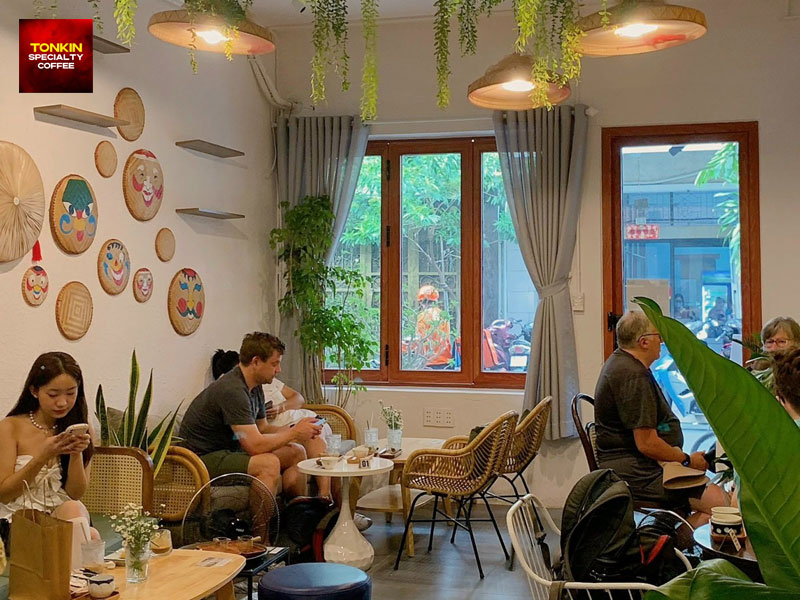
There is a simple but often overlooked truth in coffee brewing: the longer coffee is extracted from the same amount of ground beans, the more water is pulled through the puck. As extraction continues, flavors gradually shift, from sweetness and balance toward bitterness and dryness. The cup becomes thinner, harsher, and less pleasant to drink.
That is why at Tonkin, coffee is extracted only to the point where its character remains gentle and rounded. The extraction is deliberately kept short. Less water is taken from the coffee grounds, helping to limit excessive bitterness and astringency. As a result, the final volume of coffee may appear smaller compared to other cafés, but the flavor is more focused and composed. At Tonkin, this approach is supported by the use of Fine Robusta – specialty coffee Vietnam that retains Robusta’s strength while offering cleaner bitterness and a more refined structure.
This philosophy carries directly into Tonkin’s version of Vietnamese iced coffee. When the espresso meets condensed milk and ice, the balance holds. The coffee remains expressive without becoming sharp, and the sweetness does not need to work overtime to cover up harsh notes.
Tonkin believes that coffee does not need to be consumed in large quantities to be satisfying. What matters is whether the cup feels smooth, comforting, and easy on the palate. Chasing a larger yield simply to increase volume often leads to a bitter cup, without meaningfully increasing caffeine content. In fact, extracting more water does little to raise caffeine levels; it mainly amplifies bitterness.
By respecting extraction limits, Tonkin allows Vietnamese iced coffee to feel lighter on the tongue while still delivering depth. Each sip is clean, calm, and controlled—an interpretation that stays true to the spirit of cà phê sữa đá, while presenting it in a more refined and thoughtful way.
Visit Tonkin Coffee Today!
Tonkin Specialty Coffee
- Add: 91 Ly Tu Trong St, Ben Thanh Ward, District 1, Ho Chi Minh City, Vietnam.
- Hotline: 086 799 0125
Tonkin Garden Cafe
- Add: 135/50 Tran Hung Dao St, Ben Thanh Ward, District 1, Ho Chi Minh City, Vietnam.
- Hotline: 087 992 4691
Tonkin Egg Coffee
- Add: 1 Le Thi Rieng, Ben Thanh Ward, District 1, Ho Chi Minh City, Vietnam.
- Hotline: 0815 841 909

Nestled in the heart of Ho Chi Minh City, Tonkin Specialty Coffee is one of the best coffee shops to experience authentic Vietnamese flavors. From the iconic egg coffee and refreshing coconut coffee to bold Vietnamese coffee and the unique salt coffee, every sip is a journey into tradition. For non-coffee lovers, our Vietnamese matcha offers a gentle alternative. Pair your drink with a freshly baked banh mi or a buttery croissant, and savor the true taste of Vietnam in a setting inspired by folk culture and Indochine charm.