

 한국어
 中文 (中国)
 日本語
 中文 (台灣)
A practical starting point is about 1:1 egg cream to strong coffee by finished volume. For a balanced homemade version, two egg yolks with about two tablespoons of condensed milk and one teaspoon of sugar or honey can work well over a small, concentrated coffee base.
If you are asking what is the best ratio for Vietnamese egg coffee, the ideal balance depends on coffee strength, cream volume and sweetness rather than one fixed formula. At Tonkin Coffee, concentrated Fine Robusta is paired with smooth egg cream so both the coffee and creamy layer remain clearly noticeable.
What Does a 1:1 Egg Coffee Ratio Actually Mean?
A 1:1 ratio refers to the approximate finished volume of egg cream compared with coffee, not to a one-to-one measurement of raw ingredients.
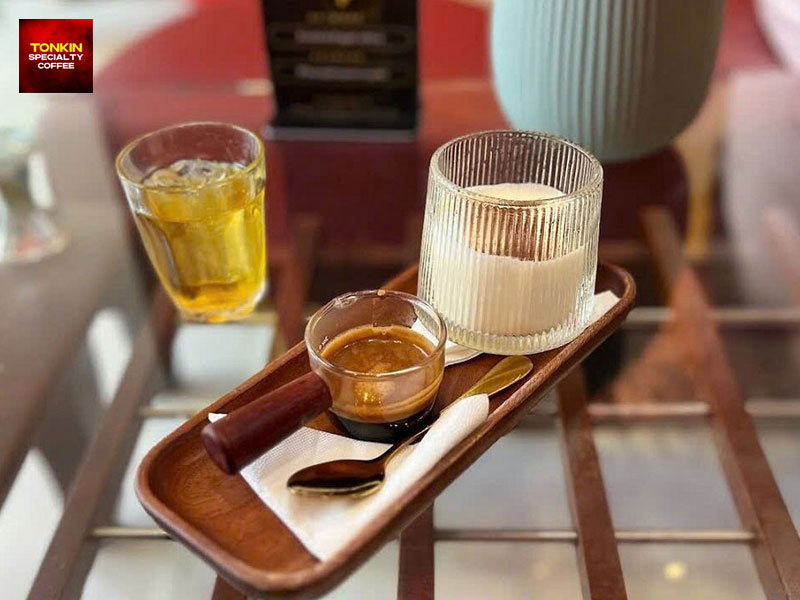
For example, a small serving might use around 60–100 ml of concentrated coffee with enough whipped cream to create a substantial upper layer of similar volume.
Why does a 1:1 balance work?
Egg coffee depends on contrast. The cream brings sweetness and richness, while the coffee provides bitterness, roast character and structure.
A balanced ratio gives both parts enough room to remain noticeable after light mixing.
That is also why What makes an egg coffee recipe authentic? is not answered by one fixed measurement alone. The drink should preserve the relationship between strong Vietnamese coffee, rich egg cream and a layered serving style.
What Is a Good Egg Cream Ratio for One Serving?
A useful home-style reference is:
-
2 egg yolks
-
2 tablespoons sweetened condensed milk
-
1 teaspoon sugar or honey
-
optional small amount of rum
-
strong concentrated coffee
This formula produces a rich cream without making sweetness the only flavor in the cup.
Can you use one egg yolk instead?
Yes. One yolk works well for a smaller or lighter serving.
Two yolks create a thicker, fuller cream and are more suitable when making one generous cup or two smaller servings.
The useful principle is consistency rather than a rigid yolk count: the whipped mixture should be pale, airy and thick enough to sit above the coffee.
How Much Coffee Should You Use With the Egg Cream?
For a richer café-style drink, around 60–100 ml of strong coffee is a practical range.
Using much more liquid can make the cream layer seem thin, while using too little coffee can leave the cup excessively rich.
Why should the coffee stay concentrated?
Concentrated coffee performs three jobs:
-
provides enough bitterness to balance sweetness;
-
keeps roasted flavors noticeable beneath the cream;
-
prevents the finished drink from tasting watery.
This is why the broader method for how to make Vietnamese egg coffee begins with a strong coffee base rather than a large, mild brew.
How Much Condensed Milk Should You Use?
About 1 tablespoon of condensed milk per egg yolk is a practical home-style reference.
That means two yolks can be paired with roughly two tablespoons of condensed milk before adjusting the cream to personal taste.
What happens if you add too much?
Too much condensed milk can make the cream heavier and significantly sweeter. Once the topping becomes too dominant, the coffee underneath becomes harder to identify.
What happens if you use less?
Using less condensed milk makes the egg character more noticeable and creates a less dessert-like cup.
The right amount depends on how sweet and rich you want the final drink to feel.
How Much Sugar Should Be Added?
Added sugar should be considered together with condensed milk rather than measured separately.
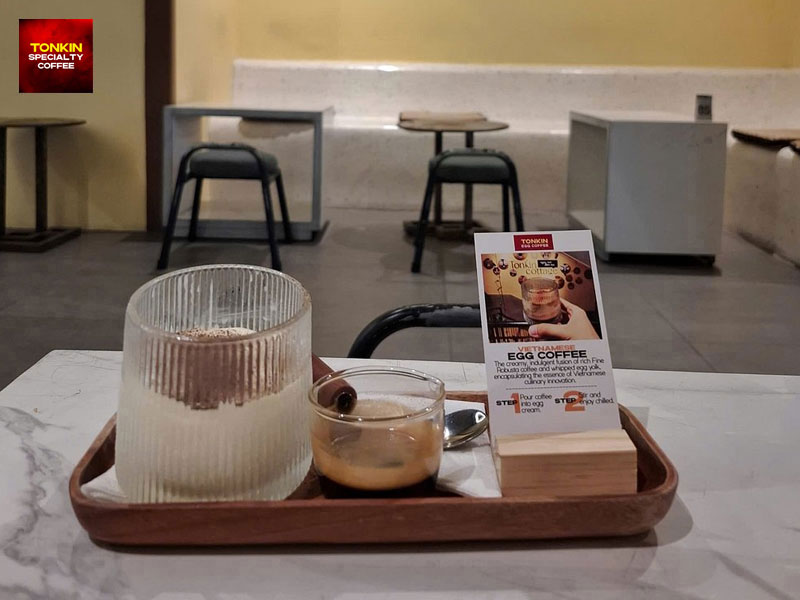
If two yolks are already paired with two tablespoons of sweetened condensed milk, about one teaspoon of sugar or honey is a useful starting point.
More sweetness is not automatically better. The finished cup should still reveal the bitterness and roasted character of the coffee.
Is a 1:2 Coffee-to-Cream Ratio Better?
Not necessarily. A larger cream layer changes the style rather than improving it.
|
Approximate coffee-to-cream ratio |
Taste direction |
|
2:1 |
More coffee-forward |
|
1:1 |
Balanced |
|
1:2 |
Creamier, sweeter and more dessert-like |
A 1:1 balance is useful for first-time preparation because it makes both components easy to recognize.
A 1:2 ratio can work for people who enjoy a richer, softer cup, while a 2:1 ratio suits drinkers who want the Robusta character to stay more prominent.
Does the Coffee Bean Change the Best Ratio?
Yes. A stronger coffee can support more egg cream without disappearing.
Vietnamese Robusta works particularly well because it often brings:
-
fuller body;
-
clear bitterness;
-
roasted depth;
-
chocolate-like notes.
A lighter coffee may require less cream or less sweetness to preserve balance.
Does roast level matter too?
Yes, although no single roast level is mandatory.
A coffee with enough roast character and body generally integrates more easily with egg cream than a very delicate brew.
The point is not to make the coffee harsh. The coffee should simply remain present once the topping is added.
Does the Brewing Method Change the Ratio?
It can.
Phin coffee and espresso may both be concentrated, but they do not produce exactly the same volume, texture or extraction profile.
Does phin coffee need the same amount of cream as espresso?
Not always.
A larger phin brew may need a slightly larger cream layer, while a small espresso base may need less total cream because the coffee itself is more concentrated.
For that reason, ratios should respond to coffee concentration, not just the name of the brewing method.
How Should You Adjust the Ratio for Your Taste?
The easiest approach is to change one variable at a time.
If you want a more coffee-forward cup
-
reduce the amount of cream;
-
keep the coffee concentrated;
-
avoid increasing sugar.
If you want a creamier cup
-
increase the egg cream slightly;
-
keep the coffee strong;
-
do not automatically add more sweetener.
If you want less sweetness
-
reduce added sugar first;
-
then adjust condensed milk if needed;
-
preserve enough cream to maintain texture.
Changing several elements at once makes it harder to understand what improved or weakened the final cup.
Is an Egg Coffee Recipe Defined by One Fixed Ratio?
No. Vietnamese egg coffee has multiple home, café and modern interpretations.
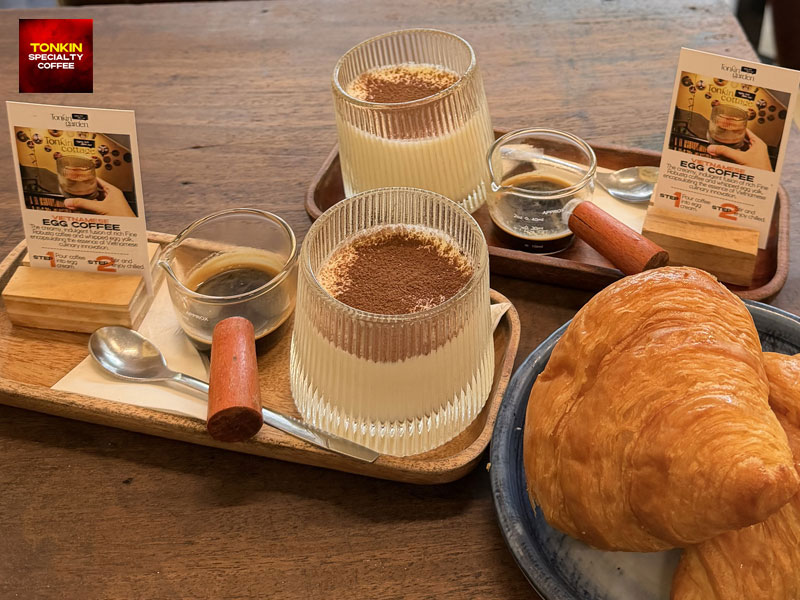
A useful Egg coffee recipe Vietnamese should therefore explain balance rather than present one measurement as the only authentic formula.
The important constants are more conceptual:
-
strong Vietnamese coffee;
-
whipped egg-based cream;
-
noticeable sweetness;
-
enough coffee bitterness to create contrast;
-
a layered presentation.
How Do You Know When the Ratio Is Balanced?
Taste the cream and coffee separately before fully mixing them.
A balanced cup should move through three stages:
-
creamy sweetness from the upper layer;
-
clear coffee bitterness underneath;
-
a smooth combination after gentle mixing.
If the coffee disappears completely, the cup is too cream-heavy. If the drink remains aggressively bitter after mixing, the cream may be too light for the strength of the coffee.
What Ratio Does Tonkin Coffee Use?
Tonkin Coffee publishes home-style recipes, but the exact commercial café ratio is not presented as a fixed public formula.
The brand’s house egg coffee uses Fine Robusta espresso with a freshly prepared cream made from fresh egg, sugar, honey, cream and a small amount of rum.
That means Tonkin Coffee’s café version should not be treated as identical to a condensed-milk-based home recipe.
What makes Tonkin Coffee’s balance different?
The coffee base is deliberately strong enough to remain noticeable beneath the cream.
Gia Lai Fine Robusta brings a full body and chocolate-like roasted character, while the upper layer provides sweetness and smoothness. The goal is not simply to maximize cream volume but to preserve contrast.
How Should You Taste Egg Coffee at Tonkin Coffee?
Start with the cream, then reach the coffee underneath, and only then lightly combine the two.
That sequence helps you judge whether the coffee-to-cream ratio is working. A good cup should taste richer after mixing without losing the underlying coffee identity.
For travelers who want to understand How do you make Vietnamese egg coffee? in practical terms, tasting the drink before recreating it at home can provide a useful sensory reference for sweetness, texture and coffee intensity.
Where Can You Try Egg Coffee at Tonkin Coffee?
Tonkin Coffee has four locations in central Ho Chi Minh City:
|
Tonkin Coffee location |
Area context |
|
Tonkin Specialty Coffee – 91 Ly Tu Trong St. |
Ben Thanh and central sightseeing |
|
Tonkin Garden Cafe – 135/50 Tran Hung Dao St. |
Bui Vien and Pham Ngu Lao |
|
Tonkin Egg Coffee – 1 Le Thi Rieng St. |
Tao Dan and Ben Thanh area |
|
Tonkin Egg Coffee & Herbal Tea – 27 Ngo Duc Ke St. |
Nguyen Hue, Dong Khoi, Bitexco and Saigon River |
The most convenient branch depends on the day’s route rather than on a different coffee ratio.
What Is the Best Egg Coffee Ratio to Remember?
For home preparation, remember three practical reference points:
-
start near 1:1 egg cream to strong coffee by finished volume;
-
use roughly 1 tablespoon condensed milk per egg yolk;
-
keep the coffee small, concentrated and strong enough to remain noticeable.
From there, adjust the cream and sweetness according to taste.
If you want a real-world reference before changing your own recipe, Tonkin Coffee offers a useful example of how concentrated Fine Robusta and smooth egg cream can be balanced without letting either component dominate the cup.
Visit Tonkin Coffee Today!
Tonkin Specialty Coffee
-
Add: 91 Ly Tu Trong St., Ben Thanh Ward, Ho Chi Minh City, Vietnam.
-
Hotline: 086 799 0125
Tonkin Garden Cafe
-
Add: 135/50 Tran Hung Dao St., Cau Ong Lanh Ward, Ho Chi Minh City, Vietnam.
-
Hotline: 087 992 4691
Tonkin Egg Coffee
-
Add: 1 Le Thi Rieng St., Ben Thanh Ward, Ho Chi Minh City, Vietnam.
-
Hotline: 0815 841 909
Tonkin Egg Coffee & Herbal Tea
-
Add: 27 Ngo Duc Ke St., Sai Gon Ward, Ho Chi Minh City, Vietnam

Nestled in the heart of Ho Chi Minh City, Tonkin Coffee is one of the best coffee shops to experience authentic Vietnamese flavors. From the iconic egg coffee and refreshing coconut coffee to bold Vietnamese coffee and the unique salt coffee, every sip is a journey into tradition. For non-coffee lovers, our Vietnamese matcha offers a gentle alternative. Pair your drink with a freshly baked banh mi or a buttery croissant, and savor the true taste of Vietnam in a setting inspired by folk culture and Indochine charm.