

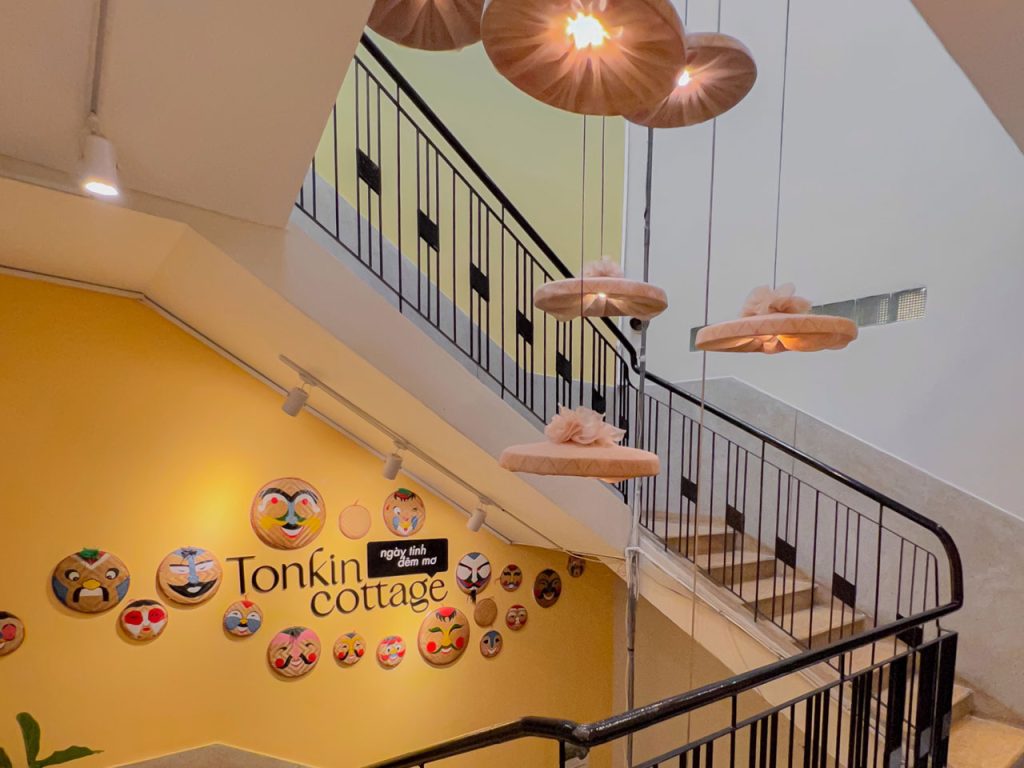
For Vietnamese coffee near Ho Chi Minh City Museum of Fine Arts, visit Tonkin Coffee at 91 Ly Tu Trong Street. The hidden second-floor café pairs Gia Lai Fine Robusta and freshly whipped egg cream with Vietnamese folk masks, lacquer details and bamboo décor, extending an art-focused visit through aroma, texture and local flavour.
Which Tonkin Coffee branch fits naturally after the museum?
Tonkin Specialty Coffee is the most suitable Tonkin branch when the next destination lies around Ben Thanh Market, Mariamman Hindu Temple or Independence Palace. The Ly Tu Trong location connects an art-focused morning with a calm coffee stop without sending visitors into another part of the city.
How can visitors find the Ly Tu Trong café?
Ho Chi Minh City Museum of Fine Arts stands at 97–97A Pho Duc Chinh Street. After leaving the museum, visitors can follow a live map towards Ly Tu Trong Street and look for Tonkin Specialty Coffee inside an older building.
A narrow passage and staircase lead to the second-floor café. The understated entrance is easy to pass because Tonkin Specialty Coffee does not have the large street-facing frontage of a modern coffee chain.
Walking conditions change with traffic signals, weather and pavement congestion. A live navigation app provides a more reliable guide than a fixed walking-time estimate.
What atmosphere awaits upstairs?
The room combines warm lighting, bamboo objects, lacquer details, Vietnamese folk masks and traditional artwork. The visual language feels connected to the museum visit while remaining intimate rather than formal.
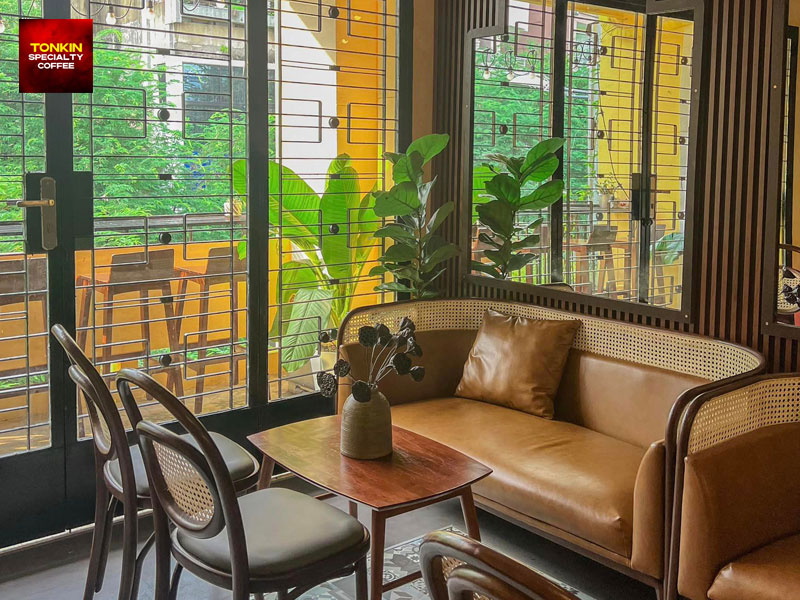
Visitors can put down their bags, review photographs and discuss memorable works without immediately entering another crowded attraction. The slower rhythm makes the café particularly useful after exploring several galleries.
How does coffee continue the museum experience?
The connection between a fine arts museum and a coffee shop comes from materials and sensory attention. Museum visitors notice brushwork, surface, colour and composition; coffee drinkers notice aroma, body, sweetness and the balance between individual ingredients.
Which artistic materials create a useful connection?
The museum introduces Vietnamese art through lacquer, silk, ceramics, sculpture and other forms. Tonkin Specialty Coffee does not attempt to reproduce a gallery, but Vietnamese folk objects and handcrafted decorative details carry the cultural journey into a more personal setting.
| Museum experience | Coffee experience |
| Lacquer surfaces | Traditional lacquer decorations |
| Silk and soft visual texture | Airy egg cream |
| Sculpture and layered forms | Two-part coffee presentation |
| Historic architecture | Hidden café in an older building |
| Vietnamese artistic identity | Locally grown Fine Robusta |
The relationship is subtle. Art communicates through images and materials, while coffee communicates through origin, preparation and taste.
Why is reflection important after viewing art?
Moving quickly from one attraction to another can reduce a museum visit to photographs and checklists. A seated break allows travellers to remember particular colours, stories or objects before fresh visual information takes over.
Visitors following a longer cultural route can use Best coffee break during a District 1 walking tour to place the café between architectural and historical stops without unnecessary backtracking.
What should first-time visitors order?
Egg coffee offers the clearest introduction to Tonkin’s approach, while black Fine Robusta reveals the character of the bean without milk or cream. Nâu Tonkin and salt coffee provide alternatives for visitors who prefer familiar sweetness.
| Drink | Main character | Recommended for |
| Egg coffee | Creamy, airy and bittersweet | A first Vietnamese coffee experience |
| Black Fine Robusta | Chocolatey, nutty and full-bodied | Visitors who want to taste the bean |
| Nâu Tonkin | Bold coffee with condensed milk | Fans of traditional iced coffee |
| Salt coffee | Creamy with a mild salty finish | Visitors who enjoy sweet-salty balance |
| Herbal tea | Light and refreshing | Travellers limiting caffeine |
What makes Tonkin’s egg coffee distinctive?
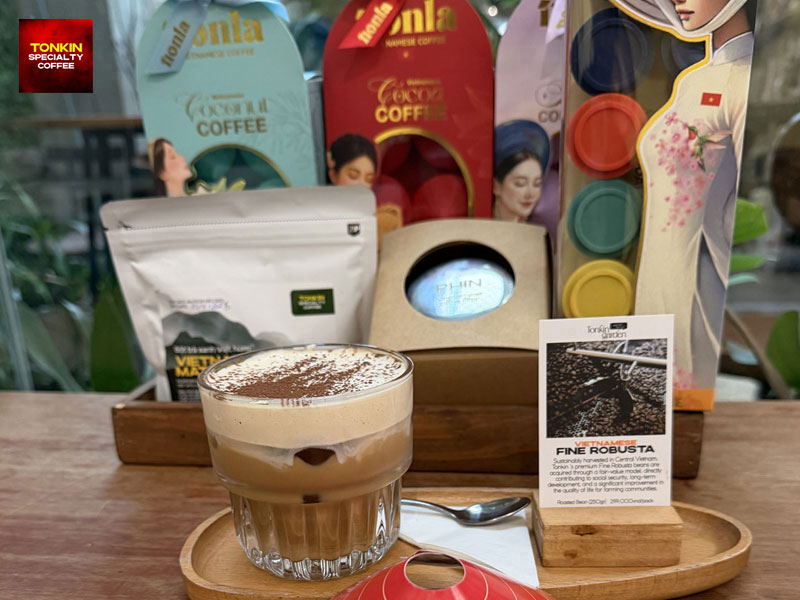
Tonkin prepares the upper layer with fresh egg, honey, sugar and a small amount of rum. Careful whipping produces a smooth mousse-like texture without allowing a strong raw-egg aroma to dominate the cup.
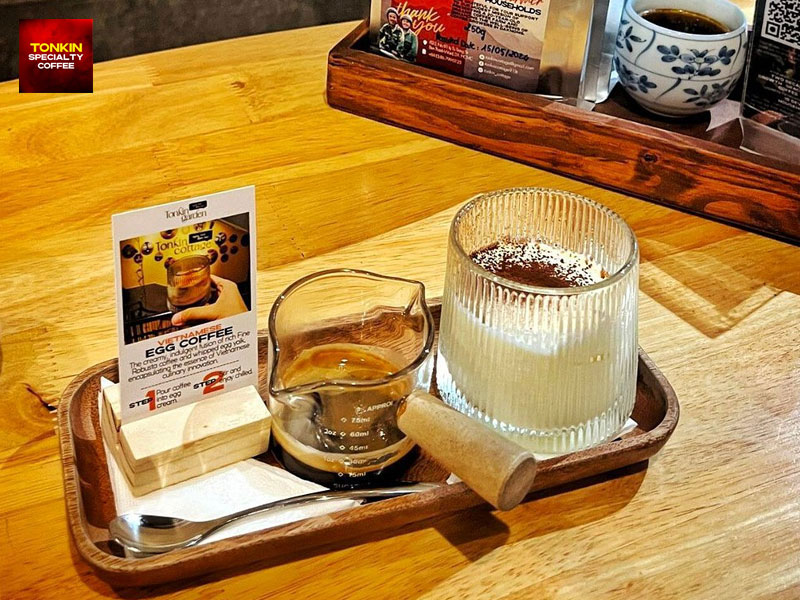
The coffee underneath remains clearly present. Tonkin uses Fine Robusta with enough body to balance the cream, preventing the drink from tasting like a sweet topping placed over weak coffee.
The qualities expected from a famous egg coffee shop in ho chi minh should be evident in the ingredients, texture and balance rather than in an exaggerated claim. Fresh preparation and a recognisable coffee base make the difference noticeable from the first spoonful.
How should visitors taste the two layers?
A simple tasting sequence makes the structure easier to understand:
- Observe the colour and separation of the two layers.
- Smell the coffee and cream before stirring.
- Taste a small spoonful of egg cream.
- Sip the Fine Robusta separately.
- Mix a portion of the cream into the coffee.
- Adjust the remaining ratio according to personal sweetness preferences.
Visitors who dislike sweet drinks do not need to mix all the cream into the cup. Black Fine Robusta remains the most direct choice for experiencing Vietnamese coffee without condensed milk.
What does Gia Lai Fine Robusta taste like?
Tonkin sources Fine Robusta from Gia Lai in Vietnam’s Central Highlands. The coffee has a substantial body accompanied by flavours resembling dark chocolate, toasted nuts and caramel.
Is every Robusta coffee harsh or bitter?
Robusta is naturally stronger and more bitter than many Arabica profiles, but origin, cherry quality, processing and roasting shape the final cup. Carefully produced Fine Robusta can retain intensity while tasting clean, rounded and naturally sweet.
That structure makes the bean suitable for Vietnamese milk coffee and egg coffee. The chocolate and nut notes remain perceptible beneath creamy ingredients, creating contrast rather than disappearing under sweetness.
How can visitors continue their cultural route?
Tonkin Specialty Coffee works as a transition point between the museum and several central areas. The best route depends on whether the next priority is public transport, shopping, architecture or green space.
Which route leads towards the market and metro?
A practical order is:
Museum of Fine Arts – Tonkin Specialty Coffee – Ben Thanh Market – Ben Thanh Metro Station – September 23 Park
Visitors planning to use Metro Line 1 can consult the route for Vietnamese coffee near Ben Thanh Metro Station before deciding which station entrance suits the next journey.
Which route combines shopping with sightseeing?
Saigon Square lies between the museum area and several central attractions. The sequence can follow:
Museum of Fine Arts – Saigon Square – Tonkin Specialty Coffee – Ben Thanh Market
The guide to coffee near Saigon Square shopping center is useful when the day combines galleries with fashion shopping and a longer indoor rest.
Visitors continuing east can move from Tonkin Specialty Coffee towards Saigon Centre, Nguyen Hue Walking Street and Bitexco Financial Tower. Information about coffee near Takashimaya Ho Chi Minh City helps organise that shopping-and-riverfront direction without returning to the museum area.
Which route suits history and green space?
Travellers interested in architecture can continue towards Independence Palace and then Tao Dan Park. The route changes from indoor galleries to historic civic space and finally to a greener environment.
A morning museum visit followed by coffee works especially well before the hottest part of the afternoon. Visitors should still check current museum hours and weather conditions before fixing the order.
When is another Tonkin branch more suitable?
Tonkin Specialty Coffee remains the primary recommendation, but another branch may fit the onward journey better.
| Next destination | Suggested branch | Main advantage |
| Ben Thanh or Independence Palace | 91 Ly Tu Trong Street | Hidden attic and folk decorations |
| Tran Hung Dao or Bui Vien | 135/50 Tran Hung Dao Street | Quiet alley and garden atmosphere |
| Huynh Hoa or Pham Ngu Lao | 1 Le Thi Rieng Street | Air conditioning, Wi-Fi and outside food |
| Nguyen Hue or Bitexco | 27 Ngo Duc Ke Street | Ground floor of a 1917 villa |
Tonkin Garden Cafe is a strong alternative for travellers moving west from the museum. Visitors with limited mobility should note that the Ly Tu Trong café requires stairs and contact Tonkin Coffee before travelling if specific access arrangements are important.
Is Tonkin Coffee worth adding to an art-focused day?
Tonkin Specialty Coffee adds flavour, aroma and local ingredients to an itinerary already shaped by Vietnamese visual culture. The folk-inspired interior, Gia Lai Fine Robusta and layered egg coffee create a meaningful continuation of the museum visit rather than a generic refreshment stop.
Choose the Ly Tu Trong branch for Ben Thanh and Independence Palace, or select another Tonkin location according to the next direction. Visit Tonkin Coffee to review the menu and save the most suitable branch before beginning the cultural walk.
Visit Tonkin Coffee Today!
Tonkin Specialty Coffee
- Add: 91 Ly Tu Trong St., Ben Thanh Ward, Ho Chi Minh City, Vietnam.
- Hotline: 086 799 0125
Tonkin Garden Cafe
- Add: 135/50 Tran Hung Dao St., Cau Ong Lanh Ward, Ho Chi Minh City, Vietnam.
- Hotline: 087 992 4691
Tonkin Egg Coffee
- Add: 1 Le Thi Rieng St., Ben Thanh Ward, Ho Chi Minh City, Vietnam.
- Hotline: 0815 841 909
Tonkin Egg Coffee & Herbal Tea
- Add: 27 Ngo Duc Ke St., Sai Gon Ward, Ho Chi Minh City, Vietnam
