

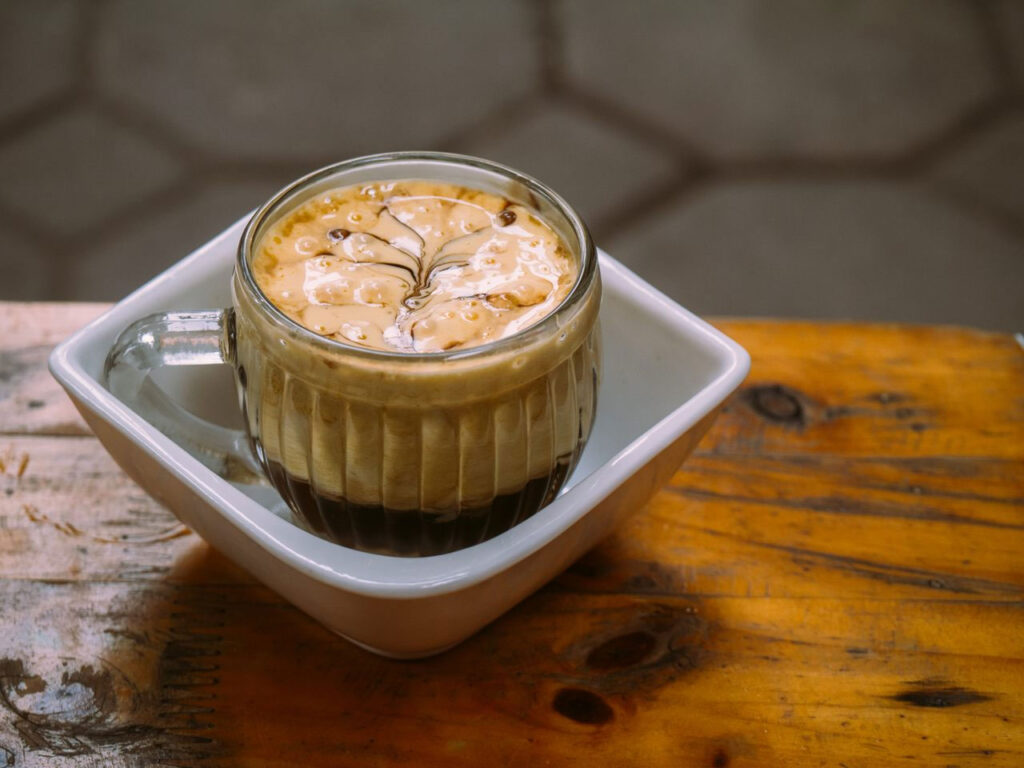
The traditional egg coffee recipe from Hanoi combines strong phin-brewed Robusta with a thick, airy egg cream made from fresh yolks and condensed milk. Defined by balance and temperature control, this iconic drink reflects authentic technique, a method carefully preserved and refined at Tonkin Coffee in District 1.
What ingredients are used in a traditional egg coffee recipe?
A traditional preparation relies on a concentrated Robusta coffee base and a freshly whipped egg cream made from egg yolks and condensed milk, lightly sweetened and served hot to maintain texture and aroma.
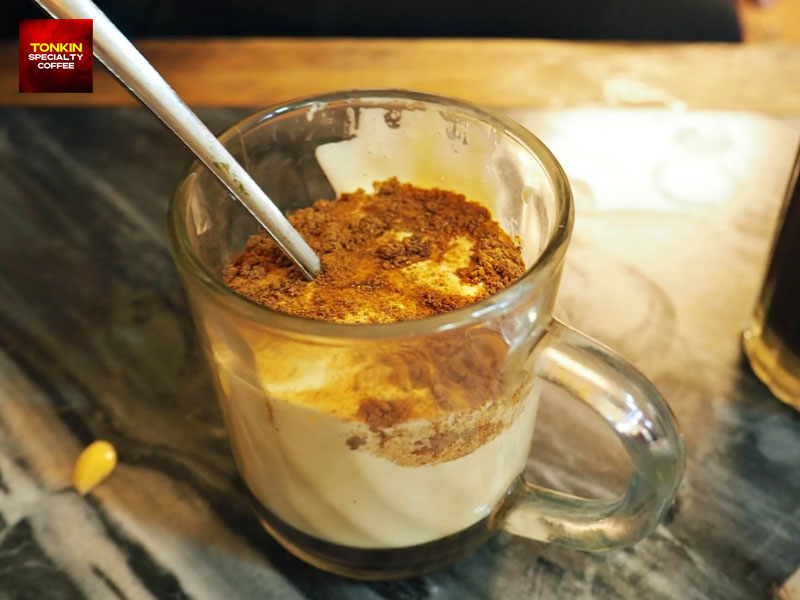
Coffee base
The coffee foundation determines structure and depth.
- 25–30g finely ground Robusta coffee
- Brewed using a Vietnamese phin filter
- Extracted slowly for strength and body
Robusta is chosen for its high caffeine content and firm bitterness. In Hanoi’s classic method, finely ground coffee is placed inside a metal phin filter and brewed directly over the serving cup. This slow-drip process ensures concentration. The coffee must be intense enough to balance the sweetness of the cream layered above it.
Egg cream
The signature layer requires precision and freshness.
- 2 fresh egg yolks
- 20ml sweetened condensed milk
- ½ teaspoon sugar or honey
- Optional: a few drops of rum
Only yolks are used. They must be cleanly separated from the whites to prevent instability or odor. Condensed milk provides both sweetness and body, while sugar or honey enhances smoothness. A small amount of rum can help neutralize any egg aroma without altering the traditional flavor.
When whipped correctly, the mixture transforms into a pale, mousse-like cream that floats gently on top of the coffee.
Garnish
Though minimal, garnish adds aroma and visual contrast.
- Cocoa powder
- Cinnamon
A light dusting enhances fragrance and creates a visual distinction between dark coffee and golden foam.
How is coffee brewed the traditional Hanoi way?
Traditional Hanoi brewing uses a phin filter to produce a slow, concentrated extraction that results in a dark, thick coffee strong enough to support the sweet egg cream.
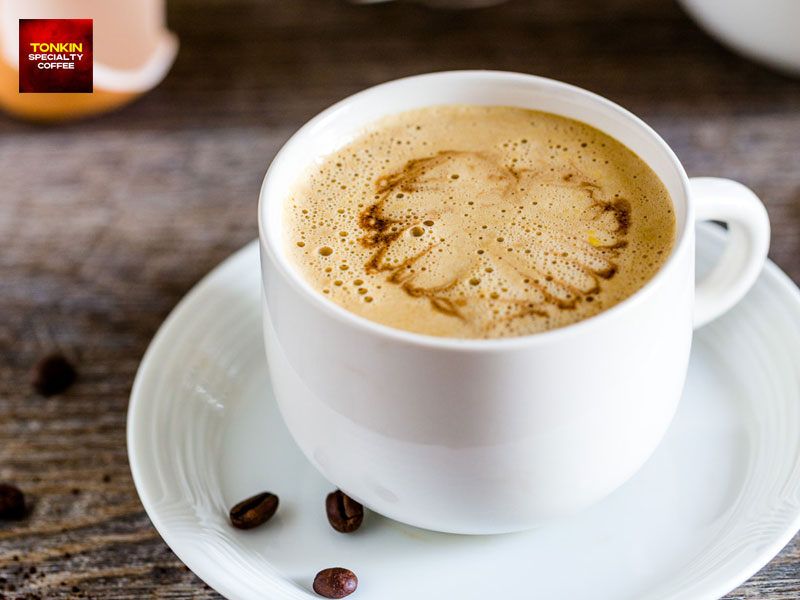
Bloom technique (20ml water – 30 seconds)
First, rinse the phin and cup with hot water to stabilize temperature. Add 25–30g of ground Robusta and gently press with the filter insert. Pour about 20ml of boiling water over the grounds and wait 30 seconds.
This blooming stage allows the coffee to expand and release gases, preparing it for full extraction.
Full extraction (60ml – 4 – 5 minutes)
After blooming, add approximately 60ml of hot water. Cover the phin and allow it to drip slowly for 4-5 minutes.
The drip rate should be steady, not rushed. Too fast results in weak coffee; too slow risks over-extraction.
Desired result: dark, thick, concentrated
The final liquid should appear deep black, slightly viscous, and aromatic. This intensity is essential. Without sufficient strength, the sweetness of the cream overwhelms the drink.
The brewing technique forms the structural backbone of what many consider the authentic vietnamese egg coffee recipe.
How do you whip egg cream correctly?
Egg cream must be whipped until light, stable, and aromatic, forming a smooth layer that floats on hot coffee without collapsing.
Whipping time (3-4 Minutes)
Place yolks, condensed milk, and sugar or honey in a bowl. Whip using an electric mixer or hand whisk at high speed for 3-4 minutes.
Consistency matters more than speed. Under-whipping leaves the mixture thin; over-whipping may cause separation.
Texture benchmark
The finished cream should turn pale yellow and increase noticeably in volume. It should resemble soft custard or light mousse, smooth and glossy.
When lifted with a spoon, it forms gentle peaks that hold briefly before settling.
Float test
To check readiness, drop a small spoonful onto hot coffee. If it floats without immediately dissolving, the density is correct.
The cream should rest naturally above the liquid rather than mixing instantly.
No raw smell rule
A properly whipped mixture should have no raw egg aroma. The sweetness and warmth of the coffee further soften the cream. Any lingering odor indicates insufficient whipping or lack of freshness.
For readers exploring how to make egg coffee at home, mastering this stage determines overall success more than any other step.
What is the correct ratio of coffee to egg cream?
The traditional ratio is 1:1, though some prefer 1:2 for a sweeter profile. The coffee must always be very hot to lightly warm the cream from below.
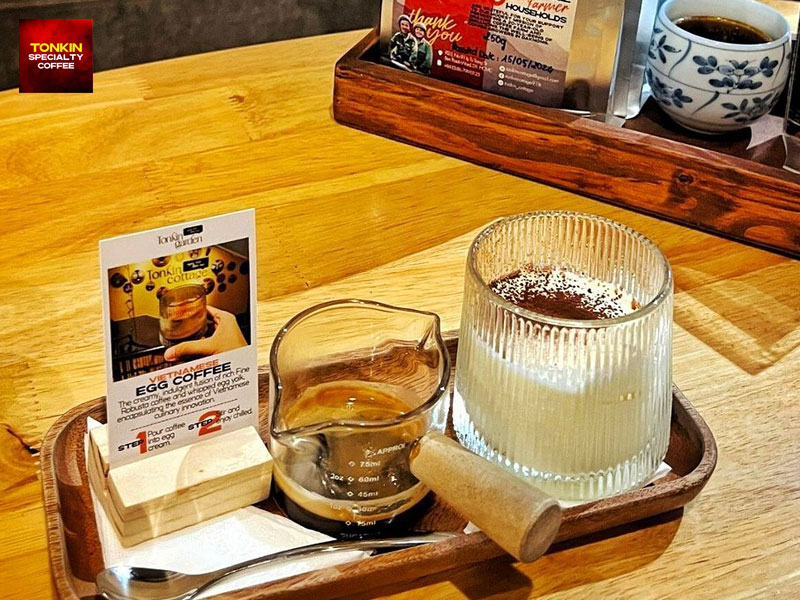
A 1:1 ratio produces balanced contrast between bitterness and sweetness. Increasing the cream to 1:2 creates a dessert-like experience, softer and more indulgent.
Temperature is critical. The coffee should be freshly brewed and near boiling when assembled. Heat subtly warms the underside of the egg layer, enhancing texture and preventing any return of egg aroma.
This careful proportioning explains why egg coffee is popular in Hanoi, the harmony between strength and softness feels deliberate rather than excessive.
How is egg coffee traditionally served in Hanoi?
Traditionally, the drink is served in a glass placed inside a bowl of hot water, encouraging slow sipping and preserving warmth.
Glass in hot water bowl
The serving glass sits in a small bowl filled with hot water. This indirect heat maintains temperature without cooking the egg layer too aggressively.
Maintaining warmth keeps texture stable and flavor balanced.
Sip foam first
Hanoi locals often taste the egg cream separately with a spoon before stirring. This highlights its custard-like sweetness.
Stir lightly after
After sampling the foam, gently stir to blend cream and coffee. The drink then transforms into a unified mixture with velvety body and bold finish.
This ritual connects the beverage to egg coffee and Vietnamese café culture, where time, conversation, and sensory appreciation define the experience as much as the ingredients.
How does Tonkin Coffee reinterpret the traditional method?
Tonkin Coffee refines the traditional Hanoi technique through precise temperature control, carefully sourced beans, and consistent texture stability.
Precision temperature
Maintaining exact brewing and serving temperatures ensures the egg cream remains stable and aromatic. Coffee is served hot enough to support structure without overheating the foam.
Central Highlands beans
Instead of generic Robusta, beans sourced from Vietnam’s Central Highlands are selected for clarity, balanced bitterness, and clean finish.
This sourcing approach strengthens the coffee base while preserving traditional intensity.
Refined extraction
Extraction is carefully calibrated to avoid harsh over-extraction while maintaining concentration. Consistency in grind size, bloom timing, and drip rate ensures uniform results across servings.
Texture stability
The egg cream is whipped to a controlled density that floats evenly and maintains smoothness from first sip to last.
This attention to detail respects the historical method while subtly elevating presentation and balance.
For visitors seeking a well-executed Egg coffee recipe beyond home preparation, this reinterpretation demonstrates how tradition can remain intact while technique evolves.
A traditional Hanoi-style egg coffee depends on precision, freshness, and contrast. Strong phin-brewed Robusta forms the base. Fresh yolks whipped with condensed milk create the airy crown. Proper ratio, temperature control, and careful serving complete the process.
More than a drink, it represents balance: bitterness and sweetness, warmth and lightness, simplicity and craft. Whether studied for technique or enjoyed slowly in a café setting, the structure behind it reveals why this beverage continues to define a distinctive chapter in Vietnam’s coffee heritage.
Visit Tonkin Coffee Today!
Tonkin Specialty Coffee
- Add: 91 Ly Tu Trong St, Ben Thanh Ward, District 1, Ho Chi Minh City, Vietnam.
- Hotline: 086 799 0125
Tonkin Garden Cafe
- Add: 135/50 Tran Hung Dao St, Ben Thanh Ward, District 1, Ho Chi Minh City, Vietnam.
- Hotline: 087 992 4691
Tonkin Egg Coffee
- Add: 1 Le Thi Rieng, Ben Thanh Ward, District 1, Ho Chi Minh City, Vietnam.
- Hotline: 0815 841 909

Nestled in the heart of Ho Chi Minh City, Tonkin Specialty Coffee is one of the best coffee shops to experience authentic Vietnamese flavors. From the iconic egg coffee and refreshing coconut coffee to bold Vietnamese coffee and the unique salt coffee, every sip is a journey into tradition. For non-coffee lovers, our Vietnamese matcha offers a gentle alternative. Pair your drink with a freshly baked banh mi or a buttery croissant, and savor the true taste of Vietnam in a setting inspired by folk culture and Indochine charm.