

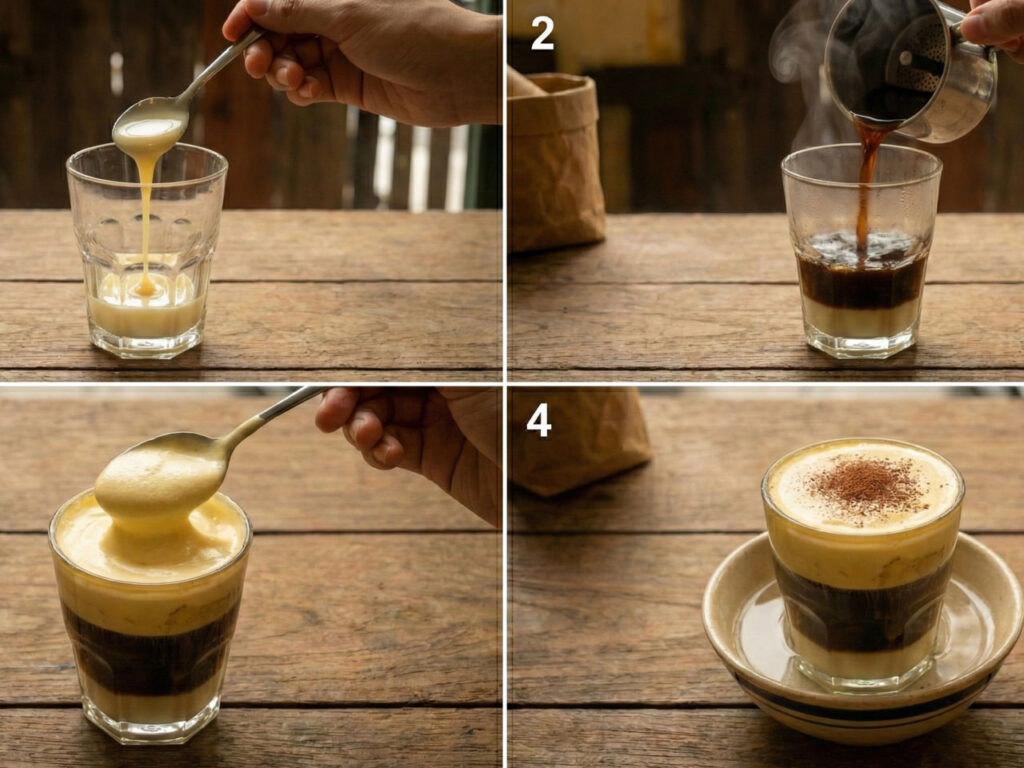
Vietnam’s famous egg coffee is known for its rich texture and balanced sweetness. Understanding the ingredients for egg coffee helps reveal how simple elements like egg yolks, condensed milk, and strong Vietnamese coffee create such a distinctive drink. At Tonkin Coffee, this classic recipe is carefully prepared to highlight both the traditional flavors and the craft behind Vietnam’s iconic café specialty.
What ingredients are used in a traditional egg coffee recipe?
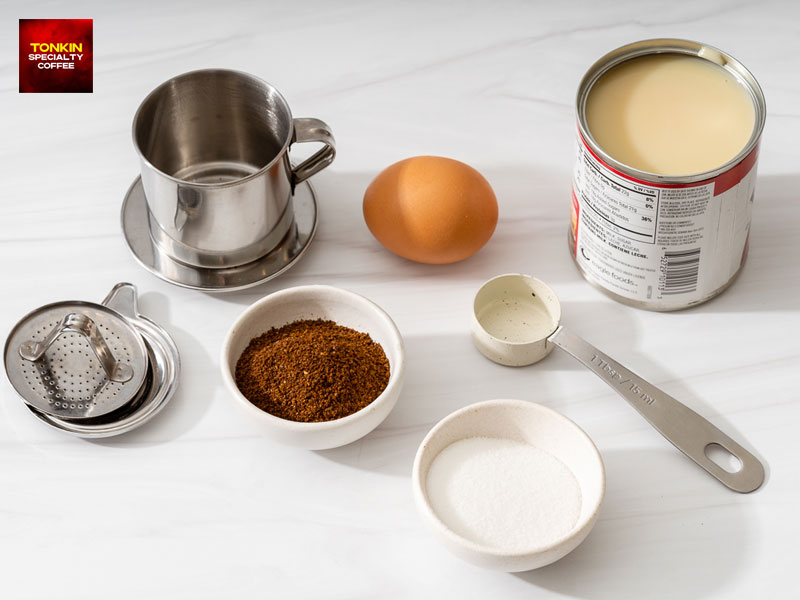
A classic preparation relies on three main components: strong Vietnamese coffee, whipped egg yolk cream, and sweetened condensed milk. Together they form the structure that defines the drink.
Coffee base
The coffee foundation determines the drink’s depth and character.
Traditional preparation typically includes:
- 25–30 g finely ground Robusta coffee
- Brewed with a Vietnamese phin filter
- Extracted slowly for concentration
Robusta beans are traditionally chosen because they provide a strong body and a firm bitterness. This strength is essential because the egg cream adds sweetness and richness above it. Without a concentrated base, the drink would taste overly sweet and lose its balance.
In Hanoi cafés, ground coffee is placed inside a small metal filter called a phin. Hot water passes slowly through the grounds, dripping directly into the serving cup. The result is a dark, thick coffee with an intense aroma.
This brewing method forms the backbone of what many describe as a traditional egg coffee recipe, where simplicity and patience guide the process.
Egg cream ingredients
The most recognizable feature of egg coffee is the pale golden foam that sits on top.
This cream typically includes:
- 2 fresh egg yolks
- 20 ml sweetened condensed milk
- ½ teaspoon sugar or honey
- Optional: a few drops of rum
Only egg yolks are used. They must be separated carefully from the whites, since even a small amount of egg white can affect the texture and aroma.
Condensed milk contributes both sweetness and body. Because it is thicker than regular milk, it blends smoothly with the yolks during whipping.
Some recipes include a small amount of sugar or honey to deepen the sweetness. A few drops of rum may also be added. The alcohol evaporates quickly in the warm drink but helps neutralize any lingering egg aroma.
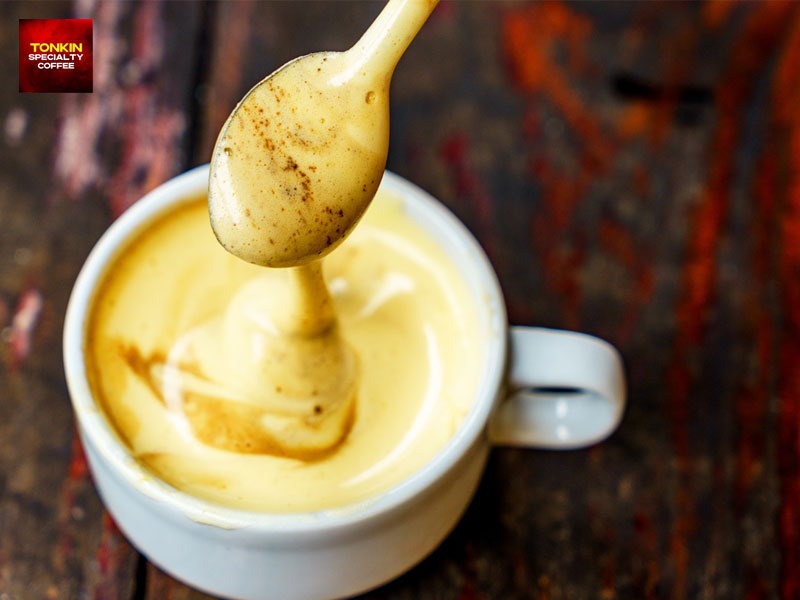
When whipped properly, the mixture becomes light and airy. The color changes from deep yellow to pale cream, and the texture resembles soft mousse.
Simple garnish
Traditional egg coffee is not heavily decorated, but a small garnish adds aroma and visual contrast.
Common options include:
- Cocoa powder
- Cinnamon
A light dusting creates a subtle fragrance and highlights the layered appearance of the drink. The dark coffee beneath and the golden foam above form a clear visual contrast that has become iconic.
How is coffee brewed for egg coffee in the traditional Hanoi method?
The coffee used in egg coffee must be strong enough to support the sweetness of the cream. For this reason, the brewing method is just as important as the ingredients themselves.
Traditional preparation relies on the Vietnamese phin filter, which produces a slow and concentrated extraction.
Bloom stage
The brewing process begins with a brief blooming stage.
After placing ground coffee inside the phin filter, a small amount of hot water is poured over the grounds. This stage usually uses about 20 ml of water and lasts around 30 seconds.
During blooming, the coffee grounds expand and release trapped gases. This prepares the coffee for full extraction and helps produce a cleaner flavor.
Although simple, this step contributes significantly to the clarity and aroma of the final cup.
Slow extraction
Once blooming is complete, more hot water is added to the filter.
Typically:
- About 60 ml of hot water is poured into the phin.
- The lid is placed on top.
- The coffee drips slowly for 4–5 minutes.
The drip rate should be steady. If the coffee flows too quickly, the result will be weak. If it drips too slowly, bitterness may become overwhelming.
A balanced extraction produces a concentrated brew that is both strong and aromatic.
Desired flavor and texture
The final coffee should appear:
- Deep black
- Slightly thick
- Strong in aroma
This intensity is essential for egg coffee. The boldness of the coffee contrasts with the smooth sweetness of the cream above it.
For many people researching the history and recipe of Vietnamese egg coffee, this slow brewing method is an important part of the tradition. It connects the drink to the long-standing coffee culture of northern Vietnam.
How is egg cream prepared and layered on the coffee?
The egg cream is the most delicate part of the drink. While the ingredients for egg coffee are simple, the texture must be just right.
Whipping the egg mixture
The yolks, condensed milk, and sweetener are placed in a bowl and whipped together.
This process usually takes 3–4 minutes.
Whipping can be done with:
- A hand whisk
- An electric mixer
As air enters the mixture, the texture gradually changes. The cream becomes lighter in color and increases in volume.
The goal is to achieve a consistency similar to soft custard or mousse.
Texture and stability
The finished cream should be smooth and glossy.
A simple test helps determine if it is ready. When a spoonful is placed on top of hot coffee, the cream should float gently rather than dissolve immediately.
If the foam collapses quickly, it may not have been whipped long enough. Stability is important because the cream needs to remain separate from the coffee at first.
This airy foam creates the layered sensation that makes egg coffee unique.
Coffee-to-cream ratio and serving method
A balanced cup usually follows a 1:1 ratio between coffee and egg cream. Some people prefer a richer drink with slightly more cream.
Temperature also matters. The coffee should be freshly brewed and very hot when the foam is added.
Traditionally, the drink is served in a glass placed inside a bowl of warm water. This indirect heat keeps the coffee hot without overheating the egg cream.
When drinking, many people first taste the foam with a spoon. Afterwards, the layers can be gently stirred together.
For those curious to make egg coffee at home, this simple ritual helps recreate the experience often found in Vietnamese cafés.
Where can you experience a refined version of egg coffee today?
While egg coffee is strongly associated with Hanoi, the drink has gradually appeared in cafés across Vietnam.
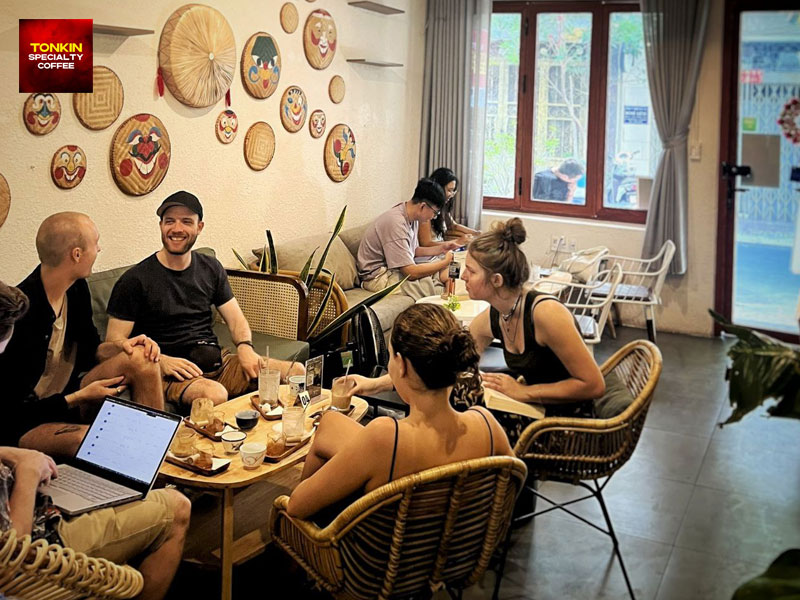
Some modern coffee shops maintain the traditional method while refining the details of preparation.
One example is Tonkin Coffee, a café in Ho Chi Minh City that focuses on Vietnamese coffee traditions while applying careful brewing techniques.
Careful bean selection
Instead of using generic coffee blends, the café works with beans sourced from Vietnam’s Central Highlands.
These beans are chosen for their:
- Clean bitterness
- Balanced body
- Aromatic clarity
Selecting high-quality beans strengthens the foundation of the drink and allows the egg cream to complement rather than dominate the flavor.
Precision brewing and texture control
Another aspect of refinement lies in consistency.
Careful attention is given to:
- Grind size
- Bloom timing
- Extraction rate
This ensures that each cup maintains the same balance between strength and sweetness.
The egg cream is also whipped to a controlled texture so that it floats smoothly and maintains stability throughout the drink.
Experiencing egg coffee in Ho Chi Minh City
For visitors exploring Vietnamese coffee culture, trying egg coffee in different cities can reveal subtle variations in preparation.
In some places, the drink leans toward dessert-like sweetness. In others, the emphasis remains on strong coffee and gentle cream.
Cafés that respect traditional techniques while refining the details offer an interesting perspective on how the drink continues to evolve.
Egg coffee may appear simple, but its structure depends on thoughtful balance. Strong phin-brewed coffee provides depth and intensity, while fresh egg yolks whipped with condensed milk create a light, airy foam.
When combined with the correct ratio and temperature, these elements produce a drink that feels both comforting and distinctive.
The ingredients themselves are straightforward. What makes the drink memorable is the harmony between bitterness and sweetness, warmth and softness.
Whether studied as part of Vietnamese coffee tradition or enjoyed slowly in a café, egg coffee continues to represent a small but fascinating chapter in the country’s culinary heritage.
Visit Tonkin Coffee Today!
Tonkin Specialty Coffee
- Add: 91 Ly Tu Trong St, Ben Thanh Ward, District 1, Ho Chi Minh City, Vietnam.
- Hotline: 086 799 0125
Tonkin Garden Cafe
- Add: 135/50 Tran Hung Dao St, Ben Thanh Ward, District 1, Ho Chi Minh City, Vietnam.
- Hotline: 087 992 4691
Tonkin Egg Coffee
- Add: 1 Le Thi Rieng, Ben Thanh Ward, District 1, Ho Chi Minh City, Vietnam.
- Hotline: 0815 841 909

Nestled in the heart of Ho Chi Minh City, Tonkin Specialty Coffee is one of the best coffee shops to experience authentic Vietnamese flavors. From the iconic egg coffee and refreshing coconut coffee to bold Vietnamese coffee and the unique salt coffee, every sip is a journey into tradition. For non-coffee lovers, our Vietnamese matcha offers a gentle alternative. Pair your drink with a freshly baked banh mi or a buttery croissant, and savor the true taste of Vietnam in a setting inspired by folk culture and Indochine charm.