


At first glance, salt coffee may sound unusual, but one sip is often enough to understand why it has captured so much attention. Many visitors and coffee lovers find themselves asking what is salt coffee in Vietnam, and the answer lies in a surprisingly gentle balance of bold coffee, creamy texture, and a hint of salt that enhances every flavor. At Tonkin Coffee, this drink is enjoyed as part of everyday Vietnamese coffee culture, where simple ingredients come together to create something memorable.
The origin and meaning of salt coffee
Salt coffee first appeared in central Vietnam, particularly in Hue, a city known for its refined culinary traditions. Local coffee lovers experimented with adding a small amount of salt to creamy milk foam, pairing it with strong brewed coffee. The result was unexpected but comforting, a cup that felt rounder, smoother, and less bitter without relying on sugar.
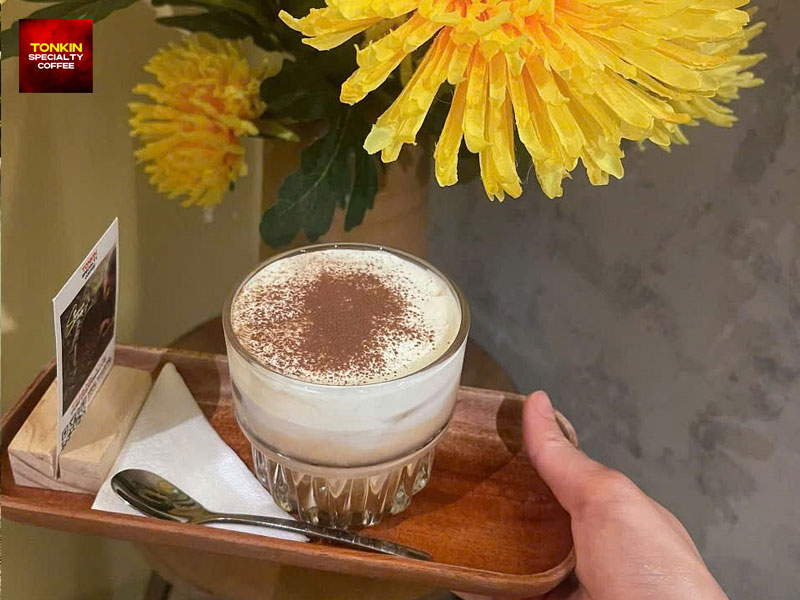
Unlike many sweetened coffee drinks, salt coffee respects the original character of the coffee beans. The salt does not dominate. Instead, it gently enhances the natural sweetness already present in the coffee, allowing deeper flavors to come forward. Over time, what started as a local curiosity became a beloved specialty, gradually spreading to cafés across the country.
Salt coffee is also a reflection of Vietnamese taste philosophy. Vietnamese cuisine often plays with contrasts, salty and sweet, bitter and creamy always aiming for harmony rather than intensity. In this way, salt coffee feels like a natural extension of how Vietnamese people experience food and drink.
How salt changes the coffee flavor
For many first-time drinkers, the most surprising part of salt coffee is how familiar it feels after the first sip. Instead of tasting salty, the coffee feels smoother, softer, and more balanced.
The science behind salt and bitterness
Salt has a unique ability to reduce bitterness on the tongue. Even a very small amount can suppress harsh bitter notes, allowing sweetness and aroma to become more noticeable. This is why salt is sometimes added to dark chocolate or grapefruit, not to make them salty, but to improve balance.
In coffee, especially strong Vietnamese brews, bitterness can be intense. When paired with lightly salted cream, the sharp edges fade. The coffee becomes rounder, and its natural chocolatey or nutty notes are easier to taste. This is one reason salt coffee often surprises people who normally find black coffee too strong.
Why Vietnamese robusta works so well
Vietnam is the world’s largest producer of Robusta coffee, a bean known for its bold body, higher caffeine, and stronger bitterness compared to Arabica. While Robusta is sometimes misunderstood internationally, it shines when brewed properly and paired thoughtfully.
In salt coffee, Robusta becomes the perfect base. Its strength holds up against cream, while salt helps smooth its bitterness. The result is a cup that feels rich and satisfying, without becoming heavy or overwhelming. This pairing shows how Vietnamese coffee culture has evolved not by copying global trends, but by working with what grows best locally.
What makes Vietnamese salt coffee special
Salt coffee may look simple, but its charm lies in careful balance. Each component plays an important role, and small changes can dramatically affect the final taste.
Essential Components of Vietnamese salt coffee
At its core, salt coffee includes three elements: strong brewed coffee, milk or cream, and a subtle touch of salt. The coffee is usually brewed strong to maintain depth. The milk layer is whipped or lightly frothed, creating a creamy texture that sits gently on top. Salt is added sparingly, just enough to enhance, never enough to overpower.
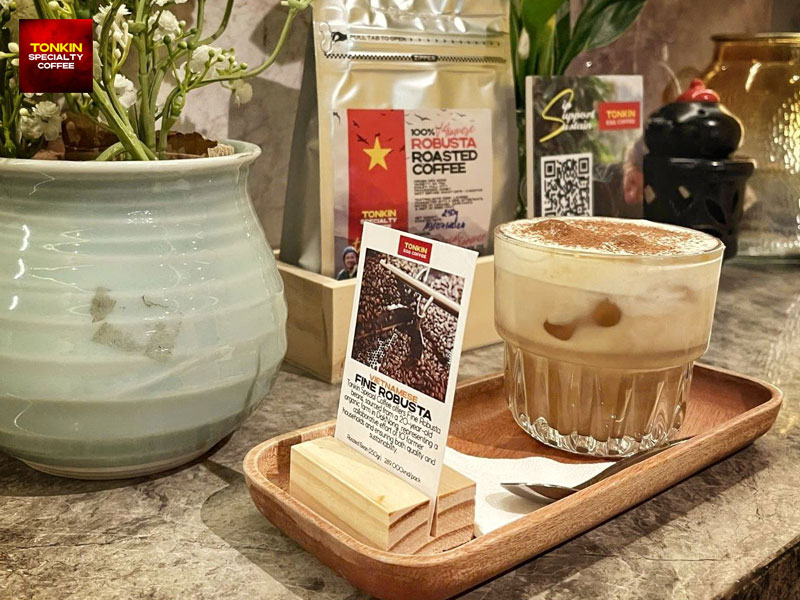
The quality of ingredients matters. Freshly roasted coffee beans, clean dairy flavors, and fine salt all contribute to a smooth, pleasant experience. When done right, the drink feels balanced from the first sip to the last.
Many coffee lovers who enjoy recreating the experience at home eventually search for how to make Vietnamese salt coffee, only to realize that technique and proportion matter more than complexity. It is not about adding salt randomly, but about understanding how flavors interact.
Traditional vs Modern Brewing Approaches
Traditionally, Vietnamese coffee is brewed slowly, allowing time for flavors to fully extract. This slow rhythm fits perfectly with salt coffee, which is meant to be enjoyed patiently. The familiar drip brewing method known as cafe phin produces a concentrated coffee that pairs beautifully with creamy toppings.
In modern cafés, baristas refine the process further. They experiment with milk textures, brewing temperatures, and foam density to achieve consistency. While the presentation may look more contemporary, the soul of the drink remains deeply Vietnamese.
Experiencing salt coffee at Tonkin Coffee
As salt coffee becomes more popular, different cafés interpret it in their own ways. Some lean toward sweetness, others emphasize creaminess. At Tonkin Coffee, the approach is calm, thoughtful, and respectful of the coffee itself.
Tonkin’s interpretation of Vietnamese salt coffee
Tonkin Coffee builds its salt coffee around fine Robusta beans, carefully roasted to highlight depth without harshness. The coffee is bold, but not aggressive. On top, a smooth salted cream layer adds softness, gently blending with the coffee below as you drink.
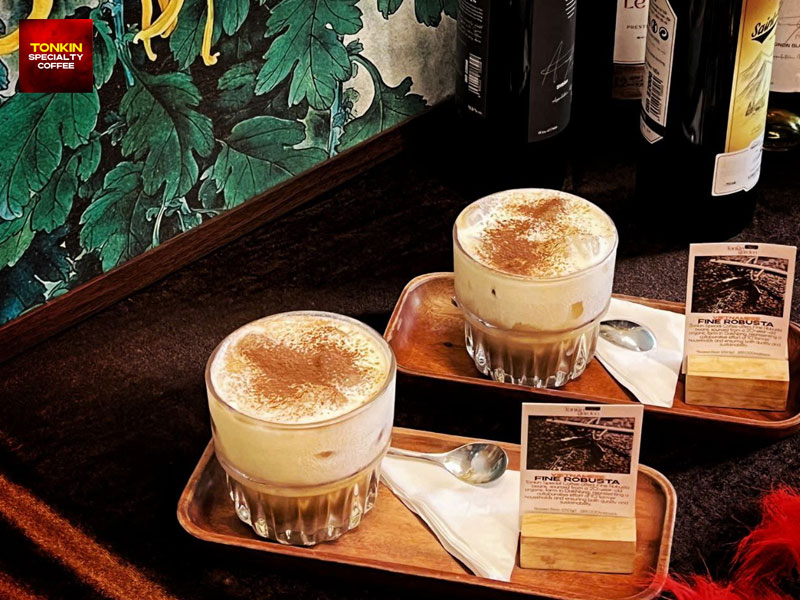
What stands out is restraint. The salt is barely noticeable as a separate flavor, yet its effect is clear. The bitterness feels softer, the mouthfeel rounder, and the overall cup more harmonious. This balance makes the drink approachable even for those trying salt coffee for the first time.
Rather than chasing trends, Tonkin Coffee focuses on clarity and consistency. The drink feels honest, like a quiet conversation rather than a loud statement.
Why the experience feels different
Salt coffee at Tonkin is not rushed. It invites you to slow down, take a sip, and notice how the flavors change as the cream blends into the coffee. The first sip may feel bold, the next smoother, the last surprisingly sweet.
For visitors exploring different types of coffee in Vietnam, this experience offers insight into how Vietnamese coffee continues to evolve while staying rooted in tradition. It shows that innovation does not always mean complexity, sometimes it means refinement.
There is also a sense of transparency. You can taste the coffee itself, not just the milk or foam. This is what makes the experience memorable and repeatable.
Visit Tonkin Coffee Today!
Tonkin Specialty Coffee
- Add: 91 Ly Tu Trong St, Ben Thanh Ward, District 1, Ho Chi Minh City, Vietnam.
- Hotline: 086 799 0125
Tonkin Garden Cafe
- Add: 135/50 Tran Hung Dao St, Ben Thanh Ward, District 1, Ho Chi Minh City, Vietnam.
- Hotline: 087 992 4691
Tonkin Egg Coffee
- Add: 1 Le Thi Rieng, Ben Thanh Ward, District 1, Ho Chi Minh City, Vietnam.
- Hotline: 0815 841 909

Nestled in the heart of Ho Chi Minh City, Tonkin Specialty Coffee is one of the best coffee shops to experience authentic Vietnamese flavors. From the iconic egg coffee and refreshing coconut coffee to bold Vietnamese coffee and the unique salt coffee, every sip is a journey into tradition. For non-coffee lovers, our Vietnamese matcha offers a gentle alternative. Pair your drink with a freshly baked banh mi or a buttery croissant, and savor the true taste of Vietnam in a setting inspired by folk culture and Indochine charm.