

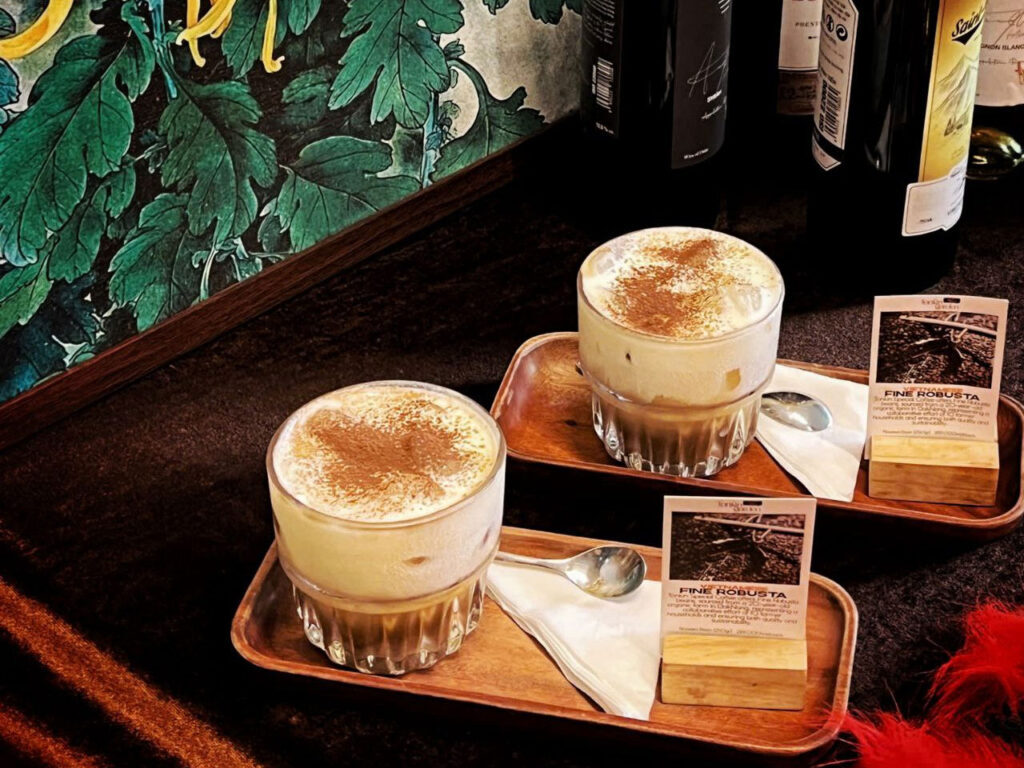
Vietnamese salt coffee is often misunderstood as a bold or heavy drink, but when prepared with care, it offers a smooth and balanced experience. Understanding how to make Vietnamese salt coffee begins with controlling extraction and adjusting salt and cream in a way that supports, rather than masks, the coffee itself. At Tonkin Coffee, this approach focuses on harmony, allowing bitterness, sweetness, creaminess, and a gentle touch of salt to come together naturally.
What makes Vietnamese salt coffee different from other coffee drinks?
Vietnamese salt coffee stands apart not because it is salty, but because it uses salt as a supporting element rather than a dominant flavor. The goal is not to surprise the palate, but to guide it.
The idea behind adding salt to coffee
In small amounts, salt has the ability to soften bitterness and make natural sweetness more noticeable. This principle has long been used in cooking, and in Vietnamese salt coffee, it is applied with the same intention. Instead of masking the coffee’s character, salt helps round out sharp edges, allowing chocolatey, nutty, or caramel notes to feel smoother and more complete.

Unlike sweet-forward drinks such as coffee with condensed milk, salt coffee relies on contrast rather than sugar alone. The cream carries a gentle salinity that blends with the coffee rather than sitting on top of it.
Balance over intensity in flavor design
A common misconception is that Vietnamese salt coffee should taste clearly salty or heavily creamy. In reality, a well-made cup should feel calm and measured. The cream should be light, the salt barely noticeable, and the coffee itself still clearly present. When balance is achieved, the drink feels comforting, not overwhelming, and invites slow, mindful drinking rather than immediate intensity.
What ingredients are needed to make Vietnamese salt coffee properly?
The simplicity of Vietnamese salt coffee means that ingredient quality matters more than quantity. Each component plays a clear role and should be chosen with intention.
Choosing the right coffee base
Vietnamese salt coffee requires a strong, clean extraction. Traditionally, this strength comes from Vietnamese brewing methods such as cafe phin, which naturally produce a bold and concentrated cup. However, modern espresso extraction can achieve the same goal when handled correctly.
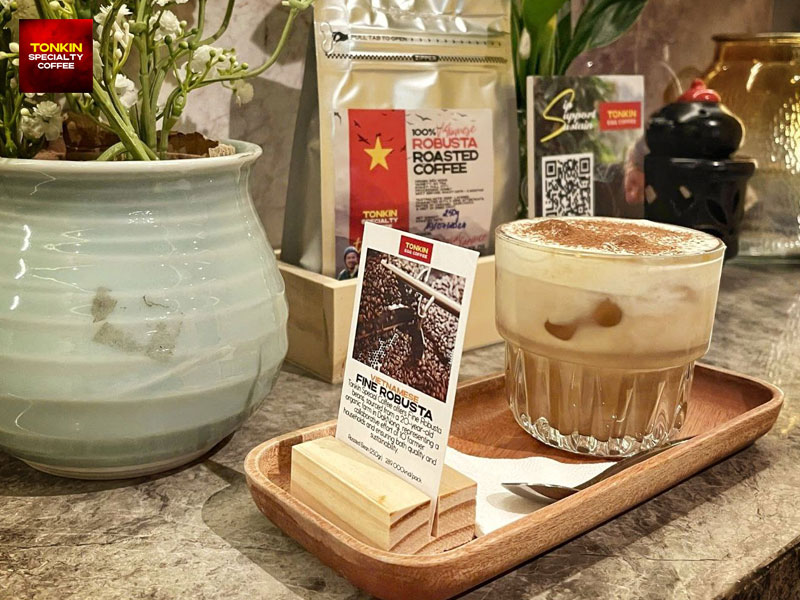
Robusta beans are often preferred because of their fuller body and natural bitterness, which gives the salted cream something to soften. This foundation is what allows the drink to feel structured rather than flat. Without a solid coffee base, even the best cream will feel disconnected.
Vietnam is known worldwide for producing some of the most famous coffee in Vietnam, and salt coffee is best understood as a modern continuation of that heritage rather than a departure from it.
Building a light and balanced salted cream
The salted cream is not meant to be thick or heavy. Ideally, it should feel airy and smooth, with just enough body to sit gently on top of the coffee. Heavy cream or whipping cream is often combined with fresh milk to reduce density, while salt is added in very small amounts.
Sweetness, if included, should remain subtle. The goal is not to create a dessert topping, but a soft counterpoint to the coffee. When done correctly, the cream enhances mouthfeel without distracting from the beans themselves. This approach reflects a broader understanding of the many types of coffee in Vietnam, where balance and practicality often guide flavor choices.
How is Vietnamese salt coffee prepared step by step?
Preparing Vietnamese salt coffee is not about complexity, but about attention. Each step, from brewing to layering, should support clarity and consistency. When done correctly, the process results in a drink that feels smooth, structured, and clearly coffee-forward.
Brewing a strong and clean coffee extraction
Whether using a traditional phin or a modern espresso machine, the objective remains the same: extract a coffee that is bold, clean, and free from harshness. Over-extraction leads to bitterness that no amount of cream can fix, while under-extraction results in a weak base that feels lost beneath the foam.
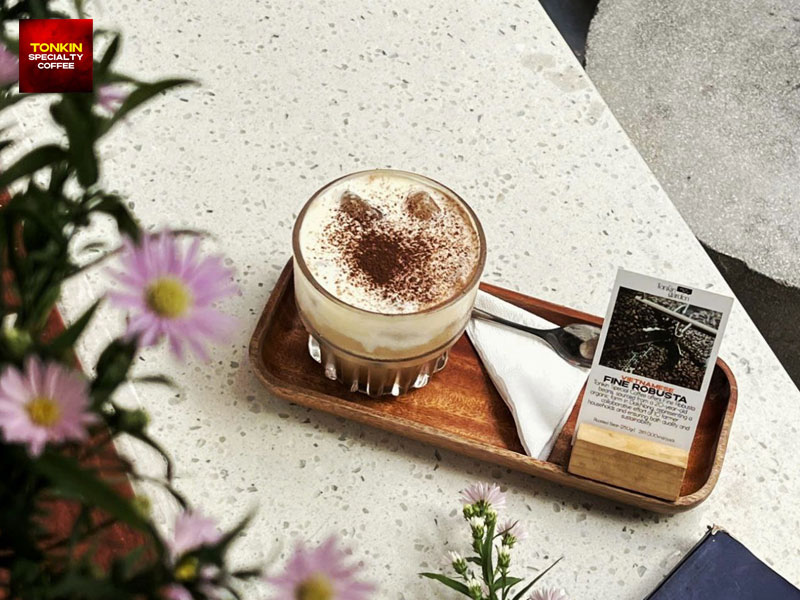
The brewing method should suit the environment and equipment available, but attention to grind size, water temperature, and extraction time is essential. A good base ensures that the final drink remains coffee-forward, even with the added cream.
Preparing and layering the salted cream
The salted cream should be prepared separately and gently frothed until light and glossy. It should not resemble whipped cream for desserts, but rather a soft foam that flows slowly.
When assembling the drink, the coffee is poured first, followed by the cream layered carefully on top. This creates a visual and sensory contrast. Stirring before drinking allows the flavors to merge, producing a unified and smooth profile rather than distinct layers.
How Tonkin Coffee refines Vietnamese salt coffee for a smoother experience
At Tonkin Coffee, Vietnamese salt coffee is approached as a process of refinement rather than exaggeration. The recipe has been tested, adjusted, and refined repeatedly to achieve a balance that feels natural and satisfying.
Adjusting salt and cream for harmony
Rather than focusing on richness or salinity, Tonkin Coffee recalibrates the ratio of salt and cream to ensure that neither dominates. The salt is present just enough to support sweetness, while the cream is kept light to avoid heaviness. This adjustment creates a more nuanced flavor profile, where each sip feels calm and controlled.
Salt and cream, in this approach, are not meant to overpower the coffee. Instead, they exist to frame it, allowing the bean’s character to remain at the center of the experience.
Extraction quality and Robusta selection
A key part of Tonkin’s approach lies in extraction quality. By focusing on proper brewing parameters, the coffee base becomes smoother and more expressive. The use of two shots of espresso made from Fine Robusta beans organically cultivated in Vietnam’s Central Highlands provides structure, depth, and a gentle bitterness that integrates naturally with the cream.
This careful extraction ensures that the drink offers more than just fat and salt. It delivers balance, clarity, and a pleasant aftertaste that lingers without fatigue.
Why balance matters more than richness
In Tonkin’s refined recipe, Vietnamese salt coffee is not defined by being salty or creamy. Instead, it is defined by how comfortably all elements coexist. The result is a drink that feels approachable, smooth, and well-proportioned, offering a richer sensory experience without excess.
For those curious to explore Vietnamese salt coffee beyond surface-level novelty, trying this balanced interpretation at Tonkin Coffee offers insight into how thoughtful adjustments can elevate a familiar idea into something more refined and enjoyable.
Visit Tonkin Coffee Today!
Tonkin Specialty Coffee
- Add: 91 Ly Tu Trong St, Ben Thanh Ward, District 1, Ho Chi Minh City, Vietnam.
- Hotline: 086 799 0125
Tonkin Garden Cafe
- Add: 135/50 Tran Hung Dao St, Ben Thanh Ward, District 1, Ho Chi Minh City, Vietnam.
- Hotline: 087 992 4691
Tonkin Egg Coffee
- Add: 1 Le Thi Rieng, Ben Thanh Ward, District 1, Ho Chi Minh City, Vietnam.
- Hotline: 0815 841 909

Nestled in the heart of Ho Chi Minh City, Tonkin Specialty Coffee is one of the best coffee shops to experience authentic Vietnamese flavors. From the iconic egg coffee and refreshing coconut coffee to bold Vietnamese coffee and the unique salt coffee, every sip is a journey into tradition. For non-coffee lovers, our Vietnamese matcha offers a gentle alternative. Pair your drink with a freshly baked banh mi or a buttery croissant, and savor the true taste of Vietnam in a setting inspired by folk culture and Indochine charm.