

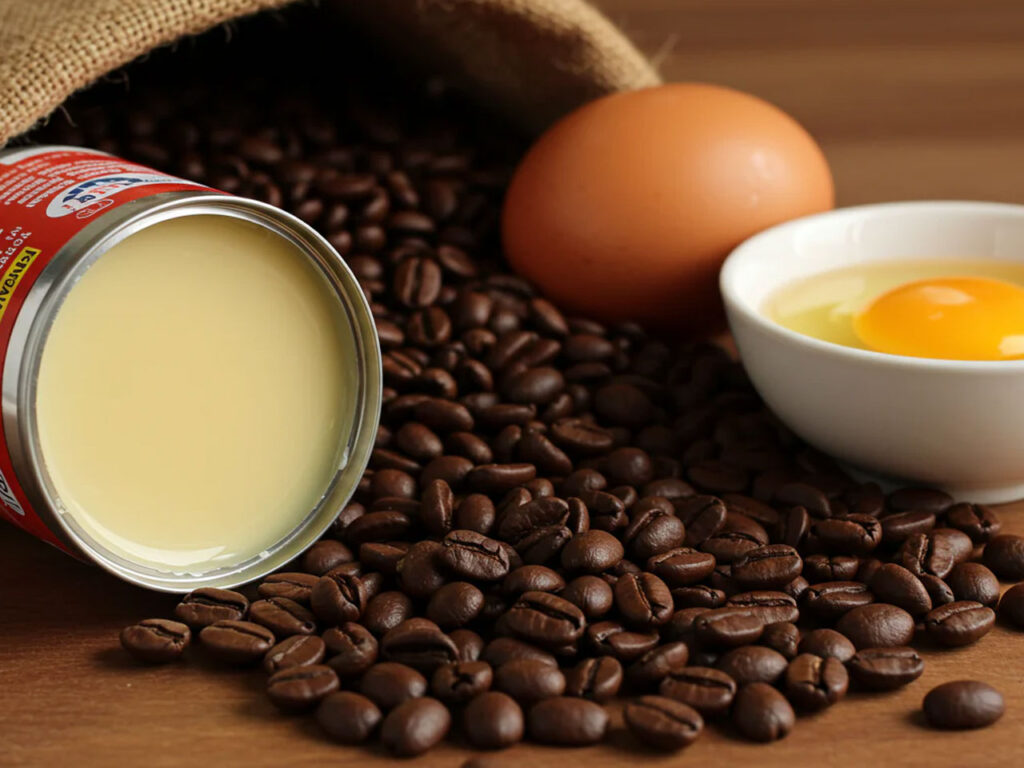
If you’re wondering how to make egg coffee at home, the process is simpler than it looks. With strong Vietnamese coffee, fresh egg yolks, and condensed milk, you can recreate the creamy, custard-like drink inspired by Tonkin Coffee. The key lies in achieving a smooth, stable foam and a perfectly balanced coffee base.
What ingredients do you need to make egg coffee?
Egg coffee requires just a few simple ingredients: fresh egg yolks, sweetened condensed milk, and a strong shot of Vietnamese coffee. A small amount of sugar or honey can enhance sweetness, while a few drops of rum help remove any egg aroma.
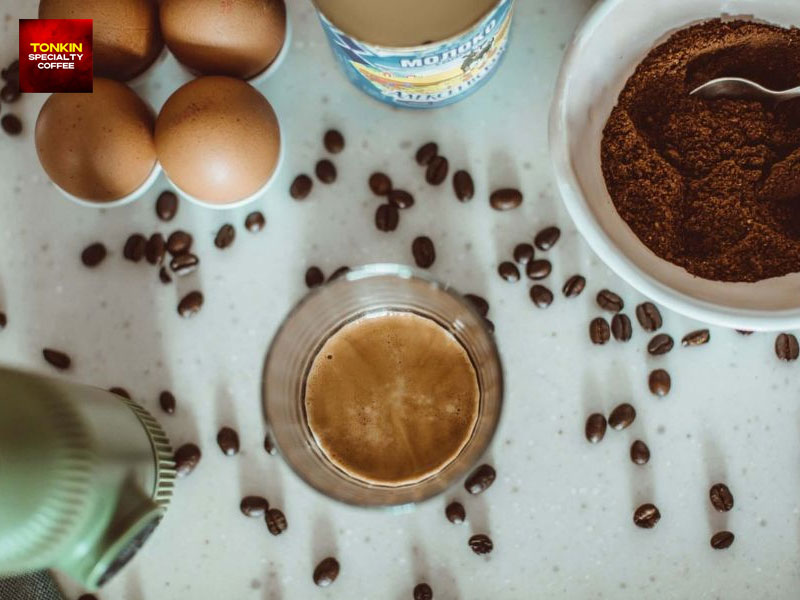
The key is using very fresh eggs and a bold coffee base to ensure balance and stability.
Essential ingredients
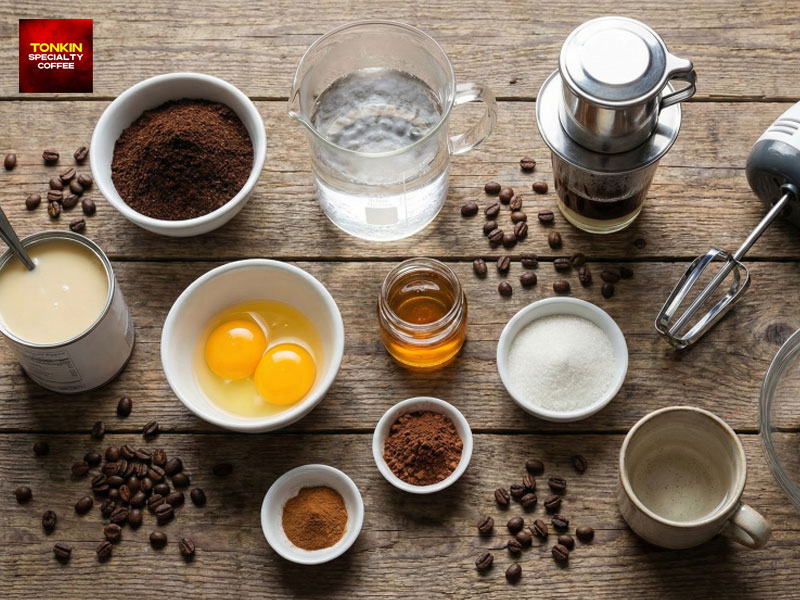
- 2 egg yolks (very fresh)
- 2 tablespoons condensed milk
- 1 teaspoon sugar or honey
- A few drops of rum (optional, helps remove egg smell)
- 1 strong shot of Vietnamese Robusta coffee
- Cocoa powder for garnish
Freshness is critical. The yolks must be cleanly separated from the whites, as even a small amount of egg white can create an unpleasant smell or unstable foam. Condensed milk adds sweetness and body, while sugar or honey can deepen the flavor slightly. A touch of rum neutralizes any raw egg aroma without overpowering the cream.
The coffee itself should be bold. Robusta beans are traditionally used because they deliver a firm bitterness that balances the sweetness of the foam.
Coffee options
You can prepare the coffee base in several ways:
- Phin filter (traditional)
- Espresso machine (double shot)
- Moka pot (acceptable alternative)
A phin filter produces a slow, concentrated drip with strong aroma and body. An espresso machine is more convenient at home and creates similar intensity. A moka pot also works if brewed carefully to avoid over-extraction.
Regardless of method, strength is essential. If the coffee is weak, the drink will taste overly sweet and flat.
What equipment helps create a thick, stable foam?
You do not need professional tools, but proper equipment makes the process easier and more consistent. Stability of the foam depends on thorough whipping and correct temperature control.
Basic tools
- Hand whisk (manual)
- Electric hand mixer (recommended)
- Small bowl for whipping
- Larger bowl with hot water (to keep warm)
A manual whisk works, but it requires patience and stamina. An electric hand mixer produces better volume and smoother texture in less time. The whipping bowl should be clean and dry to ensure proper aeration.
A separate bowl filled with hot water can hold the finished glass to maintain warmth while serving.
Temperature control
Temperature affects both texture and experience.
- Warm the serving glass slightly before pouring coffee.
- Keep the whipped foam chilled if preparing it ahead of time.
Maintaining contrast between hot coffee and cool cream enhances the layered sensation that defines this drink.
Step-by-step: how to make egg coffee at home
The process takes only a few minutes but requires attention to detail. Each step builds toward proper balance and structure.
Step 1 – Brew strong coffee
If using a phin filter:
- Add ground coffee to the chamber.
- Pour a small amount of hot water to bloom the grounds for about 30 seconds.
- Fill with hot water and cover.
- Allow it to drip slowly for 4–5 minutes.
Blooming allows carbon dioxide to escape, improving extraction. The slow drip creates a concentrated brew that forms the backbone of the drink.
If using an espresso machine, pull a double shot. The goal is intensity rather than volume.
Step 2 – Whip the egg cream
In a small bowl, combine egg yolks, condensed milk, sugar or honey, and optional rum. Whip for 3–5 minutes until the mixture turns pale yellow and triples in volume.
The texture should resemble soft mousse, light yet stable.
Float test:
Drop a small spoonful into a bowl of water. If it floats, the foam is ready. If it sinks, continue whipping.
This stage determines whether the final drink will feel luxurious or dense.
Many people researching how to make egg coffee focus on complicated variations, but mastering this foam texture is the true key.
Step 3 – Assemble
- Pour the hot coffee into a clear glass.
- Gently spoon the whipped foam over the surface.
- Avoid stirring immediately.
- Lightly dust cocoa powder on top.
The cream should float clearly above the coffee, forming two visible layers.
Step 4 – Serve properly
Place the glass in a bowl of warm water. This keeps the coffee hot and gradually warms the foam from below. The temperature difference softens the cream slightly as you drink, allowing the layers to merge naturally over time.
Common mistakes to avoid
Even with simple ingredients, small errors can affect results:
- Including egg whites, which cause odor
- Under-whipping the foam
- Using weak coffee
- Adding too much sugar
- Overheating during pasteurization
Precision ensures balance.
Safety considerations
If you are concerned about raw egg yolks, use pasteurized eggs. Alternatively, heat the egg mixture gently over simmering water until it reaches 70°C (160°F), whisking continuously. Do not overcook, as excessive heat will alter the texture.
How does Tonkin Coffee refine egg coffee technique?
While the home version is straightforward and rustic, some cafés elevate the technique through precision and temperature control. The difference lies in subtle refinements rather than new ingredients.
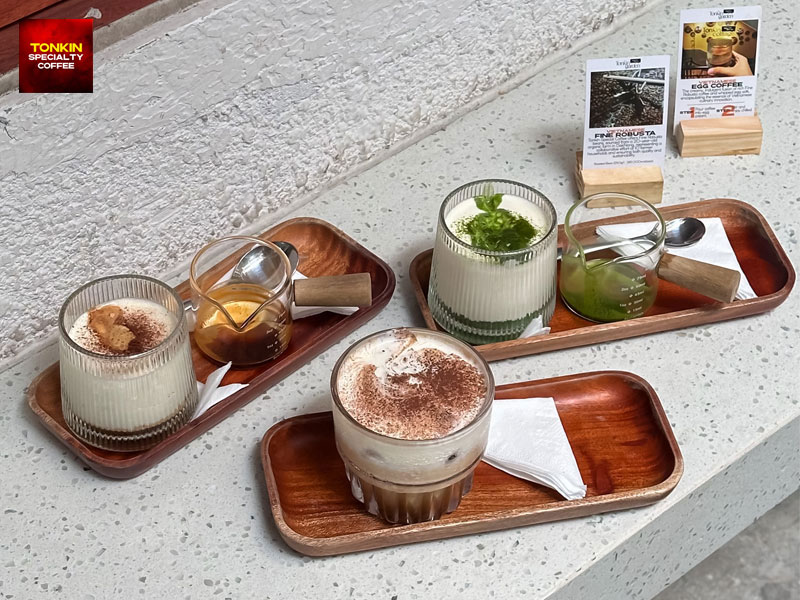
What makes Tonkin’s egg cream different?
At Tonkin Coffee, the egg cream is crafted with careful attention:
- Fresh eggs whipped until cloud-like
- A combination of sugar and honey for depth
- A few drops of rum to eliminate raw smell
- Creamy, soft, stable texture
- Cocoa powder finish for aromatic contrast
The whipping process emphasizes lightness without losing structure. The result is smooth and refined rather than dense.
Temperature precision
Temperature management distinguishes a casual homemade cup from a professional version.
- The cream is kept chilled before serving.
- The glass is pre-chilled at around 2°C.
- The coffee shot is extracted carefully to avoid bitterness.
This creates a sharper contrast between hot and cool layers, enhancing texture and flavor perception.
The coffee matters most
Foam can be replicated almost anywhere, but the coffee base defines quality.
Tonkin uses smooth Central Highlands beans that deliver bold aroma without harsh bitterness. Balanced extraction ensures that sweetness complements rather than hides the coffee’s character.
This emphasis on bean quality helps explain Why egg coffee is popular in Hanoi, where drinkers appreciate harmony between strength and smoothness rather than overpowering sweetness.
Home preparation is simple and satisfying. Café preparation emphasizes precision and refined texture. Both approaches share the same foundation, but the details create a noticeable difference.
Visit Tonkin Coffee Today!
Tonkin Specialty Coffee
- Add: 91 Ly Tu Trong St, Ben Thanh Ward, District 1, Ho Chi Minh City, Vietnam.
- Hotline: 086 799 0125
Tonkin Garden Cafe
- Add: 135/50 Tran Hung Dao St, Ben Thanh Ward, District 1, Ho Chi Minh City, Vietnam.
- Hotline: 087 992 4691
Tonkin Egg Coffee
- Add: 1 Le Thi Rieng, Ben Thanh Ward, District 1, Ho Chi Minh City, Vietnam.
- Hotline: 0815 841 909

Nestled in the heart of Ho Chi Minh City, Tonkin Specialty Coffee is one of the best coffee shops to experience authentic Vietnamese flavors. From the iconic egg coffee and refreshing coconut coffee to bold Vietnamese coffee and the unique salt coffee, every sip is a journey into tradition. For non-coffee lovers, our Vietnamese matcha offers a gentle alternative. Pair your drink with a freshly baked banh mi or a buttery croissant, and savor the true taste of Vietnam in a setting inspired by folk culture and Indochine charm.