

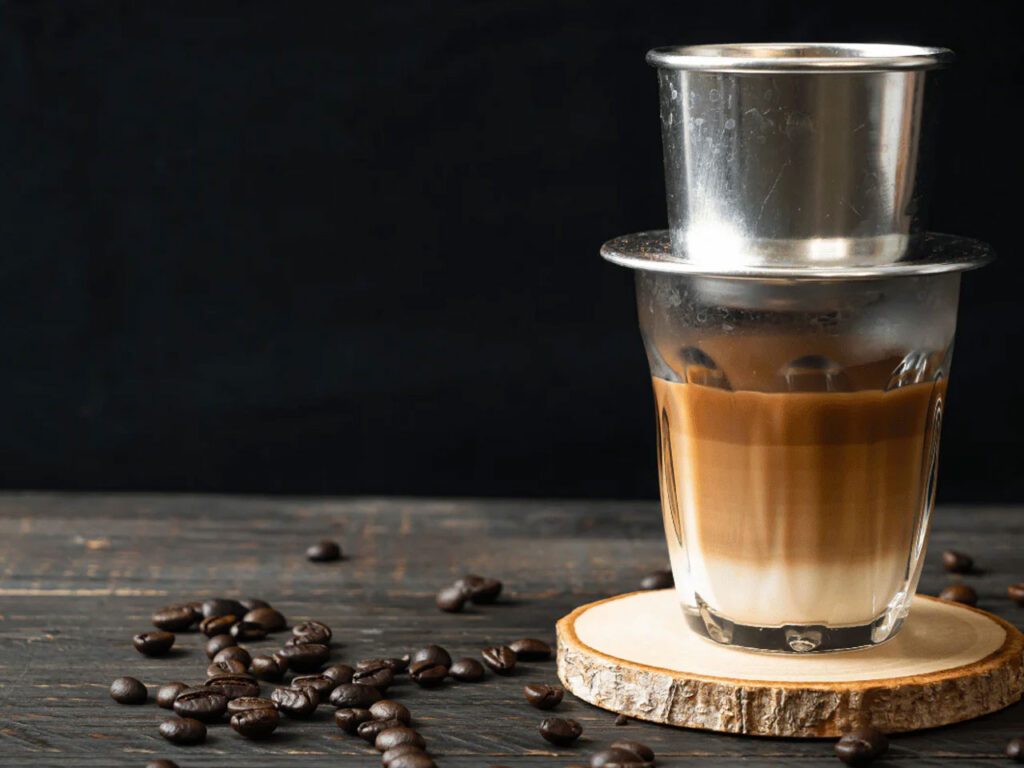
Vietnamese coffee is more than a brewing method; it reflects a way of slowing down and finding balance in each cup. By understanding how do you make Vietnamese coffee, from the traditional phin to modern interpretations like those at Tonkin Coffee, the experience becomes as meaningful as the flavor itself.
How is Vietnamese coffee traditionally brewed with a phin?
The traditional method relies on a small metal filter called a phin. This simple tool controls the pace of extraction and defines the character of Vietnamese coffee. There is no pressure, no paper filter, and no automation involved.
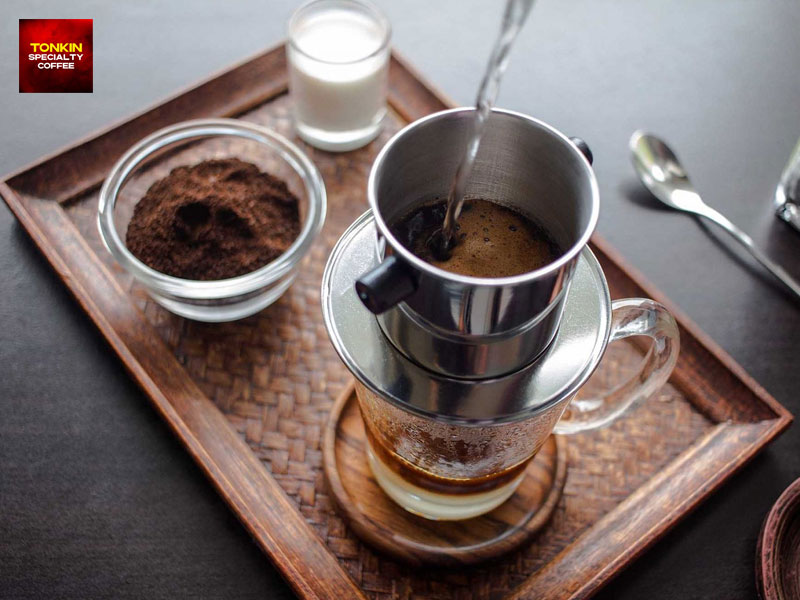
Despite its simplicity, brewing with a phin requires intention. Each step prepares the coffee for the next, ensuring the final cup remains bold without becoming harsh.
Tools and ingredients
- Aluminum phin filter
- Clean glass cup
- Ground coffee (about 25g)
- Hot water (92–98°C / 198–208°F)
- Condensed milk, sugar, or ice (optional)
Step-by-step phin brewing process
Rinse and warm the phin and cup
Pour hot water over the phin and the cup to warm them. This helps maintain temperature and allows the coffee to bloom evenly.
Add coffee grounds
Place about 25g of ground coffee into the phin. Gently shake to level the surface without compressing it unevenly.
Bloom the coffee
Slowly pour about 30ml of hot water evenly over the grounds. Cover the phin and let the coffee bloom for 2-3 minutes, allowing gases to release and flavors to open.
Lightly press and add more water
Gently place the press filter on top without forcing it. Then add another 50ml of hot water and cover again.
Let it drip
Allow the coffee to drip completely into the cup over 5-7 minutes. Near the end, a gentle press can help extract the final drops.
Adjust and enjoy
Add condensed milk, sugar, or ice to taste. Stir gently and enjoy slowly, especially when serving it as a classic Vietnamese iced coffee.
Tips for better flavor
- Water temperature: Use hot water just below boiling (92–98°C). Water that is too hot can make the coffee bitter, while cooler water leads to flat extraction.
- Drip speed: Ideal brewing time is 5–7 minutes. Too fast results in sour notes; too slow creates bitterness.
- Avoid drafts: Do not brew near fans or air conditioning to keep the phin warm and extraction stable.
- Use pure coffee: Choose natural, unblended beans commonly found in specialty coffee Vietnam to achieve the clearest flavor, aroma, and a more authentic expression of the cup.
Can Vietnamese coffee be made with an espresso machine?
While the phin remains the traditional method, Vietnamese coffee can also be prepared using modern espresso equipment.
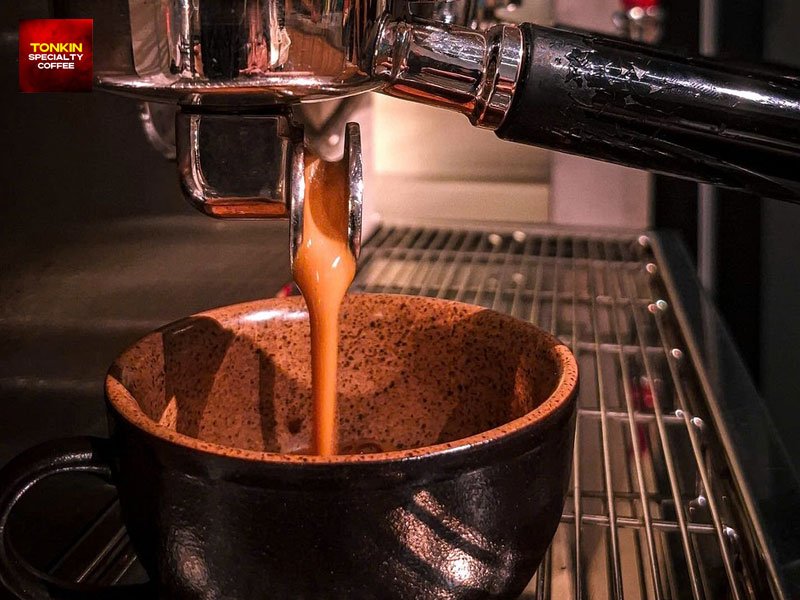
The key lies not in copying Italian espresso exactly, but in adjusting strength and dilution to preserve Vietnamese character.
What you need
- Espresso machine
- Vietnamese-style roasted coffee (medium grind)
- Hot water
- Cup, condensed milk, sugar, or ice (optional)
Brewing Vietnamese coffee with a machine
Preheat the machine
Allow the machine to reach proper operating temperature before brewing.
Grind and dose
Grind coffee to a medium consistency. Use 14–18g of coffee for a double shot.
Tamp firmly
Distribute the grounds evenly and tamp firmly to ensure even extraction.
Extract espresso
Pull a double shot for 25–30 seconds, yielding about 30–60ml of concentrated espresso.
Adjusting for Vietnamese-style drinks
- Hot black coffee: Add hot water to the espresso to soften intensity.
- Iced milk coffee: Combine espresso with condensed milk, then add ice and stir.
Tips for balance
- Ratio: A 1:2 or 1:3 ratio (coffee to liquid) maintains boldness similar to phin brewing.
- Water temperature: Keep brewing water around 90–95°C for stable extraction.
- Personal preference: Adjust water and milk levels to mirror the balance of traditional phin coffee.
Experiencing Vietnamese coffee at Tonkin Coffee
Learning how Vietnamese coffee is brewed builds appreciation, but it is not the only way to experience it fully. In many cases, the most complete expression comes from cafés that combine tradition with professional technique and a clear philosophy of flavor.
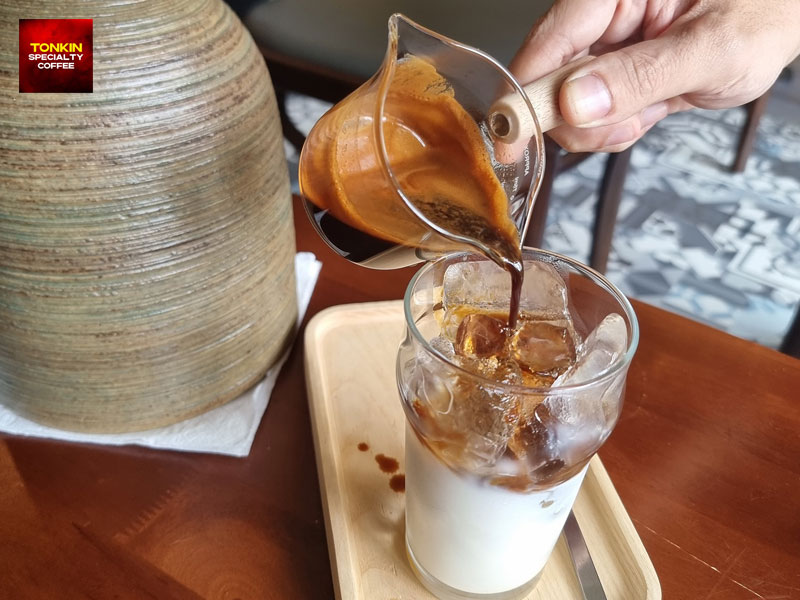
At Tonkin Coffee, Vietnamese coffee is treated as a craft rather than a routine. The café works with Fine Robusta beans sourced from Vietnam’s Central Highlands, carefully selected to approach specialty-level quality while preserving the bold identity of Vietnamese coffee. Tonkin believes that good coffee should be smooth and balanced, not aggressively bitter.
Instead of basic drip setups, Tonkin Coffee uses professional-grade espresso equipment similar to those found in specialty coffee shops. This allows precise control over pressure, temperature, and water flow, ensuring every cup begins with a strong yet well-structured foundation.
Why Tonkin Coffee prepares Vietnamese coffee differently
A fuller, richer foundation
Controlled extraction brings clarity and depth, allowing natural sweetness and layered flavors to emerge rather than relying on raw strength alone.
Balanced texture and flavor
Tonkin views coffee as a drink with multiple flavor dimensions. A good cup should balance sweetness, acidity, saltiness, and bitterness, with notes that may evoke berries, caramel, chocolate, and other nuanced characteristics. Bitterness is present, but only as one element of a much larger whole.
Consistency from cup to cup
Each cup is prepared with uniform grind size, stable water temperature, and carefully timed extraction. This precision ensures a consistent experience throughout the day for both first-time guests and regulars.
Efficiency without rushing
Even during busy hours, quality is never compromised. Speed comes from skill and well-calibrated equipment, not shortcuts.
Beyond the machines, it is the baristas who shape the experience. They understand how to preserve the bold character of Vietnamese coffee while refining it into something smoother and more harmonious. Guests are never asked to think about ratios or technique; everything is handled quietly and intentionally.
This approach reflects a broader shift in how Vietnamese coffee is being perceived, not merely as tradition, but as part of an evolving conversation around quality, balance, and craftsmanship.
Tonkin Coffee avoids making the experience feel intimidating or overly technical. Complexity is removed from the guest’s perspective so enjoyment comes first. In a landscape where discussions about famous coffee in Vietnam or the best coffee brand often focus on names and recognition, Tonkin Coffee shows that smoothness, balance, and care leave a deeper and more lasting impression.
At Tonkin, the coffee is never harsh or burnt. There is no sharp bitterness or smoky aftertaste. Instead, each cup is smooth, well-rounded, and confidently expressive, offering enough depth to satisfy seasoned drinkers while remaining approachable and refined.
Visit Tonkin Coffee Today!
Tonkin Specialty Coffee
- Add: 91 Ly Tu Trong St, Ben Thanh Ward, District 1, Ho Chi Minh City, Vietnam.
- Hotline: 086 799 0125
Tonkin Garden Cafe
- Add: 135/50 Tran Hung Dao St, Ben Thanh Ward, District 1, Ho Chi Minh City, Vietnam.
- Hotline: 087 992 4691
Tonkin Egg Coffee
- Add: 1 Le Thi Rieng, Ben Thanh Ward, District 1, Ho Chi Minh City, Vietnam.
- Hotline: 0815 841 909

Nestled in the heart of Ho Chi Minh City, Tonkin Specialty Coffee is one of the best coffee shops to experience authentic Vietnamese flavors. From the iconic egg coffee and refreshing coconut coffee to bold Vietnamese coffee and the unique salt coffee, every sip is a journey into tradition. For non-coffee lovers, our Vietnamese matcha offers a gentle alternative. Pair your drink with a freshly baked banh mi or a buttery croissant, and savor the true taste of Vietnam in a setting inspired by folk culture and Indochine charm.