
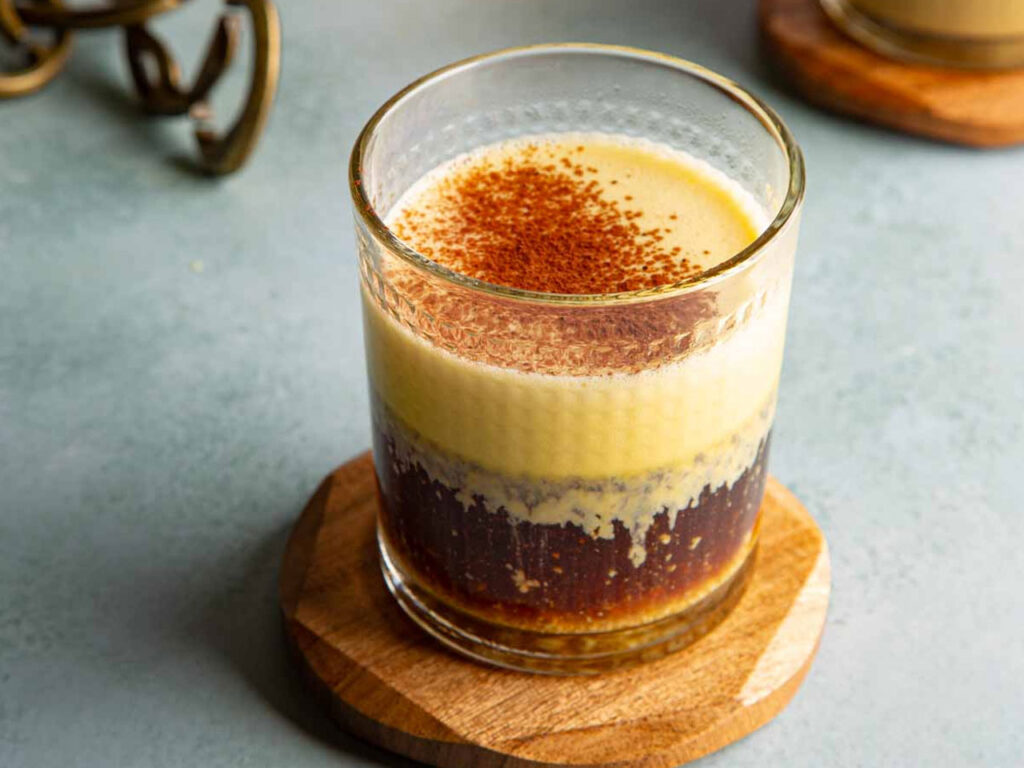
Despite its custard-like richness, Vietnamese egg coffee is traditionally alcohol-free, which answers the common question does egg coffee have rum. Tonkin Coffee stays true to this classic approach, focusing on purity of flavor rather than added spirits.
Traditional Vietnamese egg coffee does not include rum
In its classic form, Vietnamese egg coffee is made without rum or any other alcohol. The original recipe relies entirely on fresh ingredients and careful technique rather than flavor masking.
What defines the traditional recipe
Egg coffee originated in Hanoi in the mid-20th century, at a time when milk was scarce. Creative baristas turned to egg yolks as a substitute, whisking them with sugar to create a thick, creamy topping for strong coffee. Over time, sweetened condensed milk became part of the recipe, adding richness and stability.
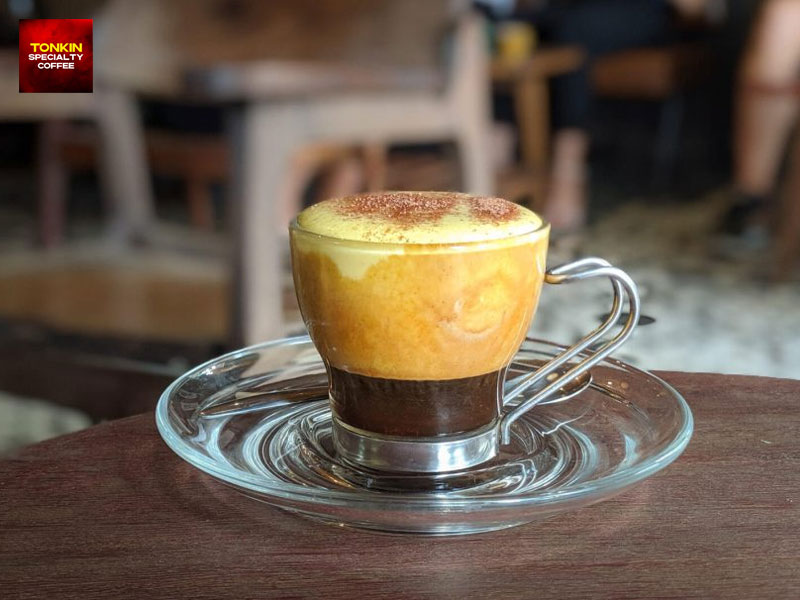
A traditional cup consists of:
- Fresh egg yolks
- Sugar
- Sweetened condensed milk
- Strong Vietnamese coffee, usually Robusta
There is no alcohol in the original formula. The depth of flavor comes from the balance between bitter coffee and rich egg cream, not from spirits.
This directly addresses a common misconception. While some modern versions may taste reminiscent of dessert cocktails, the classic Vietnamese preparation is entirely alcohol-free.
Why rum is often assumed to be present
The assumption usually comes from texture and aroma rather than taste. A well-made egg coffee feels silky, warm, and layered, qualities people often associate with desserts like tiramisu or custard-based drinks that sometimes include alcohol.
In reality, when egg coffee is prepared correctly, the egg foam is light and clean, with no raw aroma. That cleanliness comes from technique, not rum.
Rum is found mainly in modern and international styles
While traditional Vietnamese egg coffee excludes alcohol, rum does appear in certain contemporary adaptations and in egg coffee traditions outside Vietnam.
Why some modern recipes add rum
In some cafés and home recipes, a small amount of rum, or occasionally vodka or whisky, is added while whisking the egg yolk mixture. This practice serves two main purposes:
Odor control
Alcohol can help neutralize the sulfur-like aroma that sometimes appears when eggs are handled improperly. Rather than improving flavor, it compensates for rushed preparation or low-quality ingredients.
Flavor enhancement
A few drops of rum add warm, dessert-like notes similar to custard or tiramisu. For some drinkers, this creates familiarity, especially for those encountering egg coffee for the first time.
However, this is a stylistic choice, not a requirement. Many purists argue that relying on alcohol hides flaws rather than showcasing skill.
Egg coffee with alcohol in other cultures
Vietnam is not the only place where eggs and coffee intersect, but approaches vary widely.
Cuban egg coffee
In Cuba, certain egg coffee preparations include white rum mixed with egg yolk, sugar, and espresso. This version leans closer to a coffee cocktail than a breakfast or café drink.
Sri Lankan egg coffee
Some Sri Lankan recipes incorporate brandy, giving the drink a warming, spiced profile intended for leisurely sipping.
Scandinavian egg coffee
In contrast, Scandinavian egg coffee contains no alcohol at all. A whole egg is mixed with coffee grounds to clarify the brew, producing a clean cup with reduced bitterness, completely different from the creamy Vietnamese style.
These comparisons highlight an important point: alcohol is cultural, not essential. Vietnamese egg coffee stands out precisely because it achieves balance without it.
High-quality egg coffee relies on technique, not alcohol
When egg coffee is made with care, there is no need for rum. Precision, ingredient quality, and patience do all the work.
The role of egg cream craftsmanship
A properly prepared egg cream should be:
- Light and airy, not heavy
- Smooth, without graininess
- Gently sweet, never cloying
- Completely free of any raw egg smell
Achieving this requires fresh eggs, controlled temperature, and careful whisking. When done right, the foam takes on a pale, almost white appearance rather than a deep yellow, signaling refinement rather than richness alone.
At this level, the drink no longer needs anything to “fix” it.
The importance of the coffee base
While the egg cream draws attention, the coffee underneath matters just as much. Vietnamese Robusta, when sourced and roasted well, offers deep bitterness and intensity that anchor the drink.
This balance explains why egg coffee often feels more satisfying than expected. Between the richness of the egg layer and the strength of the coffee, people sometimes wonder whether egg coffee have protein or if it functions more like a small meal. The answer lies in its composition: egg yolk naturally contributes nutrients that make the drink more filling than black coffee.
It also clarifies another frequent question whether egg coffee have caffeine. Because the base is brewed coffee, the stimulant effect is very much present, especially when Robusta beans are used.
Experiencing refined egg coffee at Tonkin Coffee
Understanding egg coffee in theory is one thing. Experiencing it prepared at a high level is another.
At Tonkin Coffee, egg coffee is crafted without rum, relying instead on refined technique to deliver purity of flavor. Each cup reflects a philosophy that values balance over excess and precision over shortcuts.
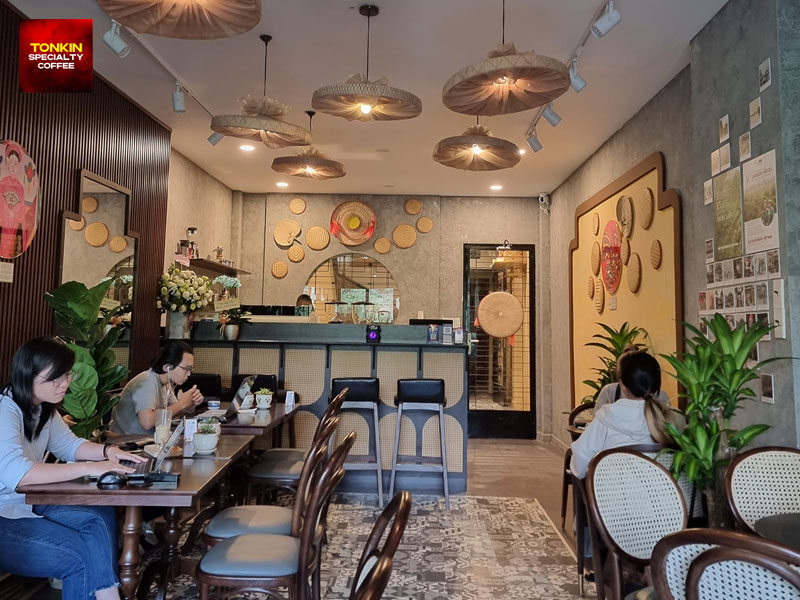
Silky egg cream without alcohol
The egg cream at Tonkin is whisked to a cloud-like consistency—soft, airy, and stable. Its sweetness is measured, its aroma clean. There is no trace of egginess, eliminating the need for alcohol entirely.
This approach also answers another common curiosity: egg coffee have egg in a very literal sense, but when prepared skillfully, the egg transforms into something closer to custard foam than a raw ingredient.
A robust espresso foundation
Tonkin pairs the egg cream with a single shot of carefully extracted Robusta espresso. The bitterness of the coffee cuts through the richness of the cream, preventing the drink from becoming heavy.
Served together, they highlight contrast rather than blending into sameness.
The two-cup serving ritual
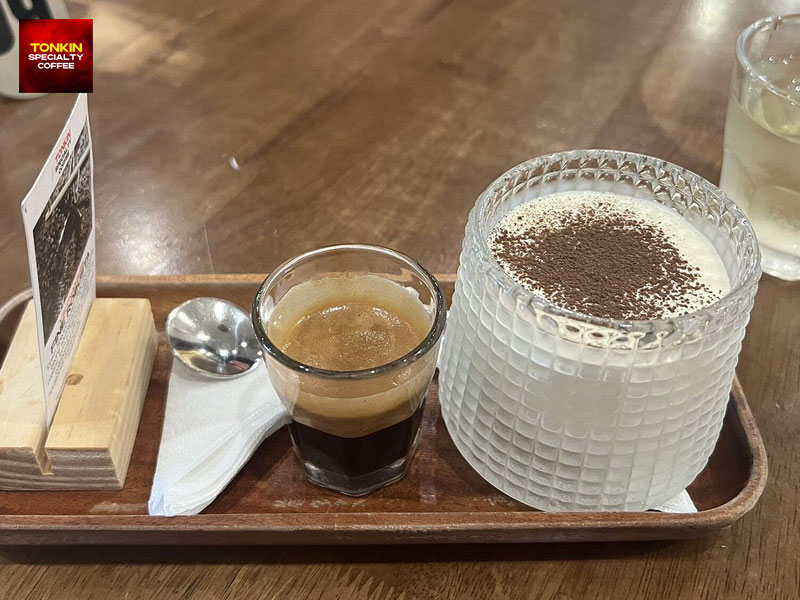
At Tonkin Coffee, egg coffee arrives as two elements:
- A small jug holding the espresso
- A separate glass containing the egg cream
This presentation invites interaction rather than passive drinking.
Step 1: Taste the egg cream on its own
Notice the texture first. It should feel light, not sticky. The sweetness should be gentle, and the aroma clean.
Step 2: Combine or alternate
You can pour the coffee into the cream for a unified flavor, or sip them separately to experience contrast, bitterness followed by softness.
Both approaches are valid. The ritual slows you down and turns the drink into an experience rather than a quick caffeine fix.
Visit Tonkin Coffee Today!
Tonkin Specialty Coffee
- Add: 91 Ly Tu Trong St, Ben Thanh Ward, District 1, Ho Chi Minh City, Vietnam.
- Hotline: 086 799 0125
Tonkin Garden Cafe
- Add: 135/50 Tran Hung Dao St, Ben Thanh Ward, District 1, Ho Chi Minh City, Vietnam.
- Hotline: 087 992 4691
Tonkin Egg Coffee
- Add: 1 Le Thi Rieng, Ben Thanh Ward, District 1, Ho Chi Minh City, Vietnam.
- Hotline: 0815 841 909
Nestled in the heart of Ho Chi Minh City, Tonkin Specialty Coffee is one of the best coffee shops to experience authentic Vietnamese flavors. From the iconic egg coffee and refreshing coconut coffee to bold Vietnamese coffee and the unique salt coffee, every sip is a journey into tradition. For non-coffee lovers, our Vietnamese matcha offers a gentle alternative. Pair your drink with a freshly baked banh mi or a buttery croissant, and savor the true taste of Vietnam in a setting inspired by folk culture and Indochine charm.