

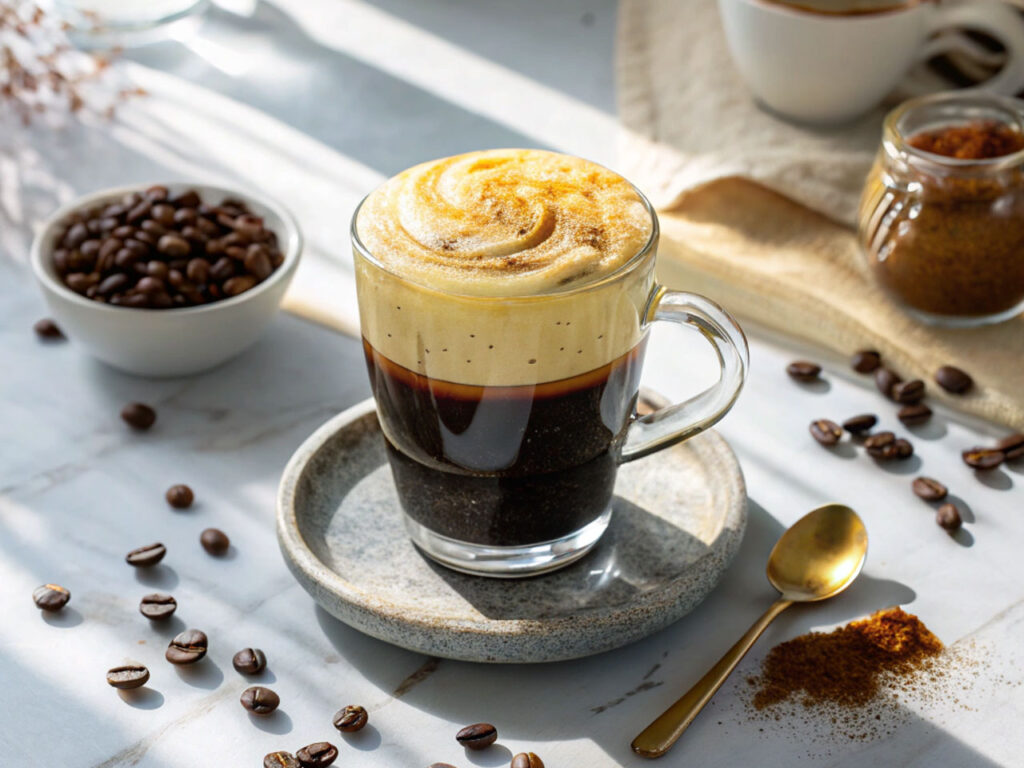
In recent years, many coffee lovers have started asking can you make egg coffee without condensed milk as they look for lighter, more flexible ways to enjoy this iconic Vietnamese drink. At Tonkin Coffee, egg coffee is approached with respect for tradition while allowing room for thoughtful alternatives, making the experience accessible to those who prefer less sweetness or dairy-free options.
Can egg coffee be enjoyed without condensed milk?
Yes, egg coffee can be made and enjoyed without condensed milk while still retaining its creamy texture, layered flavor, and comforting character.
The key lies in understanding what condensed milk contributes to the drink and how those elements can be replaced thoughtfully.
What condensed milk traditionally provides
Condensed milk plays two main roles in egg coffee: sweetness and body.
Its thick consistency helps stabilize the whipped egg foam, while its sweetness softens the intensity of strong coffee. Historically, it was also widely available and easy to store.
Why it is not essential
While condensed milk is familiar, it is not the defining element of egg coffee. The heart of the drink lies in the contrast between hot, aromatic coffee and a smooth, airy egg topping. As long as that balance is maintained, alternative ingredients can fulfill the same functions without altering the essence of the drink.
A lighter direction for modern drinkers
Many coffee lovers today prefer reduced sweetness or dairy-free options. Making egg coffee without condensed milk allows the coffee’s natural character to shine through while offering a more delicate, less heavy mouthfeel.
How egg coffee works: Technique before ingredients
Egg coffee depends more on structure and method than on a fixed ingredient list.
Once the mechanics of the drink are understood, ingredient substitutions become intuitive rather than experimental.
The coffee base
Egg coffee requires a bold coffee base with enough intensity to stand up to the richness of the topping. Vietnamese coffee traditions favor strong extraction because it creates a foundation that remains expressive even when layered with creaminess.

This strength is essential, especially when condensed milk is removed. Without heavy sweetness, the coffee’s aroma, bitterness, and depth must carry the drink.
The egg foam
The foam is made by whipping fresh egg yolks with a sweetener until light, glossy, and airy. When done correctly, the foam resembles a soft custard rather than a dense cream. Heat from the coffee gently warms the foam, enhancing aroma and texture without cooking the egg directly.
This process often surprises first-time drinkers, especially those hesitant to put an egg in coffee. The result is smooth, balanced, and refined rather than heavy or raw.
Replacing condensed milk thoughtfully
Instead of focusing on what is removed, successful substitutions focus on function:
- Natural sweeteners provide gentle sweetness without overpowering the coffee.
- Plant-based creams or milks add body and smoothness.
This is the foundation of an egg coffee recipe without condensed milk, where balance replaces excess.Origins, adaptation, and cultural context
Egg coffee has always been a product of adaptation, shaped by context rather than rigid rules.
Its history explains why modern variations remain true to its spirit.
A practical beginning
For those curious where does egg coffee come from, its origins trace back to Hanoi in the mid-20th century. Limited access to fresh dairy led to the creative use of egg yolks as a substitute, transforming necessity into innovation.
From necessity to national icon
What began as a practical solution evolved into one of Vietnam’s most recognizable coffee drinks. Over time, technique improved, flavors became more refined, and egg coffee earned its place as a cultural symbol rather than a temporary workaround.
Modern interpretations
Today, egg coffee continues to change. Lighter sweetness, alternative milks, and refined textures reflect shifting tastes while maintaining respect for the original concept. Adaptation, not imitation, has always been part of egg coffee’s identity.
Experiencing egg coffee without condensed milk at Tonkin Coffee
At Tonkin Coffee, egg coffee is treated as a thoughtful experience shaped by balance, choice, and a deep respect for Vietnamese coffee traditions.
Rather than offering a single fixed version, guests are invited to explore different expressions of egg coffee that align with their personal taste, whether they prefer richness, lightness, or a cleaner finish.
Fine Robusta as the foundation
Every cup begins with carefully selected Fine Robusta from the Central Highlands. Chosen for its smooth structure, clarity, and aromatic depth, this coffee forms a steady foundation that remains expressive even when paired with lighter, less sweet egg foam.
The goal is not intensity for its own sake, but a rounded, confident coffee base that supports the entire drink.
Almond milk as an alternative
For those who wish to avoid condensed milk, Tonkin Coffee offers almond milk as a thoughtful substitute. Its subtle nuttiness and gentle creaminess complement the egg foam without masking the coffee’s natural character. This creates a cup that feels lighter on the palate while still delivering comfort and cohesion.
What goes into Tonkin’s egg cream coffee
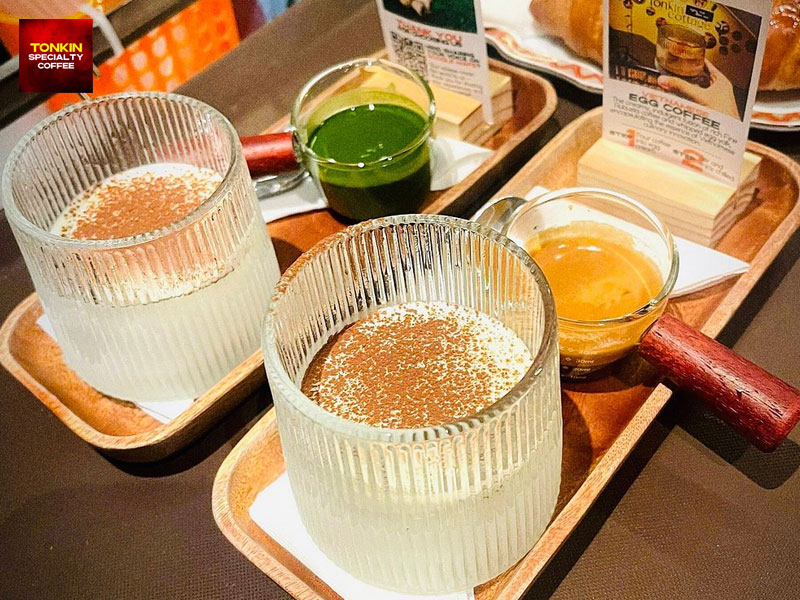
A Tonkin egg coffee is built with precision and care, starting with fresh egg yolks whipped until cloud-like and airy. A small amount of sugar and honey is added to create gentle sweetness, followed by a few drops of rum. The rum plays a quiet but essential role, completely removing any unwanted egg aroma while preserving the foam’s rich fragrance.
The result is a creamy, soft, and velvety egg mixture with a smooth, luxurious texture. A light dusting of cocoa powder is added on top, enhancing aroma and adding a subtle bittersweet note that ties the layers together.
All ingredients are thoroughly mixed and kept chilled to preserve both flavor and structure. Even the glass used to serve the egg cream is deeply chilled at around 2°C, ensuring the foam stays stable, cool, and silky when served.
The final and most crucial element is a carefully pulled shot of coffee from the Central Highlands. Smooth, aromatic, and full-bodied without harsh bitterness, this coffee brings the drink into balance. Egg cream may taste similar in many places, but the refined notes and gentle finish only emerge when paired with a high-quality coffee and the attentive hands of an experienced barista.
A balanced, modern experience
Rather than presenting egg coffee as a rigid formula, Tonkin Coffee treats it as a dialogue between tradition and personal preference. Whether enjoyed in its classic style or with lighter adjustments, egg coffee here remains unmistakably Vietnamese, thoughtful, comforting, and carefully crafted.
Visit Tonkin Coffee and experience our refreshed egg coffee recipe for yourself.
We promise, the difference begins with the coffee.
Visit Tonkin Coffee Today!
Tonkin Specialty Coffee
- Add: 91 Ly Tu Trong St, Ben Thanh Ward, District 1, Ho Chi Minh City, Vietnam.
- Hotline: 086 799 0125
Tonkin Garden Cafe
- Add: 135/50 Tran Hung Dao St, Ben Thanh Ward, District 1, Ho Chi Minh City, Vietnam.
- Hotline: 087 992 4691
Tonkin Egg Coffee
- Add: 1 Le Thi Rieng, Ben Thanh Ward, District 1, Ho Chi Minh City, Vietnam.
- Hotline: 0815 841 909
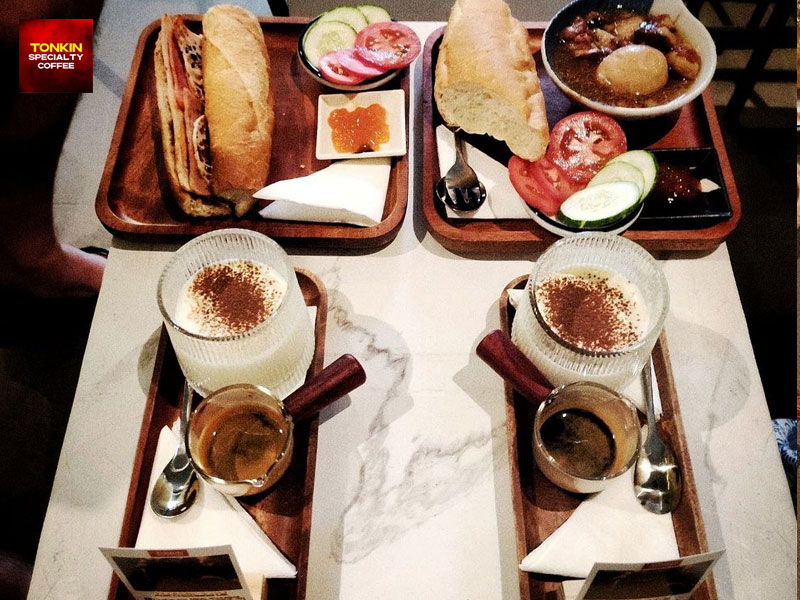
Nestled in the heart of Ho Chi Minh City, Tonkin Specialty Coffee is one of the best coffee shops to experience authentic Vietnamese flavors. From the iconic egg coffee and refreshing coconut coffee to bold Vietnamese coffee and the unique salt coffee, every sip is a journey into tradition. For non-coffee lovers, our Vietnamese matcha offers a gentle alternative. Pair your drink with a freshly baked banh mi or a buttery croissant, and savor the true taste of Vietnam in a setting inspired by folk culture and Indochine charm.