

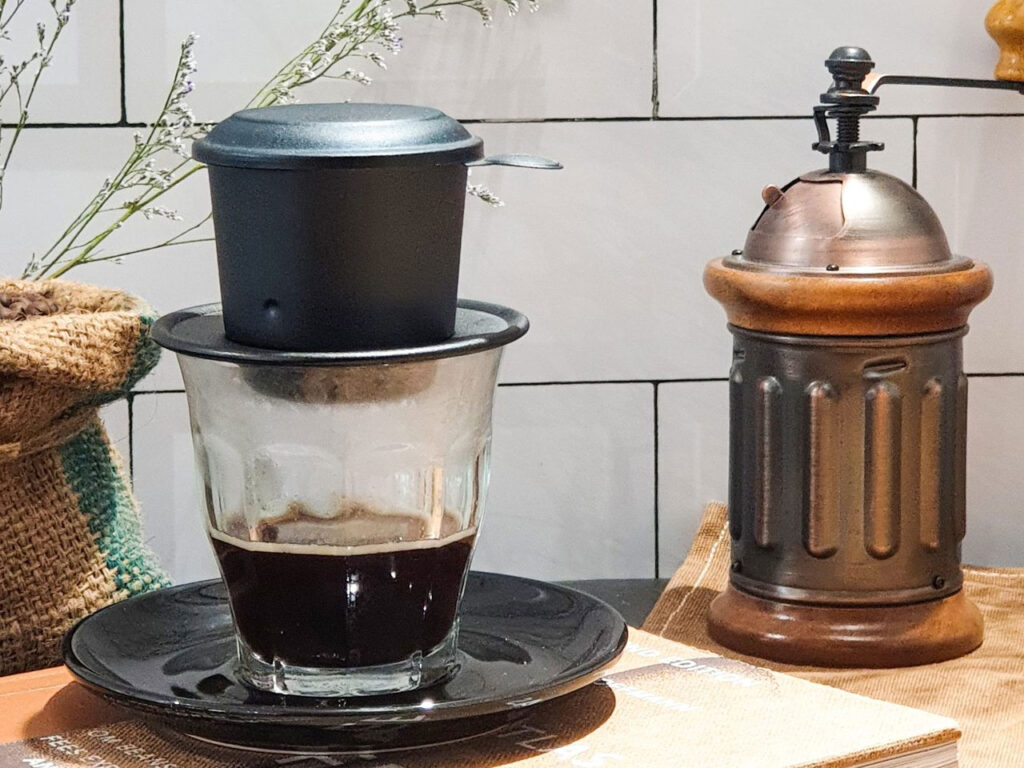
Join Tonkin Coffee in discovering cafe phin Vietnam, a symbol of tradition that has quietly accompanied daily life in Vietnam for generations. Through its story, the character of Vietnamese coffee becomes clearer and more meaningful.
What defines Vietnamese phin coffee?
Vietnamese phin coffee is defined by its slow brewing rhythm, bold foundation, and deep connection to everyday life. Rather than focusing on speed or technical complexity, the phin method emphasizes waiting, observing, and letting flavor develop naturally. This approach turns coffee from a functional drink into a mindful pause in the day.
The phin filter and slow extraction
The phin itself is a small metal drip filter placed directly on top of the cup. Hot water flows through the coffee grounds at a controlled pace, producing a steady drip rather than a fast extraction. There is no pressure involved, only gravity and time.
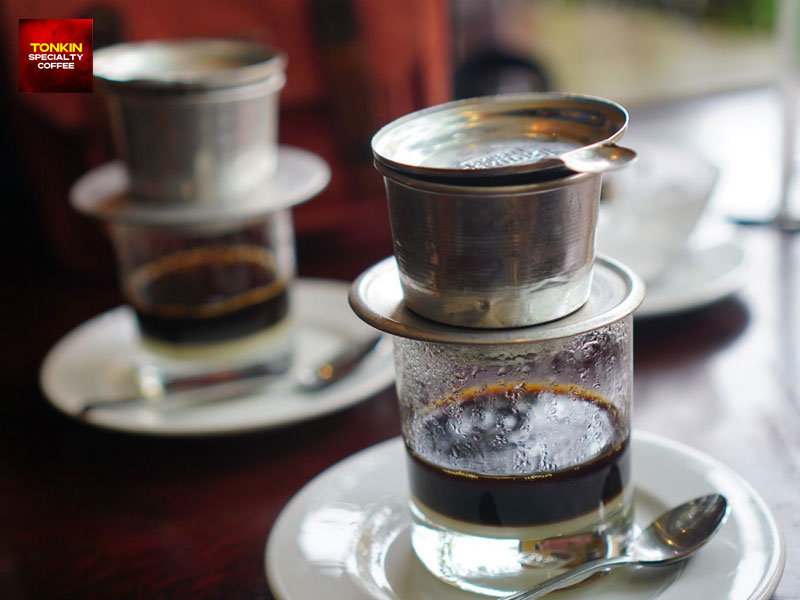
This slow process allows heavier compounds to dissolve, giving the coffee its characteristic body and intensity.
Strength as a cultural preference
Strength has long been a defining trait of Vietnamese coffee. Historically, people favored a cup that felt grounding and energizing, especially in a hot, humid climate. Over time, this preference shaped roasting styles, brewing ratios, and even how coffee was talked about. The result is a profile that many people immediately recognize and associate with famous coffee in Vietnam.
Coffee as a daily ritual
Equally important is the cultural role of the brewing process itself. Watching coffee drip is not seen as waiting for something to finish, but as part of the experience. In local cafés, it is common to see people chatting, reading, or simply sitting quietly while their coffee brews. The phin encourages presence rather than haste.
How is Vietnamese phin coffee traditionally prepared and enjoyed?
Traditional phin coffee follows a straightforward process designed to extract depth and body rather than brightness. The method is simple enough to be repeated at home, yet nuanced enough that small adjustments can noticeably change the result.
A simple and deliberate brewing process
Brewing usually begins with a short bloom, where a small amount of hot water is poured over the grounds. This allows the coffee to release trapped gases and prepares it for even extraction. More water is then added, and the lid is placed on top as the coffee drips slowly into the cup below.
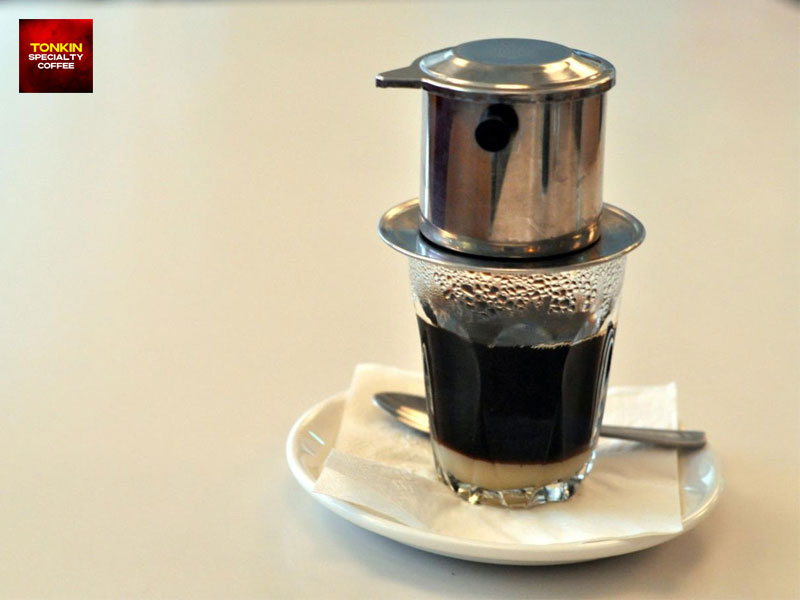
This unhurried technique is often what people are curious about when they ask how do you make Vietnamese coffee, because the process values timing and restraint more than specialized tools.
Popular ways to drink phin coffee
Once brewed, phin coffee is enjoyed in several familiar ways. Some prefer it black and hot, appreciating its directness and weight. Others add ice, which softens the intensity and makes it refreshing in warm weather. One of the most popular versions includes sweetened condensed milk, which balances bitterness with creaminess and gentle sweetness.
Why bitterness became part of the identity
Bitterness plays a central role in these preparations. Rather than being avoided, it is embraced as part of the flavor structure. Over time, many drinkers come to associate this bitterness with comfort and familiarity. It becomes less about sharpness and more about character.
How is Vietnamese coffee flavor evolving today?
As tastes evolve, Vietnamese coffee is increasingly being reinterpreted with greater attention to balance, clarity, and texture. This shift does not reject tradition; instead, it builds upon it by refining how coffee is extracted and how flavors are presented.
From raw strength to balanced structure
Rather than relying on raw strength alone, modern approaches focus on revealing sweetness and layered notes that were always present but often overshadowed. Bitterness remains, but it is no longer the dominant feature. Instead, it supports the overall structure of the cup.
Fine Robusta and flavor potential
A key part of this evolution is a renewed appreciation for Robusta coffee. When carefully selected and thoughtfully roasted, Robusta can express more than intensity. Chocolate, caramel, and subtle fruit-like notes can emerge, offering a broader understanding of the diverse types of coffee in Vietnam and how they can be experienced.
Consistency as a marker of quality
Consistency has also become an important marker of quality. Traditional phin brewing can vary widely depending on grind size, water temperature, and timing. By controlling these variables more precisely, modern cafés are able to deliver a more reliable experience without stripping away the essence of the method.
How Tonkin Coffee brings a modern perspective to Vietnamese coffee
Tonkin Coffee represents a meeting point between Vietnamese tradition and modern brewing precision.
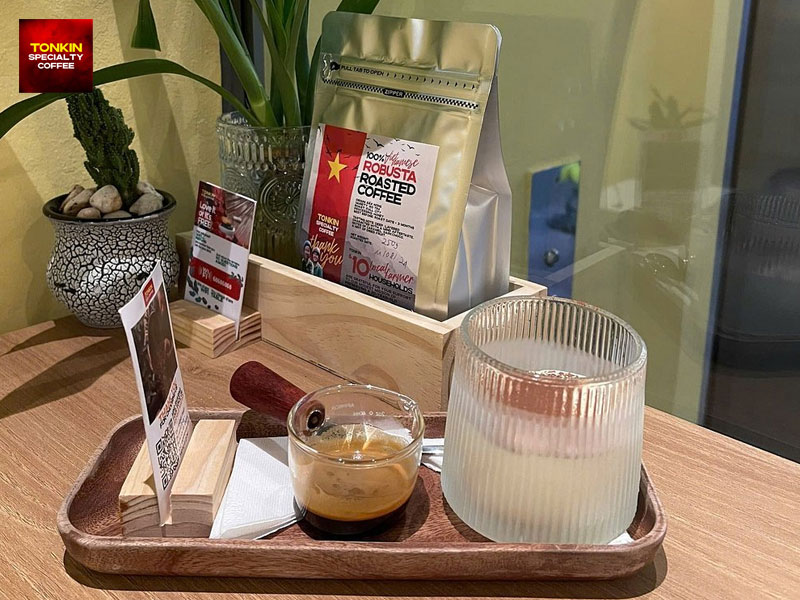
The café approaches phin coffee not as something to reinvent, but as something to clarify and elevate.
Professional extraction for a clean foundation
Instead of using basic drip setups, Tonkin Coffee relies on professional-grade espresso equipment to manage pressure, temperature, and water flow. This level of control creates a strong, well-structured foundation before the coffee reaches the cup. The goal is not to make the coffee lighter or weaker, but smoother and more balanced.
Fine Robusta from the Central Highlands
Tonkin Coffee works with Fine Robusta beans sourced from Vietnam’s Central Highlands, carefully selected to approach specialty-level quality while preserving the bold identity of Vietnamese coffee.
When extracted with intention, these beans reveal natural sweetness and layered flavors such as caramel, chocolate, and gentle fruit notes. Bitterness remains present, but as one element within a larger, more harmonious whole.
Consistency and trust in every cup
Each cup at Tonkin Coffee is prepared with uniform grind size, stable water temperature, and carefully timed extraction. This ensures that the experience remains consistent throughout the day, whether the guest is visiting for the first time or returning regularly. Through this commitment to quality and balance, Tonkin Coffee quietly reshapes expectations around what could be considered the best coffee brand in Vietnam, not through bold claims, but through execution.
Visit Tonkin Coffee Today!
Tonkin Specialty Coffee
- Add: 91 Ly Tu Trong St, Ben Thanh Ward, District 1, Ho Chi Minh City, Vietnam.
- Hotline: 086 799 0125
Tonkin Garden Cafe
- Add: 135/50 Tran Hung Dao St, Ben Thanh Ward, District 1, Ho Chi Minh City, Vietnam.
- Hotline: 087 992 4691
Tonkin Egg Coffee
- Add: 1 Le Thi Rieng, Ben Thanh Ward, District 1, Ho Chi Minh City, Vietnam.
- Hotline: 0815 841 909

Nestled in the heart of Ho Chi Minh City, Tonkin Specialty Coffee is one of the best coffee shops to experience authentic Vietnamese flavors. From the iconic egg coffee and refreshing coconut coffee to bold Vietnamese coffee and the unique salt coffee, every sip is a journey into tradition. For non-coffee lovers, our Vietnamese matcha offers a gentle alternative. Pair your drink with a freshly baked banh mi or a buttery croissant, and savor the true taste of Vietnam in a setting inspired by folk culture and Indochine charm.